Introduction
Office spaces have changed a lot in recent years. As more companies move away from closed-off rooms and begin removing internal partition walls, the way sound moves through the space changes too. What feels like a fresh, open plan layout can often bring along new sound problems. Voices tend to carry further, small noises become more distracting, and conversations start overlapping.
That is where office acoustic panels come in. They help ease the sharpness of echoes and reduce sound drift across the room. When set up properly, they allow people to work, meet, or take calls without hearing too much from across the space. With summer in full swing and many buildings quiet from seasonal holidays or renovations, now is a good time to make changes that will help year-round.
Understanding What Happens After Removing Internal Partitions
Taking down internal walls might fix layout issues, but it almost always changes how sound behaves. Without partitions, there is nothing to break up noise. That means sound travels far too easily. A voice that used to stop at the next wall now bounces across the whole floor.
This can lead to a few common issues:
- Echo increases, making it harder for people to understand each other
- Background sounds from equipment or movement become more noticeable
- Conversations in one area can be heard clearly in another, leading to less privacy
Most people notice this first during video calls or larger meetings where noise builds up fast. It is not just loud spaces that cause problems either. Sometimes it is the mixture of different types of noise that creates a distracting atmosphere.
What Office Acoustic Panels Actually Do
Office acoustic panels do not block sound like walls or barriers. Instead, they absorb it. This helps take the edge off high and mid-range noise, softening how sound reflects around the room. Less bounce gives clearer hearing at shorter distances and keeps noise from building up over time.
Different materials offer different sound control. Panel cores are often made from acoustic foam, carefully cut so that they increase surface area. That extra texture helps pull sound in rather than let it reflect off. Many office acoustic panels in our range achieve a Noise Reduction Coefficient of around 0.75, with a sound absorption class of C, which is well suited to controlling typical office speech and mid-range noise.
Where these panels go is just as important as which type you choose. Panels placed near sources of sound or in common traffic areas can help take pressure off larger spaces. The goal is to make speech more direct and less vague, helping people stay focused.
Comparing Common Types of Acoustic Panels for Open Offices
Not every office space is the same, so the panels you choose should fit the way your space is used. There are several panel types worth considering, each built for a different kind of area.
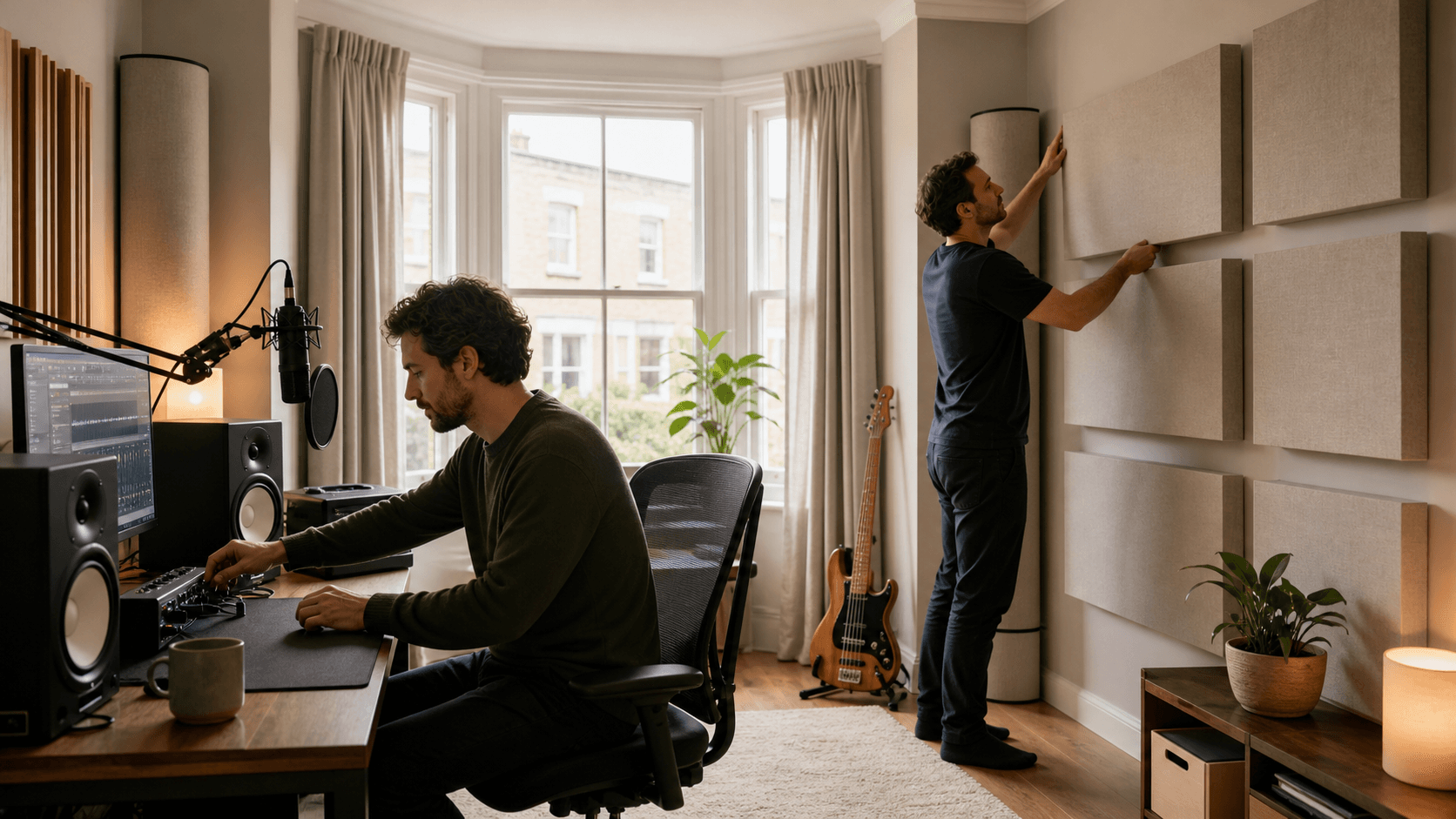
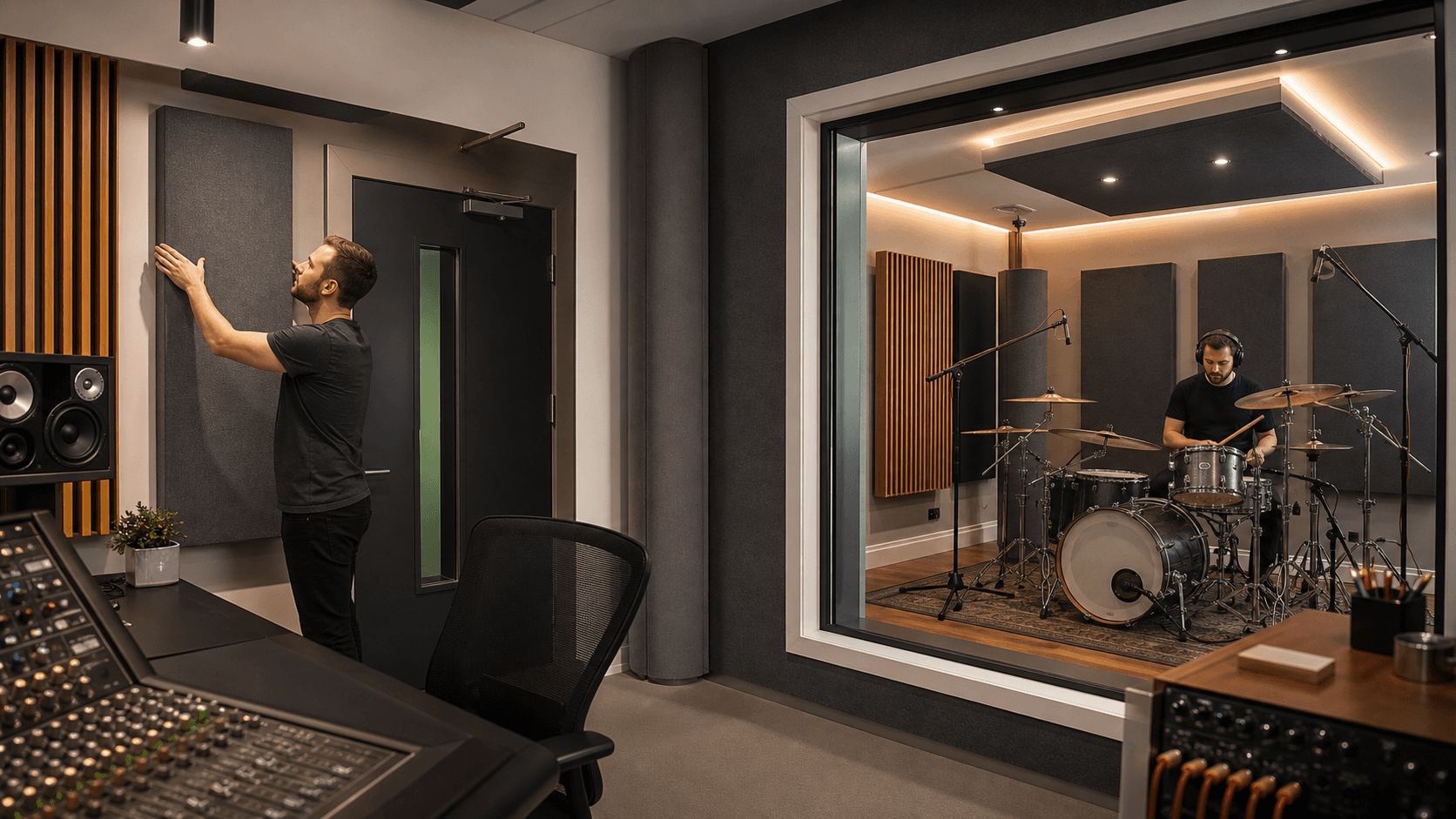
- Wall-mounted acoustic foam panels are great for controlling local echo. These are often placed on side or rear walls across shared working areas.
- Ceiling cloud panels are great for large open rooms or shared desks with hard floors. These catch sound before it bounces back down, making conversations feel more focused.
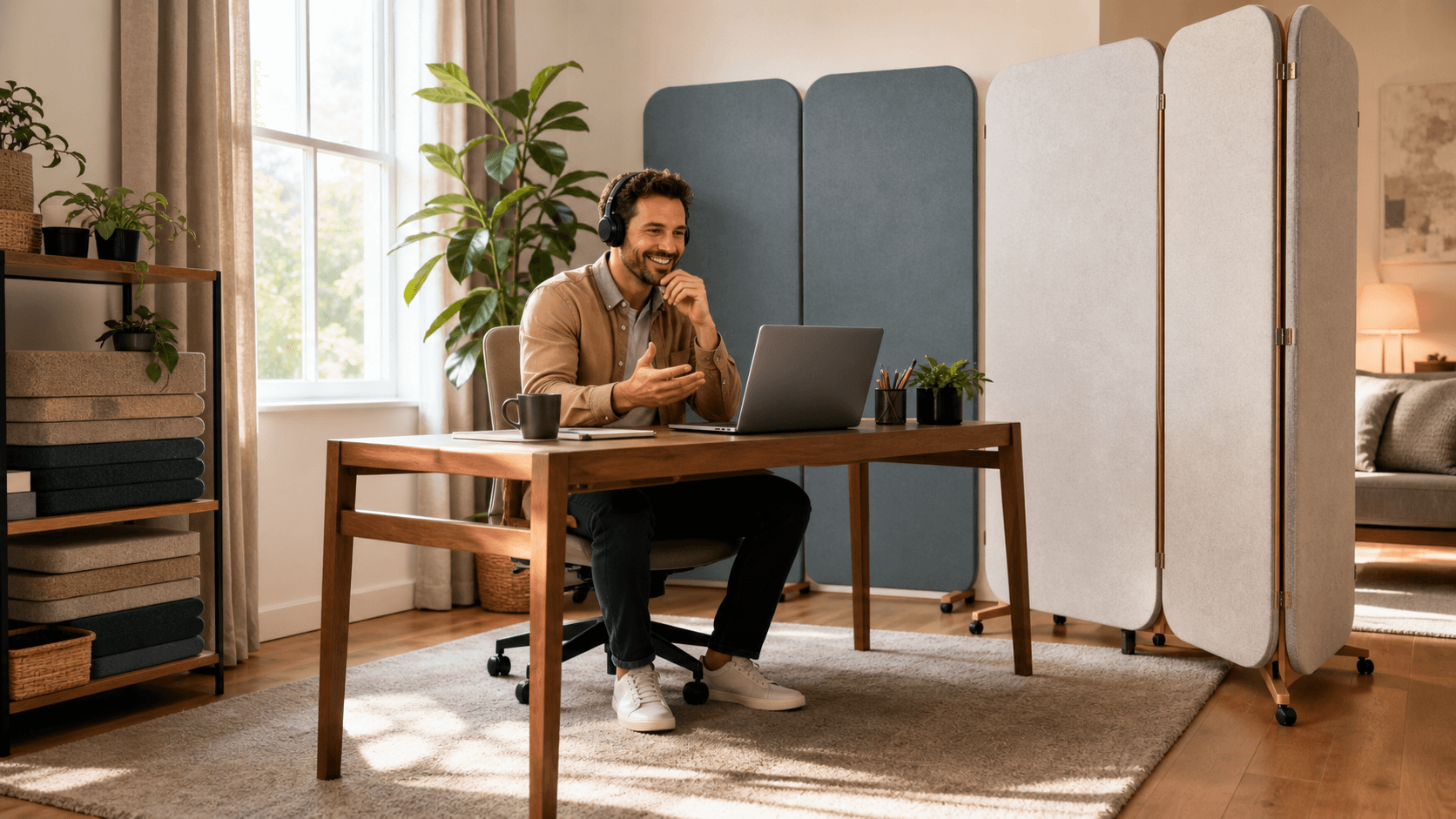
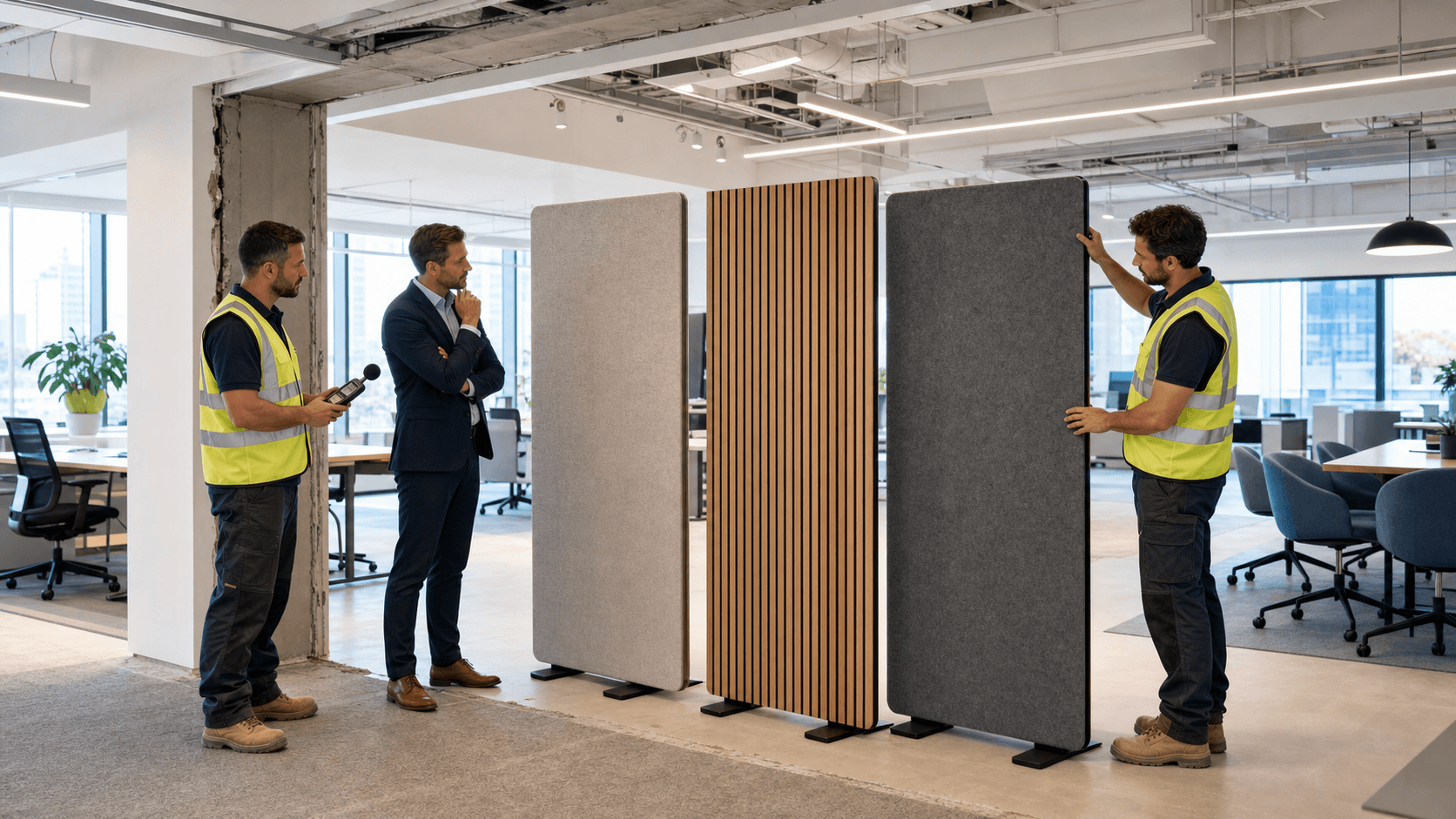
- Free-standing or desk-mounted panels offer flexible support for spaces that shift or get reconfigured often. These are useful for temporary zones or when a full refit is not part of the plan.
Each of these helps to lower how far sound travels and how strongly it bounces. By putting the right panel in the right area, soft spaces feel better to work in without giving up the benefits of open design.
Choosing Panels Based on How the Office is Used
Once the walls are down, everything depends on how the office actually gets used. Some spaces need more quiet than others, while team zones can handle a bit more activity. Thinking through how each zone works can help narrow down what type of office acoustic panels work best.
Here is a quick way to break it down:
- Quiet workstations benefit from ceiling or wall panels that reduce noise from others talking
- Meeting rooms need sound absorption on walls, especially around the center of activity
- Communal areas can be softened with free-standing panels or ceiling panels placed near high-use entry or flow paths
Office layout comes into the mix too. Higher ceilings need different panel placements than lower ones. Equipment such as printers or servers may boost sound in a way that only a thicker panel will calm.
A helpful step is listening for areas where sound seems to bounce more or where voices linger. These weak spots can often be improved with just a few well-chosen panels, rather than a full rebuild.
Sound Improvements That Actually Make Work Easier
When sound is better managed, work feels easier. Fewer distractions, clearer calls, and less background noise can all be felt by teams throughout the day. Open layouts can stay social and connected without becoming too chaotic.
Well-placed acoustic panels will not make a space silent. Instead, they help guide how sound works across the room. This makes everything from casual chats to focused solo work more comfortable.
The key is recognising that improved sound is not only about clarity. It is also about keeping that calm, balanced feel, so people can stay in control of their own workspace. A good setup gives space for quiet without chasing silence.
Better Sound, Better Focus
Removing internal walls can help spaces feel more open and connected, making the office seem flexible and modern. But without some way to shape the sound, small noises start to stand out more than they should.
Office acoustic panels help bring balance back to the room without needing to build new walls again. They work behind the scenes, softening sharp noise and giving each part of the office its own audio space. When every area supports the focus and comfort of the people using it, it is easier to stay on track, think clearly, and enjoy where you work. Most of our office acoustic panels are made to order, with typical lead times of around two to three weeks, and are available in a wide palette of up to 31 colours, so they can blend into existing designs while improving how the space sounds.
Thinking about how your workspace sounds is just as important as how it looks. At Advanced Acoustics, we're here to help you reduce distractions and bring clarity to your office environment. Explore tailored office acoustic solutions that make open-plan layouts feel calm and productive. Let us help you create a smarter, quieter space where your team can truly thrive.