Transforming a Spare Room Into a Serious Studio
Good studio acoustics in a small spare room can make the difference between mixes that sound clear everywhere and mixes that only sound good in one spot. When the room is working for you, it gets easier to judge vocals, bass and spoken word, even at low volume. When the room is working against you, everything feels muddy or harsh, no matter how expensive your gear is.
Across the UK, many of us are trying to record and mix in boxy little bedrooms, loft spaces and spare rooms with thin walls and noisy neighbours. As the evenings get darker and we spend more time indoors, those spaces suddenly become our main creative world. Autumn and winter are a great time to sort the room out so you can enjoy long recording sessions without fighting the sound.
At Advanced Acoustics, we focus on making acoustic treatment and soundproofing that actually suits these compact domestic rooms. Let us walk through how to get the most from a small UK spare room and turn it into a studio you can trust.
Understanding Studio Acoustics in Small Rooms
Small spare rooms come with some common sound problems:
- Flutter echo from bare, parallel walls
- Boxy or boomy tone because the room dimensions are short
- Strong reflections off nearby walls, desk and ceiling that blur the stereo image
It also helps to split two ideas that often get mixed up: soundproofing and acoustic treatment. Soundproofing is about keeping sound in or out, so that usually means adding mass and isolation so noise does not pass through walls, ceilings or floors as easily. Acoustic treatment is about what happens to the sound inside the room itself, and that is where absorption and diffusion come in.
Small rooms are less forgiving because the walls are close, so reflections come back to your ears very quickly. Bass builds up in corners and along walls, so kicks and low notes can feel huge in one spot and thin in another. That affects:
- Mixing music and needing low end to translate
- Recording podcasts or voiceovers with a clean, even tone
- Tracking vocals without boxy room sound
The three ideas to keep in mind as we go are reflection control, bass management and keeping the room as neutral as you can.
Planning Your Studio Layout Before You Treat Anything
Before you put anything on the walls, it helps to plan where you and your speakers will sit. A good starting point in a typical UK spare room is to place the desk along the shorter wall, facing into the length of the room. Try to sit roughly in the centre of that wall, not pushed into a corner or tight up against a radiator.
A few layout tips that work well:
- Leave some space between the speakers and the front wall
- Keep the listening position away from the exact centre of the room length
- Avoid having your back right against the rear wall
Furniture can actually help your studio acoustics if you think about it. A filled bookcase at the back of the room can break up reflections a bit like a crude diffuser. A small sofa or daybed can soak up some low mids and make the space more comfortable for longer sessions. Try to keep big reflective surfaces like bare desks, big mirrors or uncovered windows from being the first thing sound hits.
UK spare rooms are often awkward: sloped ceilings, chimney breasts, alcoves, built-in wardrobes. These quirks can work in your favour if you plan around them. Think about where a guest bed might go, how you access storage and how often the room needs to switch roles. Once you know where you will sit, mark that listening position and likely speaker spots. That makes it much easier to place acoustic products so they act exactly where they are most helpful.
Essential Acoustic Treatment for Compact Studios
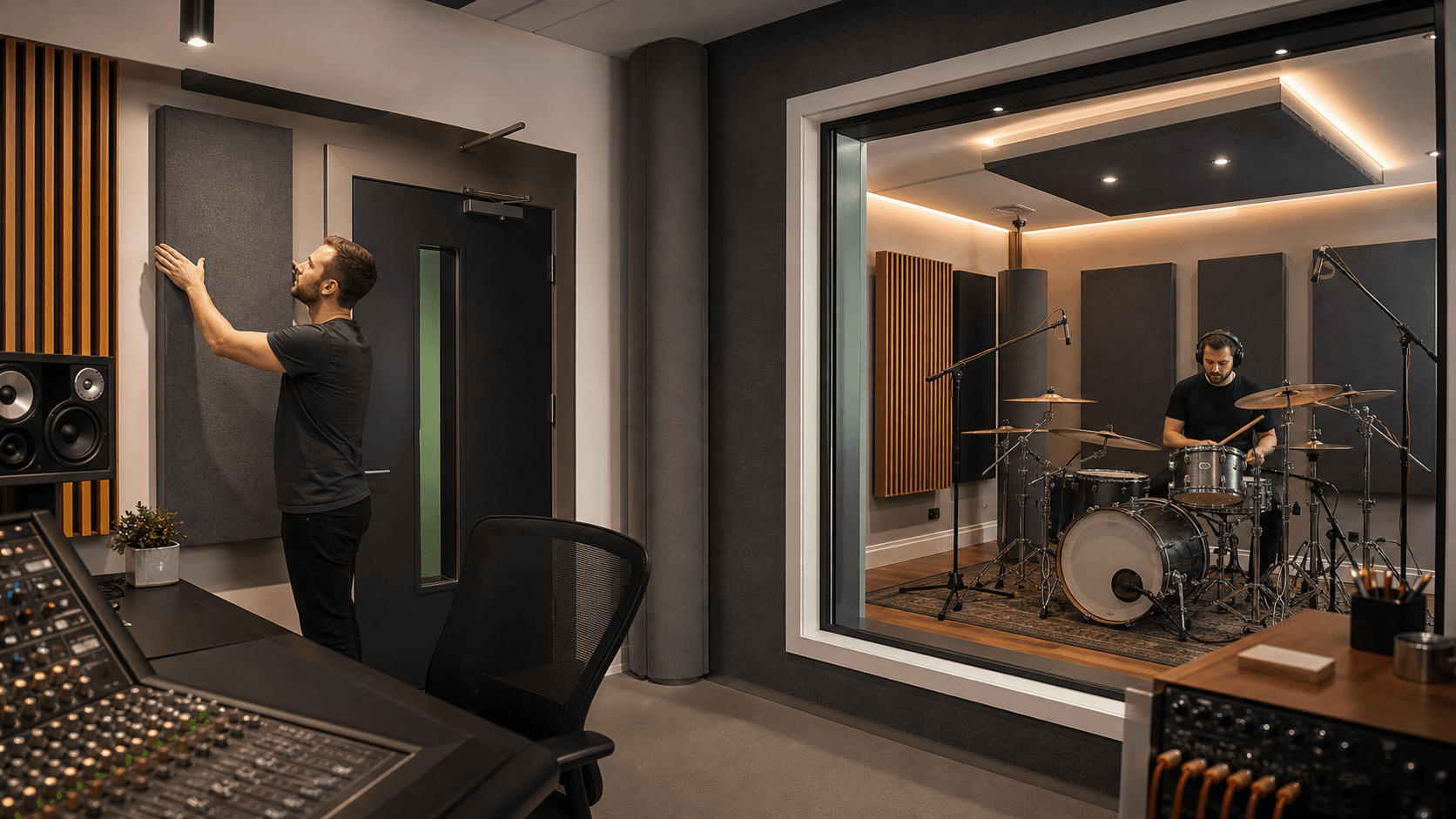
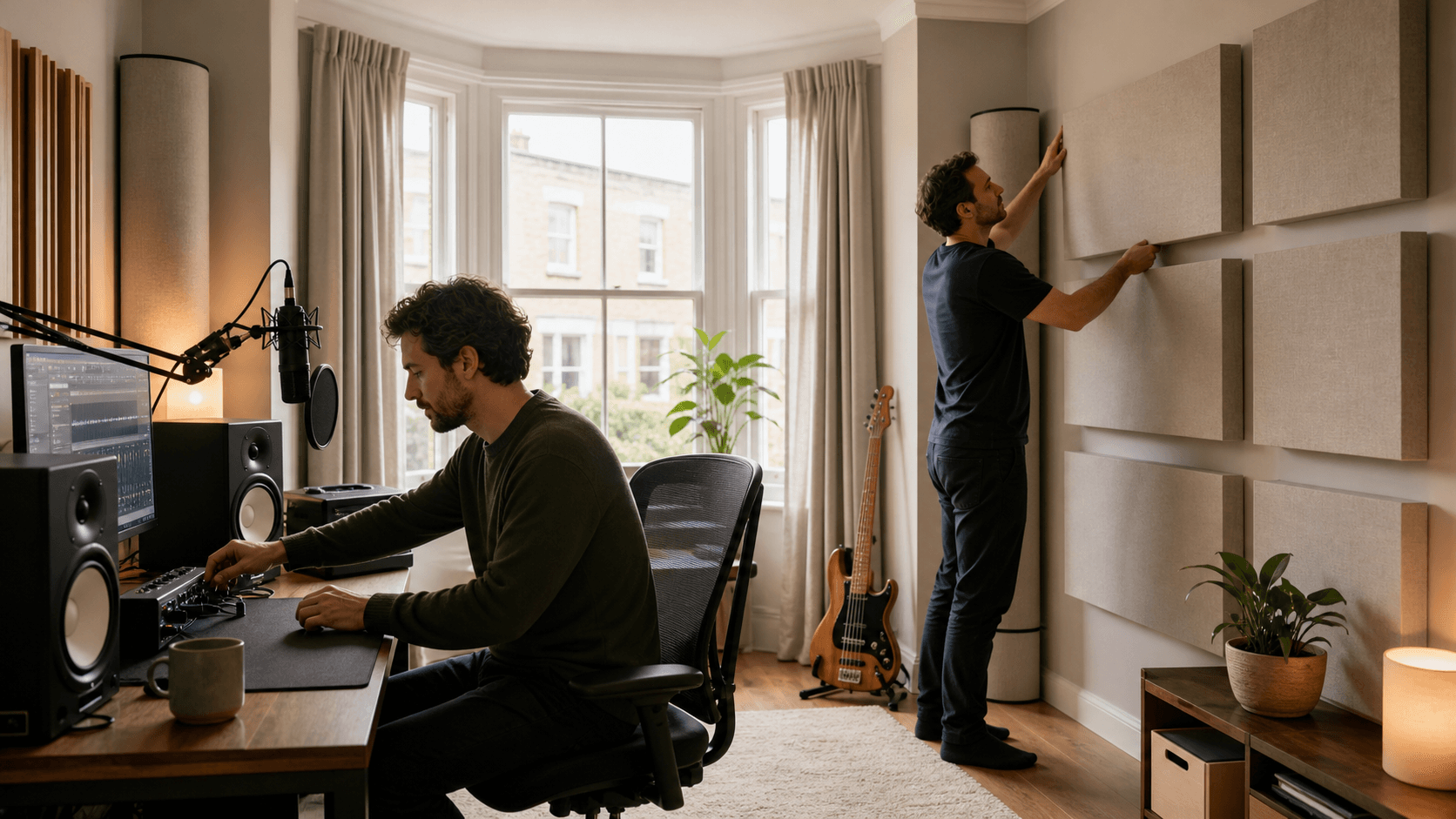
For small studios, there is a simple, effective treatment plan that suits most spare rooms. It starts with broadband wall panels at the first reflection points. These are the spots on the side walls where sound from your speakers bounces straight to your ears. Panels there absorb those early reflections, which sharpens the stereo image and reduces comb filtering.
Next, a cloud of panels or acoustic foam on the ceiling above the listening position helps control vertical reflections. That can make the sound feel more focused and less splashy, especially in rooms with low ceilings.
Then we come to bass traps, which are very hard to skip in tiny rooms. Low-frequency control is what lets you judge kick and bass balance without guessing. Thicker corner traps, placed from floor to ceiling where possible, work far better than thin foam stuck flat on the wall. They help smooth out peaks and dips so the low end feels more even across different notes.
When you are worried about the room looking cramped, you can:
- Use slimline panels where space is tight
- Stick to neutral or soft fabric colours that suit a bedroom or office
- Keep the layout visually balanced so the room still feels calm
At Advanced Acoustics we make UK-produced acoustic foam, panels and bass traps that are designed to work across a broad range of frequencies, which is exactly what these small spaces need.
Smart Soundproofing Strategies for Terraced and Flat Living
Many of us live in terraces, semis or flats, with a spare room on a party wall or above a neighbour. That can make late-night creativity feel stressful. While full studio isolation might not be realistic in a lived-in home, there are focused steps that can help a lot.
You can think about soundproofing in layers:
- Improve the door with better seals and a solid core if possible
- Treat the main shared wall with an isolation layer or system, not just thin foam
- Look at floors and ceilings if noise seems to come from above or below
Mass loaded systems and decoupled layers help reduce how much sound passes through structure. Pairing that with acoustic treatment inside the room gives both cleaner monitoring and better control of what leaks out.
As the weather turns colder and we shut windows more often, outside noise tends to reduce slightly, which can make every upgrade inside feel more noticeable. Autumn can be a good time to plan soundproofing changes before winter projects really start.
Fine-Tuning Studio Acoustics with Measurement and Ears
Once treatment and any soundproofing are in place, the room will already be much easier to work in. The next step is fine-tuning. Simple tests tell you a lot. A sharp handclap can reveal flutter echo that still needs treatment. Playing a few favourite, well-mixed tracks shows how your room handles bass, vocals and stereo width.
Small changes can give big wins:
- Slide a panel along the wall to catch a stubborn reflection
- Add an extra bass trap to a problem corner
- Move your desk a few centimetres to shift a room mode
Set up a short listening routine with the same reference tracks each time. Check mixes both on your speakers and on headphones you know well. Over time you will learn exactly how your spare room sounds, so you can trust decisions even on long, dark evenings.
If you share room dimensions and photos, we at Advanced Acoustics can give more tailored suggestions on placement and product choice so you get the best from the space.
Turn Your Spare Room Into a Reliable Creative Space
A small UK spare room can become a serious studio if you get the basics right. Plan the layout, sort your listening position, add focused acoustic treatment for reflections and bass, then apply targeted soundproofing where it matters most. After that, keep tweaking with your ears and simple tests until the room feels dependable.
At Advanced Acoustics we design and manufacture acoustic foam, panels, bass traps and complete soundproofing systems here in the UK, all with compact home studios firmly in mind. When you are ready to bring order to that spare room, you can sketch the space, note wall types and noise sources, then use our support and resources to shape a treatment plan that suits both your sound and your home.
Transform Your Studio Acoustics With Expert Treatment
If you are ready to improve your sound quality, our tailored studio acoustics solutions can help you create a space that truly reflects your work. At Advanced Acoustics, we work with you to identify the right combination of products to suit your room, budget and goals. If you would like specific advice for your project, simply contact us and we will guide you through the next steps.