Turn Any Spare Room Into a Call-Ready Office
Good sound on video calls is not a luxury now; it is part of doing our jobs well. When a room is noisy or echoey, it is harder for others to hear us clearly and it can make us sound less confident than we really are. That is stressful when we are trying to lead a meeting, talk to a manager, or speak with a client.
Home life is not quiet. Kids are off school, neighbours are doing DIY, traffic rumbles past, and many spare rooms have bare walls and hard floors that bounce sound around. As the weather turns colder in the UK, we shut the windows, which cuts some outside noise but makes the echo in the room sound even worse. The good news is there are simple, non-permanent office soundproofing solutions that we can put in place in a spare room, box room, or even a corner of the bedroom, often in less than a weekend.
In this guide, we will look at landlord-friendly ideas that do not need drilling or glue on the walls. We will focus on four pillars that work well together: portable acoustic panels, better microphone technique, quick fixes for doors, windows, and floors, and fast DIY isolation tricks that we can pack away. At Advanced Acoustics, here in the UK, we work with these tools every day, so we will share what tends to give the biggest improvement with the least hassle.
Tame Echo and Reverb with Portable Acoustic Panels
First, it helps to know the difference between soundproofing and acoustic treatment. Soundproofing is about blocking noise getting in or out of a room. Acoustic treatment is about calming the echo and reverb inside the room so voices sound clear and close. On a lot of video calls, the main problem is that the room sounds boomy or hollow, even when outside noise is not that bad.
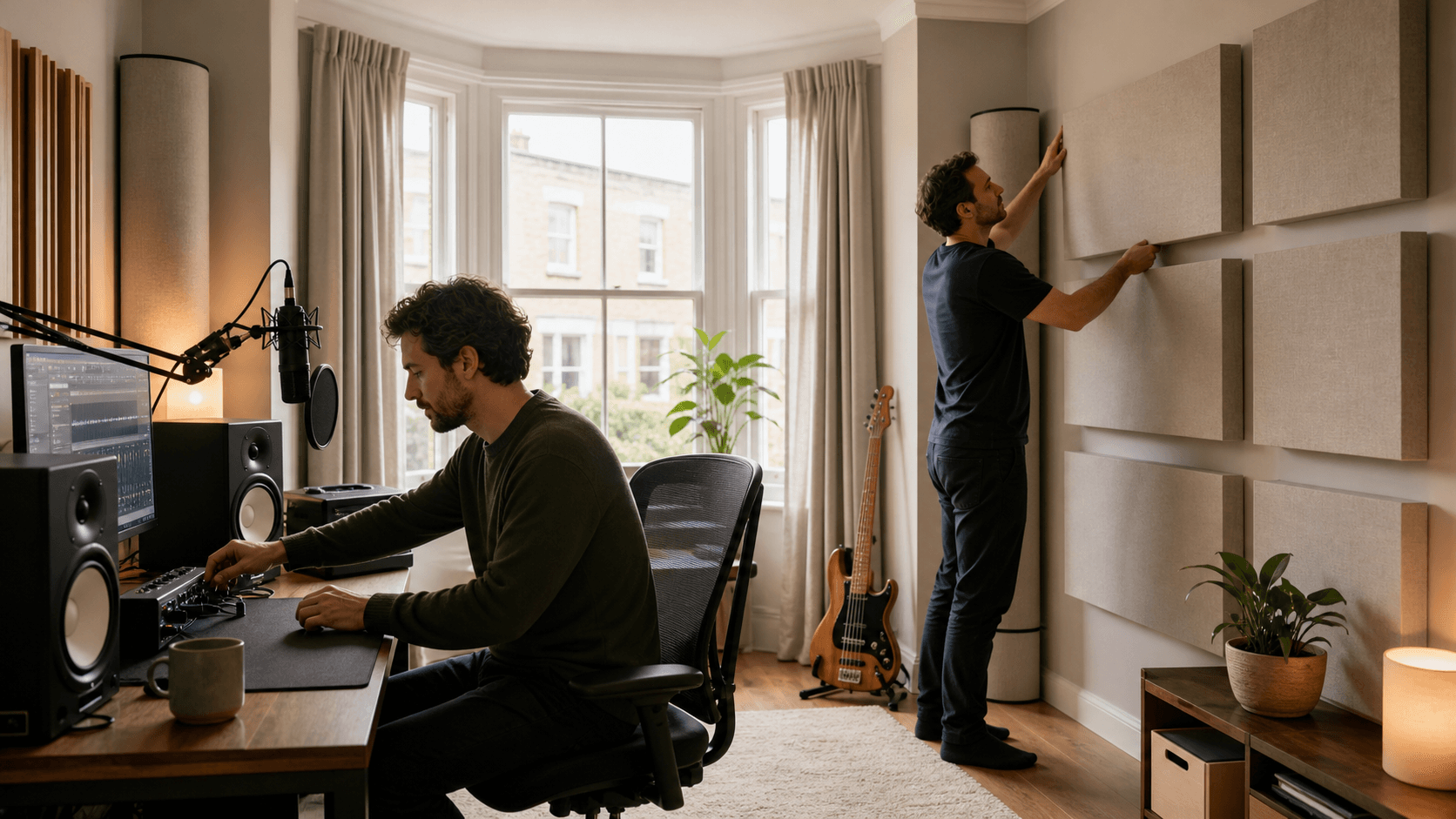
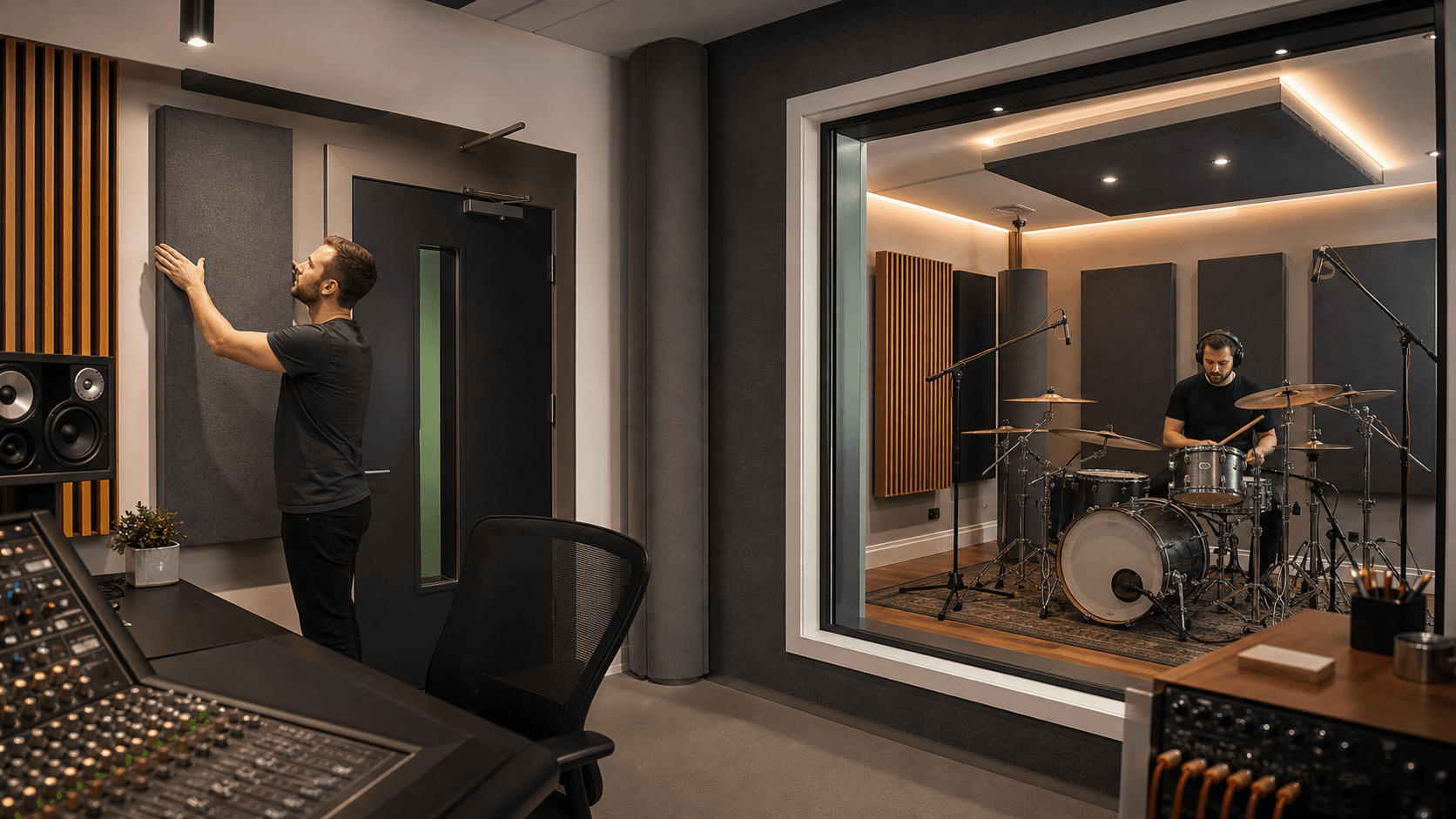
Portable acoustic panels are a simple way to fix this without touching the walls. Freestanding or lean-to panels, foam tiles fixed to temporary boards, and movable bass traps in corners can all soak up reflections that make speech messy. At Advanced Acoustics we make acoustic panels here in the UK with carefully chosen foam and core materials, and the density and thickness of those panels has a big effect on how well they deal with mid and low-mid speech tones.
When placing portable panels, a few simple rules help:
- Put panels behind you as you face the webcam, as well as to each side of where you sit
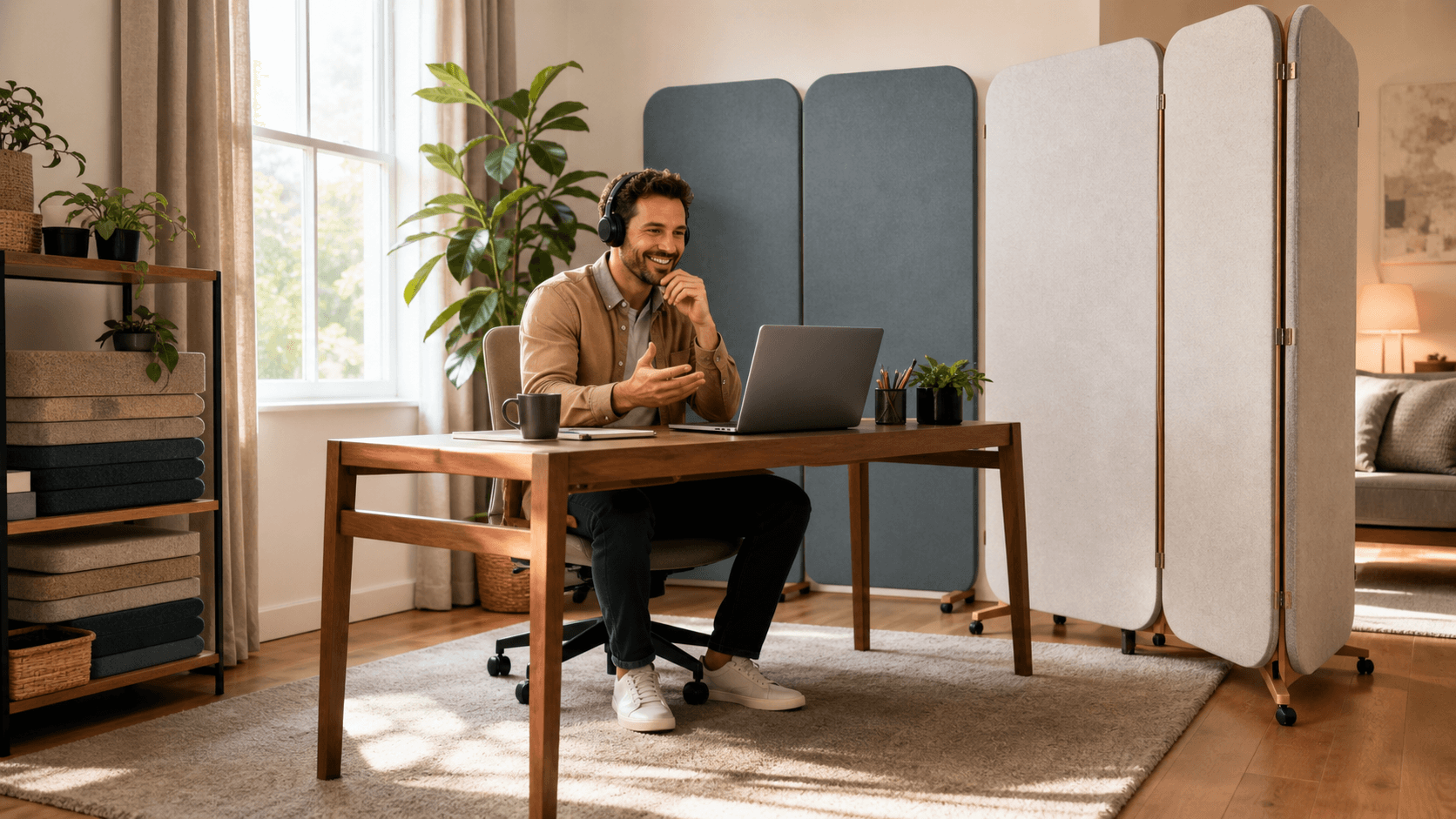
- If you can, create a foldable screen behind the camera so your voice hits treatment, not a bare wall
- Aim to cover the first strong reflection points, which are usually large blank walls, hard floors, and big windows
Hard, shiny surfaces make your room sound like a bathroom, so try to soften them. If you cannot fix anything to the wall, you can:
- Hang panels from a clothes rail and roll it behind your chair
- Use photography stands to hold a couple of panels either side of your desk
- Lean panels against bookcases to break up flat surfaces
- Hook lightweight boards with foam over the top of doors during the day
When work is done, all of this can be stacked behind a sofa or in a cupboard, and your room is back to normal.
Smarter Mic Technique for Cleaner, Quieter Calls
A lot of people think they need a fancy studio to sound clear, but what we do with the microphone matters just as much. Even a modest USB mic can sound very tidy in a lightly treated small room if we use it well.
A few quick rules help here:
- Keep the mic 10 to 20 centimetres from your mouth
- Angle it slightly off to the side to reduce strong breath hits on letters like P and B
- Use a cardioid or supercardioid pickup pattern if you can, pointing the front of the mic at your mouth and the null point towards noisy areas like doors or windows
Small add-ons that do not alter the room are worth using. Clip-on pop filters cut down breath noise. Foam windshields help with both breath and small bumps. A compact desktop reflection filter behind the mic can tame sound that would otherwise bounce off the wall in front of you and head straight back into the microphone.
It is also smart to look at the software settings:
- Turn on noise suppression and echo cancellation in tools like Zoom or Teams, but keep them on the moderate settings
- Avoid stacking lots of effects, as too much processing can make your voice sound thin or watery
- Set the input gain so your loudest speech peaks sit in the healthy range without hitting the red
If others say they can hear fans, traffic, or humming, try turning your mic down a little and moving it closer, instead of turning it up and dragging in more background noise.
Quiet the Biggest Leaks: Doors, Windows and Floors
Most outside noise does not come evenly through the walls; it sneaks in through gaps and light parts of the room. That is why doors, windows, and floors are smart places to focus when we want better office soundproofing solutions without building work.
For doors, quick and reversible options include:
- Adhesive or clip-on rubber seals around the frame to close up gaps
- Draught excluder brush strips at the bottom to cut air and noise leaks
- A heavy fabric draught stopper laid along the threshold while you work
- A thick curtain or portable acoustic panel hung behind the door to add mass and absorption
Windows can be a big source of traffic noise, wind and rain sounds, especially in wetter, darker months. Helpful ideas that do not change the structure are:
- Compression-fit acoustic or draught seals that sit between the frame and sash
- Thermal or acoustic blackout curtains that cover the whole reveal, not just the glass
- Removable secondary glazing sheets or film that can be clipped or pressed into place when needed
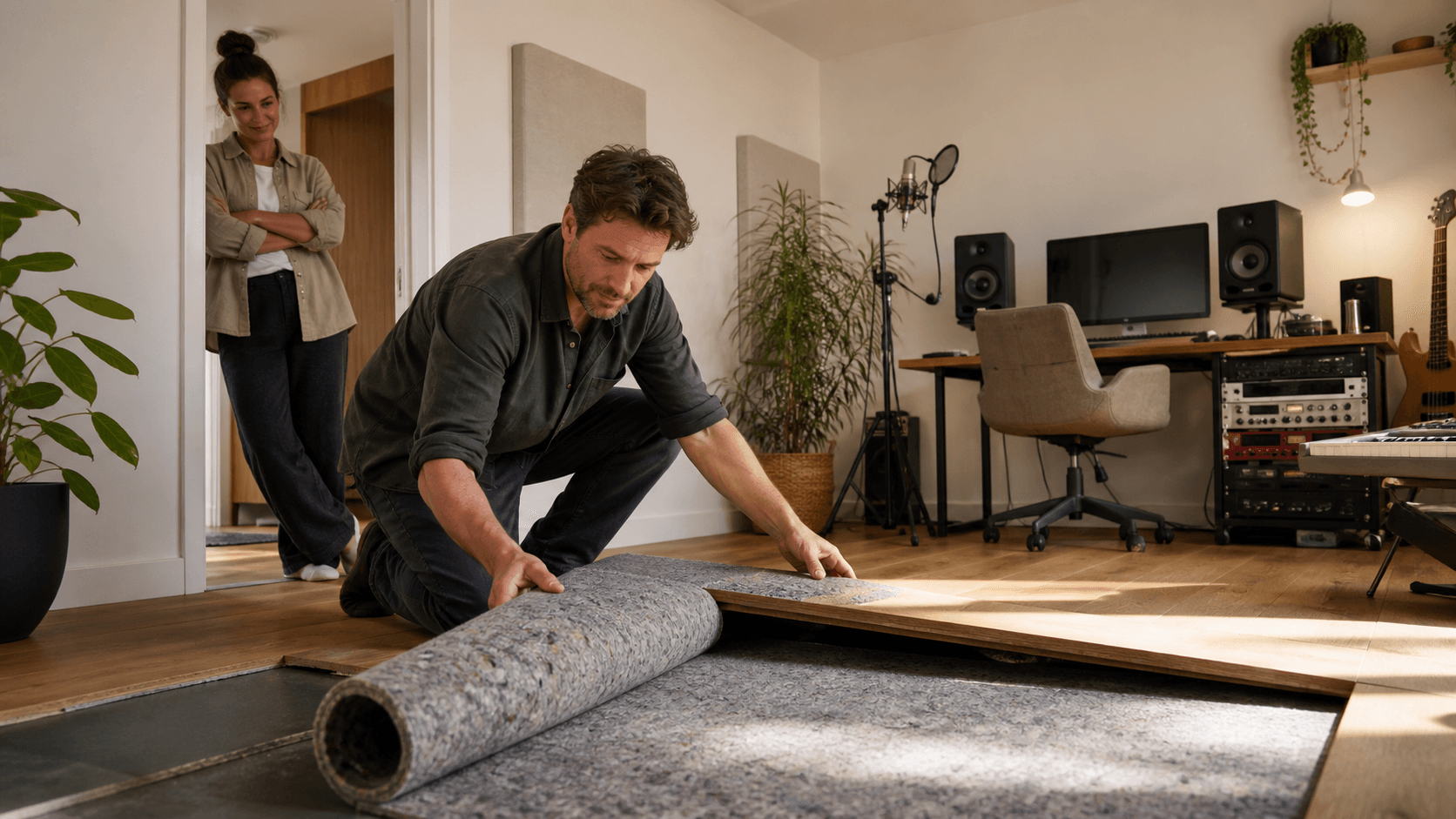
Floors matter too, especially if you have laminate, wood or tile. They reflect sound and can pass impact noise into the structure. Laying down rugs is a low-effort fix:
- Use a thick rug under your desk and chair
- Add a runner along the main walking route into the room
- If possible, use a soft underlay under the main rug for extra absorption
These changes help calm both the sound you hear and the sound your mic picks up.
Fast DIY Isolation Fixes You Can Pack Away
Isolation is slightly different to treatment. Here we are trying to stop vibrations travelling through solid objects like desks, stands and floors. This matters for low rumbles and thumps that can ruin an otherwise clear sound.
Anti-vibration pads or isolation feet are a quick win. Putting them under mic stands, studio monitor stands, desktop speaker stands, or even under the legs of a light desk can cut down how much keyboard taps, mouse clicks, chair movements and nearby footsteps travel into the mic. It will not make the room silent, but it can remove some of the dull thuds and desk noise that distract people on calls.
For renters who cannot build anything in, a small, portable sound nook can work well:
- A foldable frame with acoustic blankets that stands behind and beside you
- A corner office made from freestanding baffles that you set up each morning
- A wardrobe or alcove temporarily lined with foam tiles mounted on removable boards made from light sheet material
At Advanced Acoustics we supply acoustic panels, foam tiles and bass traps that suit these kinds of setups, and because they are not fixed to the building, they are easy to move when you change rooms or move house. Storage can be simple too. Panels can stack behind a sofa, flat boards can slide under a bed, and smaller tiles or pads can live in an ottoman or cupboard between working days.
Build Your Call-Ready Kit and Upgrade Over Time
The best approach is not to change everything at once. Start with a simple call-ready kit for your home office and build it up as you learn what your room needs most. A basic starter setup might include:
- One or two portable acoustic panels placed behind or beside you
- A decent cardioid microphone with a pop filter and foam cover
- Simple door and window seals plus a draught stopper
- A thick rug under your desk and chair area
- A few isolation pads under your mic stand or speakers
Spend a little time on a quiet afternoon doing a test recording. Walk around the room, speak at your normal level, type on the keyboard, roll your chair, and listen back. Ask yourself: is the main problem echo and room tone, outside noise coming through gaps, or desk thumps and rumbles?
We usually find it makes sense to tackle echo first with portable panels, then close up door and window gaps, and finally fine-tune microphone setup and isolation. That way each pound and each bit of effort works harder. At Advanced Acoustics we focus on UK-made acoustic treatment and soundproofing products that fit this kind of flexible, non-permanent setup, and we are always happy to share advice so you can put together a home office that sounds as professional as it looks when the busy meeting season hits.
Get Started With Your Project Today
If noise is affecting productivity or privacy in your workplace, our tailored office soundproofing solutions can help you create a calmer, more focused environment. At Advanced Acoustics we work with you to understand your space, your budget and the performance you need before recommending the right approach. Speak to our team to discuss your project in detail or request a quotation via our contact page today.