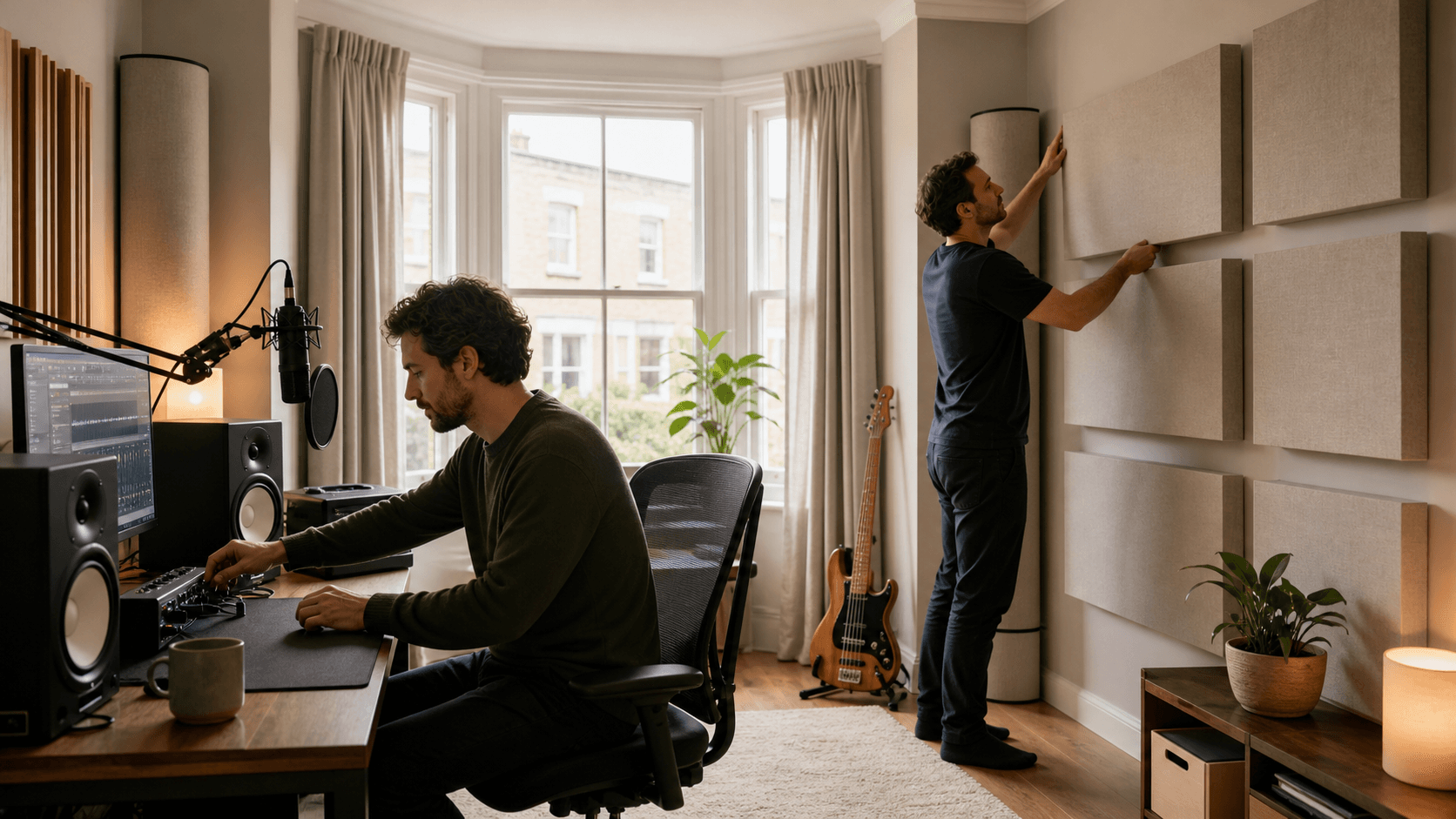
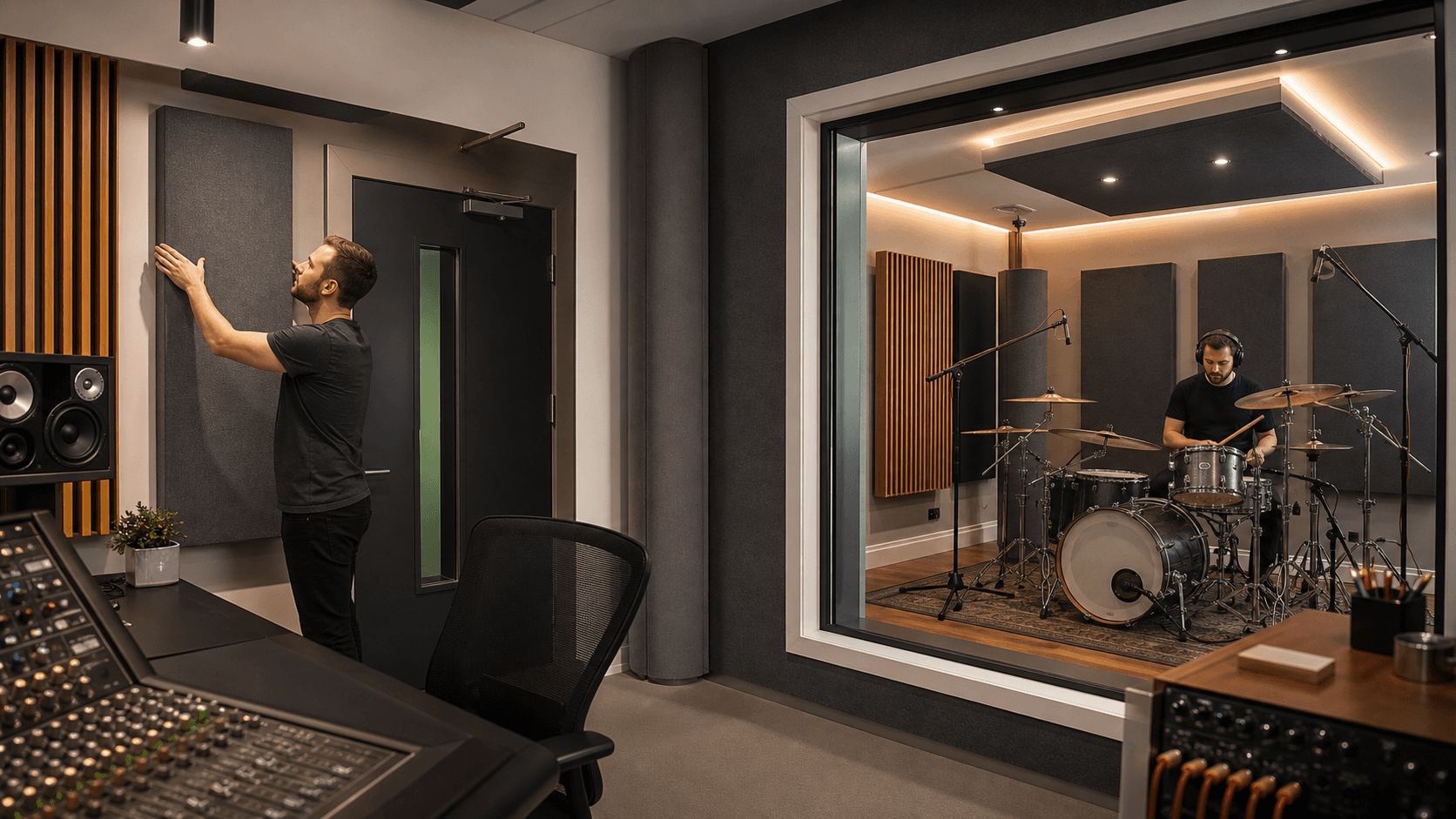
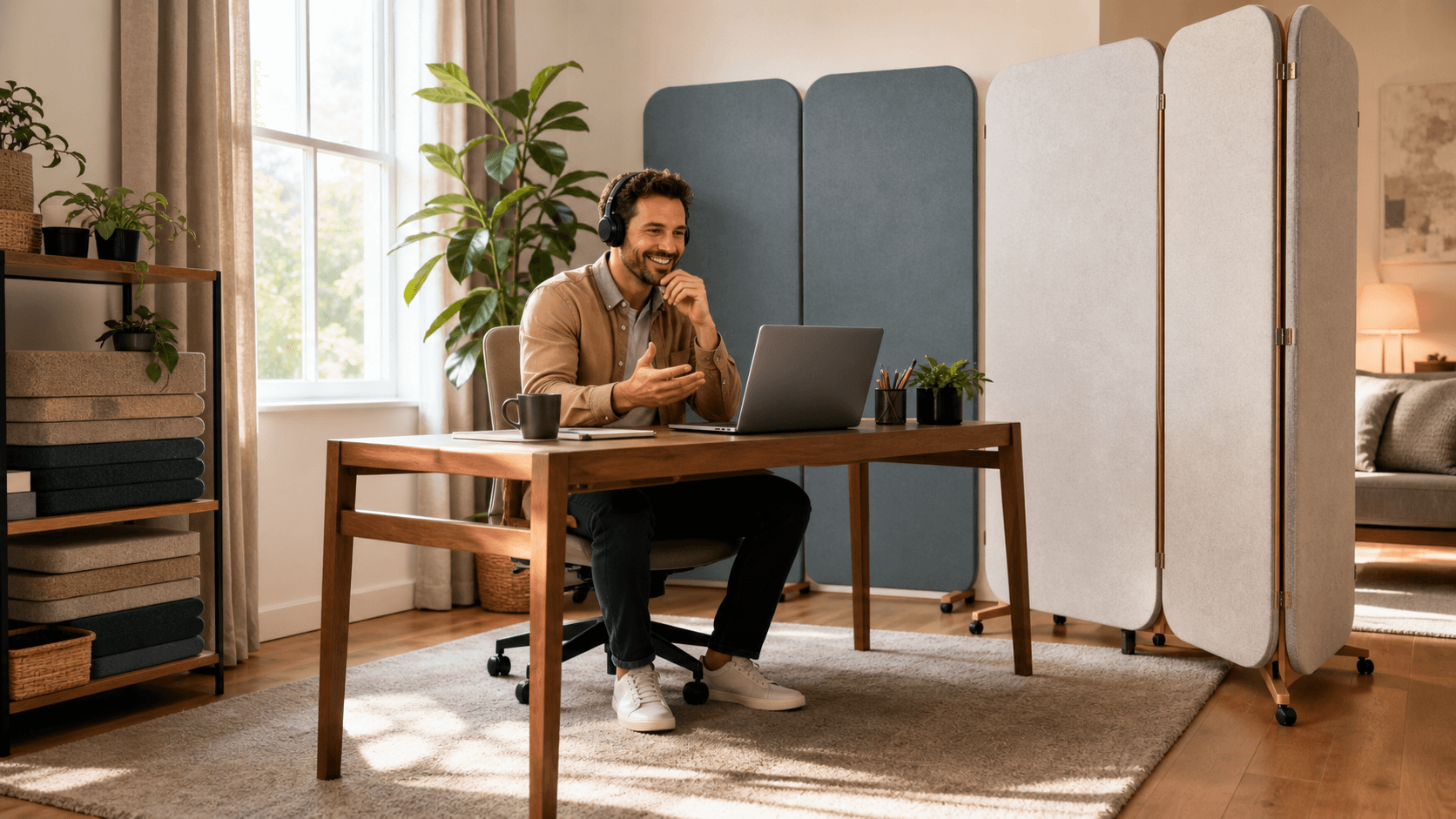
Noise bleeding through walls is not just annoying; it is tiring. Many people try to fix it by adding extra plasterboard, only to find the sound still coming through. If you are about to build a studio, kit out a home cinema or update a busy office, it helps to understand why that often happens and what actually works better.
In this guide, we will talk about why thick soundproof walls are not always the smartest answer, how a soundproofing mat works, and when it can outperform extra plasterboard. We will keep things simple, practical and focused on real rooms like terraces, semis and flats across the UK.
Stop Wasting Space on Thick Soundproof Walls
A common pattern goes like this: noise from next door, from the stairwell or from the room with the big TV gets on your nerves. The usual advice is to add more plasterboard, maybe even two layers, and hope for peace. After all, more board must mean more soundproofing, right?
The truth is a bit different. Good sound isolation is about mass and damping working together, not just stacking up extra layers of the same material. If you only keep adding standard plasterboard to a stud wall, you may gain a little, but you still let a lot of vibration pass straight through.
A properly chosen soundproofing mat can change that. It adds serious mass and damping in a thin layer, so you can:
- Keep more floor space
- Avoid major disruption to the room
- Target the wall that is actually causing the problem
When space is tight, as it often is in UK terraces and small box rooms, that can make all the difference.
Why Traditional Plasterboard Upgrades Fall Short
Basic upgrades like double boarding or using thicker boards focus almost only on weight. They can help a bit with mid and high frequencies, like some speech and TV sound, but they do not deal well with low rumbles from subs, music or traffic.
There are a few reasons these upgrades disappoint:
- They add mass but very little damping
- They leave flanking paths, like sound travelling through side walls, floors and ceilings
- The original studs and fixings still carry vibration from one side of the wall to the other
On top of that, there are practical headaches. Extra plasterboard means a thicker wall, which means:
- Lost floor area along every treated wall
- Moving sockets, skirtings and sometimes radiators
- More mess, more dust and longer downtime
For homes and offices that are already lived in or in daily use, that level of disruption is hard to justify. Many people expect near silence after all that work, then find they can still hear next door talking or the TV in the room above. The wall has changed, but the overall system was not really tuned for soundproofing.
How Soundproofing Mats Turn Walls Into Noise Barriers
A soundproofing mat is a high-density, flexible acoustic sheet that is fitted as part of the wall or ceiling build-up. Instead of being a stiff, bulky board, it is heavy and pliable, so it can absorb and slow down vibration as sound tries to pass through the structure.
The key benefits of a soundproofing mat are:
- High mass in a slim thickness
- Flexible, so it helps to damp vibration, not just block it
- Effective across a wide range of frequencies that matter in real homes and studios
When you fix a soundproofing mat over existing plasterboard, then finish with another board layer, you create a more complex barrier. The different materials and densities make it much harder for sound energy to move straight through.
Compared with simply adding another plasterboard sheet, a mat system usually:
- Takes up less room depth
- Gives better performance for the same added thickness
- Fits more easily into retrofit projects where you cannot strip back to bare studs
On common party walls between flats or semis, combining a soundproofing mat with plasterboard and suitable insulation can bring a clear, everyday improvement in how much conversation, TV noise or hallway sound you hear. The wall works as a barrier, not just a heavier version of what was there before.
Choosing the Right Soundproofing Mat for Your Space
Not every wall or room needs the same approach. A party wall in a terraced house has different demands from a plant room, and a small bedroom is not the same as a dedicated studio. Soundproofing mats are flexible enough to fit into many of these situations.
Typical spaces that benefit include:
- Separating walls in terraces and semis
- Party walls and floors in flats
- Home cinema rooms and music studios
- Office meeting rooms and call rooms
- Noisy corridors or plant rooms in commercial buildings
When you are choosing a soundproofing mat system, it helps to think about:
- Density and thickness, how much mass can you add without losing too much space?
- Existing wall build-up, is it single board, double board, insulated, on studs or solid?
- Fire performance, to keep the system in line with building requirements
- Compatibility with other tools, like acoustic plasterboard, resilient bars or independent stud frames
In some small rooms, a slim, direct-to-wall mat system over the plasterboard may be ideal. You gain better sound isolation and keep the room size almost the same. In other cases, like serious studios or home cinemas, you might pair soundproofing mats with extra layers, floating walls or other acoustic products to push isolation even further.
The key is to match the mat type and system design to how loud the source is and how quiet you need the receiving room to be. That is where detailed advice and proper planning matter.
Smarter Soundproofing for Autumn Renovation Projects
As the weather cools and evenings draw in, we all spend more time indoors. That is often when noise from neighbours, gaming rooms, kids' bedrooms and TVs starts to bother people more. Windows are shut, heating is on and every sound seems that bit closer.
Soundproofing mats are very well suited to late summer and autumn refurb projects because they:
- Install without major structural changes
- Create far less mess than full wall rebuilds
- Allow you to treat only the walls or ceilings that are actually causing trouble
For landlords preparing properties for winter lets, home workers needing a quieter office, or families trying to keep a cinema room from taking over the whole house, this kind of targeted, low-profile solution can be a smart option.
You do not always need to tear a room back to brick. In many cases, fitting a soundproofing mat system over the existing finish, then re-boarding and decorating, is enough to shift the space from distracting to comfortable.
Upgrade Once, Not Twice
Before you commit to another layer of plasterboard, it is worth pausing and asking what you actually need the wall to do. If the goal is better sound isolation, a soundproofing mat-based approach will often give a stronger result while saving valuable space.
At Advanced Acoustics, based in the UK, we work with studios, offices, home cinemas and everyday homes to build acoustic systems around the right materials, including soundproofing mats, not just more of the same board. A simple plan is to list the loudest rooms, note which walls cause the most trouble and gather a few details about how those walls are built. That way, when you take your next step, you can choose a solution that is designed to solve the noise problem properly the first time, not after a second round of work.
Get Started With Your Project Today
If you are ready to reduce noise and improve comfort, we can help you choose the right soundproofing mat for your space. At Advanced Acoustics we work with homeowners, trades and commercial clients to deliver practical solutions that fit real-world budgets and timelines. Share a few details about your project and we will provide straightforward guidance on the most effective options. If you would like tailored advice or a quotation, please contact us.