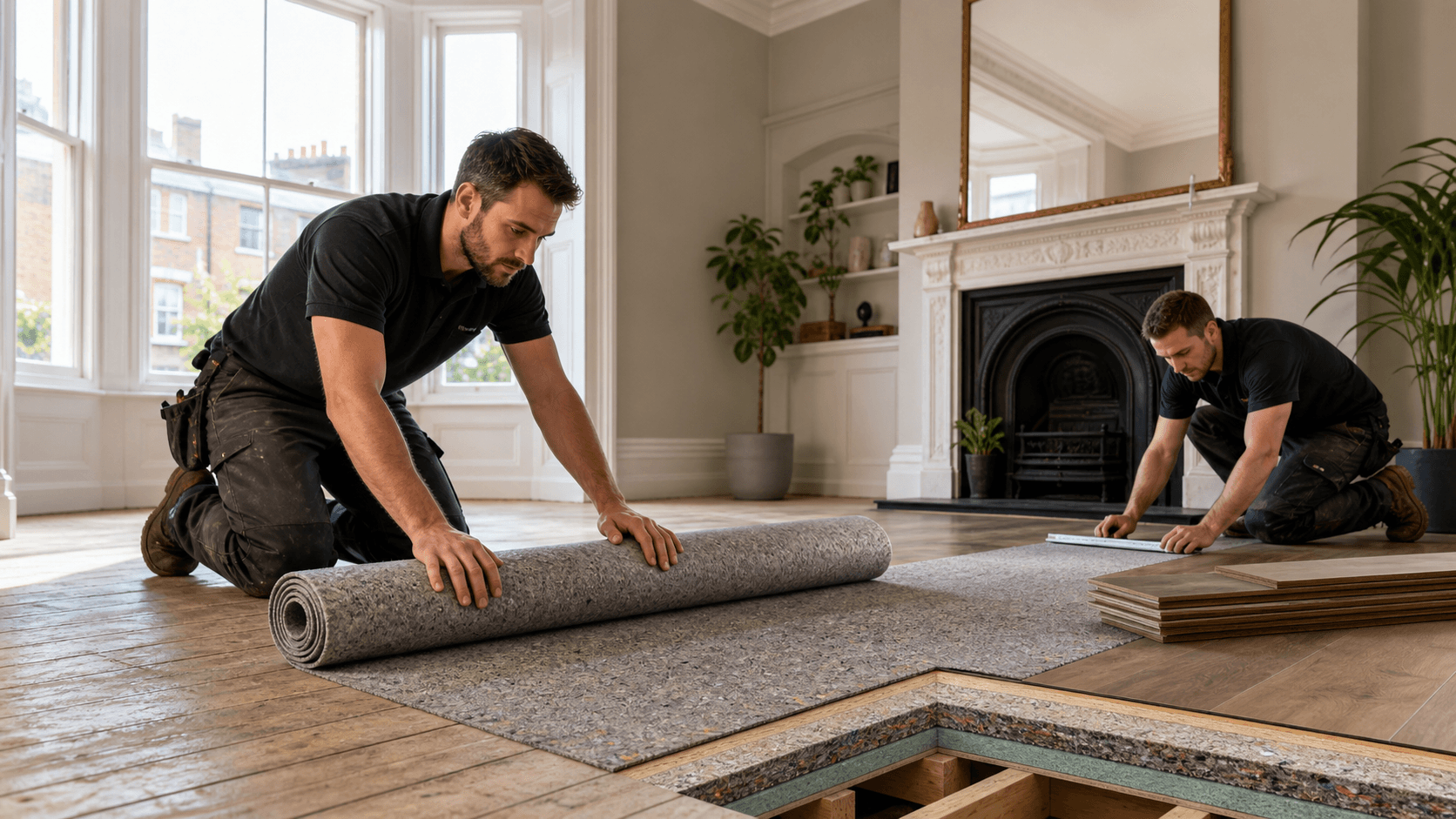
A good home studio needs to sound great and feel good to live in. That can be tricky when the same room has to work as a spare bedroom, office or lounge once the session is over. One of the biggest things that affects both comfort and noise is right under our feet, yet it is often ignored: the floor.
Acoustic underlay is a quiet hero for dual-purpose home studios. It sits out of sight, but it can cut noise travelling to the room below and make the space warmer and calmer to be in, especially as the evenings get darker and colder. In this guide, we will talk through how sound moves through a floor, what different floors need, and how to choose acoustic underlay that keeps neighbours happy without turning your home into a building site.
Create a Quiet Studio Without Losing Liveability
Many of us are turning spare rooms, loft conversions and garden rooms into places where we can record, mix and work. During the day it might be a studio, at night it might go back to being a guest room or family snug. That means any soundproofing has to be discreet, practical and easy to live with.
Floors are often left until last, after speakers, acoustic panels and furniture. But a bare or poorly treated floor can send sound straight through to the space below, especially things like:
- Footsteps and rolling studio chairs
- Pedal taps and drum pedals
- Low frequency build up from monitors and subs
- General movement as people come and go
As the weather in the UK turns cooler and wetter, more people stay indoors with windows closed, so any noise that leaks through the floor becomes more noticeable. Acoustic underlay gives a hidden layer of control and comfort without spoiling the look of your room or taking up much height.
How Sound Travels Through Your Studio Floor
To pick the right acoustic underlay, it helps to know what we are fighting against. There are two main types of noise that travel through a floor.
Airborne noise is sound that moves through the air, like:
- Voices
- Playback from speakers or TV
- Acoustic instruments
Impact noise is created when something hits or shakes the structure, such as:
- Footsteps, especially in shoes
- Dropped items or moving chairs
- Tapping pedals and mic stands
- Kids running and jumping above a ceiling
In many UK homes, especially in terraces and semis, sound also travels by flanking transmission. This is when noise finds side paths through:
- Floor voids and joists
- Shared walls and structural beams
- Gaps around skirting and pipework
A single rug or thicker carpet might make the room feel softer, but it rarely does enough to stop noise travelling through timber joists or concrete slabs. Dual-purpose studios are even more of a challenge, because one moment you want a quiet, controlled space for tracking and mixing, and the next it is a normal living room with chairs being dragged and doors opening and closing.
As we move into damp, windy seasons, people are at home more, windows are shut, and everyone is a little more aware of bumps and thuds from other rooms. That is when a well-designed floor build-up with proper acoustic underlay really starts to earn its place.
Matching Acoustic Underlay to Your Room and Floor
Not all floors behave the same way. In the UK, we see a few common types:
- Suspended timber floors, often in older houses, with floorboards over joists
- Concrete slabs, more typical in newer ground floors and flats
- Floating floors in loft conversions or modern builds, where boards sit on top of insulation
Each one responds differently to acoustic underlay. The main things we think about are:
- Resilience and density, to reduce impact noise from footsteps and movement
- Mass, to help block airborne sound like music and speech
- How these layers work together with existing boards, screeds or coverings
There are also real-world limits. Raise the floor too much and doors might not open, skirting might need refitting and furniture could feel awkward. In rented homes or shared spaces, you may not be able to change the main structure at all.
Some common dual-purpose set-ups and what they might need:
- Spare bedroom studio above a neighbour or another flat, where you need strong impact isolation and good airborne control, usually pointing to a dense acoustic underlay with added mass in the build-up
- Loft studio above children's rooms, where impact noise from chairs, pedals and walking is the main issue, so we focus on resilient layers that decouple movement from the structure
- Garden room used as an office and studio, often with a lightweight floor where both thermal comfort and sound control matter, so an underlay that adds warmth and reduces hollow, drummy sounds works well
Choosing the Right Acoustic Underlay System
Acoustic underlay is not one single product. There are a few main styles, each with its own strengths.
Common options include:
- Dense rubber crumb underlay, good for impact noise and long-term load bearing
- Foam-based resilient layers, often lighter and useful in floating systems
- Combination underlays that include an acoustic layer and a barrier for extra mass
- Special underlays made for laminate, engineered wood, carpet or luxury vinyl tiles
In a studio, the floor has to cope with more than just people walking. We think about:
- Rolling office and studio chairs that can dig into soft layers
- Keyboard stands, drum hardware and speaker stands that focus weight into small points
- Racks, desks and storage that may sit in one place for a long time
- Pets and general family use, which means the surface covering needs to be hard-wearing
As autumn settles in, there are nice side benefits too. Acoustic underlay can make a room feel warmer, reduce the hard echo of laminate in larger spaces and make long sessions more comfortable underfoot.
To get the promised performance, it is important to treat the floor as a system. That can include:
- Perimeter isolation strips, so the floor does not touch the walls directly
- Careful sealing of gaps and junctions
- Extra layer or layers of boards or overlays on top of the underlay where needed
Even a small rigid contact or open gap can undo a lot of hard work, so the little details matter.
Integrating Underlay with Full Studio Soundproofing
Acoustic underlay works best as part of a complete soundproofing plan. In many homes, that might also involve improving walls, ceilings and doors so the room feels more enclosed and less leaky.
It also helps to be clear on the difference between soundproofing and acoustic treatment. Soundproofing is about keeping sound in or out, which is where acoustic underlay, extra mass and isolation systems come in. Acoustic treatment is about controlling how the sound behaves within the room itself.
For a dual-purpose home studio, we usually want both:
- Acoustic underlay and floor build-ups to reduce noise to neighbours or family members below
- Acoustic panels, bass traps and ceiling treatment to tame reflections and low frequency build up, so what you hear from your monitors is honest and controlled
The layout of the room matters too. Some simple planning can help:
- Place the loudest activities on the best isolated part of the floor
- Keep heavy gear and stands away from rigid contact points like structural columns or hard wall junctions
- Leave clear areas that can stay flexible for non studio use, like a sofa bed or workout space
When the floor, walls and ceiling all work together, your studio can feel calm and focused during the day, then relaxed and homely once work is done.
Plan Your Autumn Studio Upgrade with Confidence
The shift into cooler months is a good time to improve a home studio. There is less temptation to be outside, and you feel the benefits of a quieter, warmer floor right away when you close the windows and settle in for longer sessions.
A simple way to think about it is:
- Look at your current floor and note what type it is
- Be honest about where noise goes and who it bothers
- Choose an acoustic underlay system that suits the structure and the way you use the room
- Add matching soundproofing and acoustic treatment so the whole space works as one
At Advanced Acoustics in the UK, we spend our days helping people get this balance right, from spare bedrooms to loft and garden studios. When acoustic underlay is chosen and installed with care, your studio feels more solid, your mixes are easier to trust, and the rest of the household can relax downstairs without hearing every step from above.
Get Started With Your Project Today
If you are ready to improve sound control in your space, we can help you choose the right acoustic underlay for your project. At Advanced Acoustics, we work with homeowners, contractors and businesses to provide practical, reliable solutions that fit real-world demands. Tell us about your plans and we will recommend products and installation guidance tailored to your needs, large or small. If you would like personalised advice before you order, simply contact us and we will be happy to help.