Quiet Timber Floors for Warmer, Cosier Homes
Noise from timber floors feels louder when the nights get longer and we are all tucked up at home. Heating is on, windows are shut, and every footstep across a creaky floor suddenly stands out. If you live in a period home, a conversion, or an upstairs flat, the sound of people moving around can travel very easily.
This is where the right acoustic underlay starts to earn its keep. A good system will cut down impact noise from footsteps and moving furniture, make rooms feel calmer, and add a sense of quality to any winter refurb. In this guide, we will walk through how timber floors actually carry sound, what makes acoustic underlay work, and how to pick a product that does more than just feel soft underfoot. We work with acoustic treatment and soundproofing every day, so we will keep things clear and practical.
How Noise Really Travels Through UK Timber Floors
Many older UK homes share a similar floor build-up. You often have:
- Floorboards or chipboard laid across timber joists
- Gaps between boards, gaps around pipes, gaps at the edges
- Little or no insulation in the void between floors
- Party walls and ceilings that link spaces together
In that kind of structure, sound has plenty of paths to travel. It helps to split noise into two types:
- Impact noise: footsteps, dropped toys, chairs scraping, pets running around
- Airborne noise: voices, TV, music, laughter
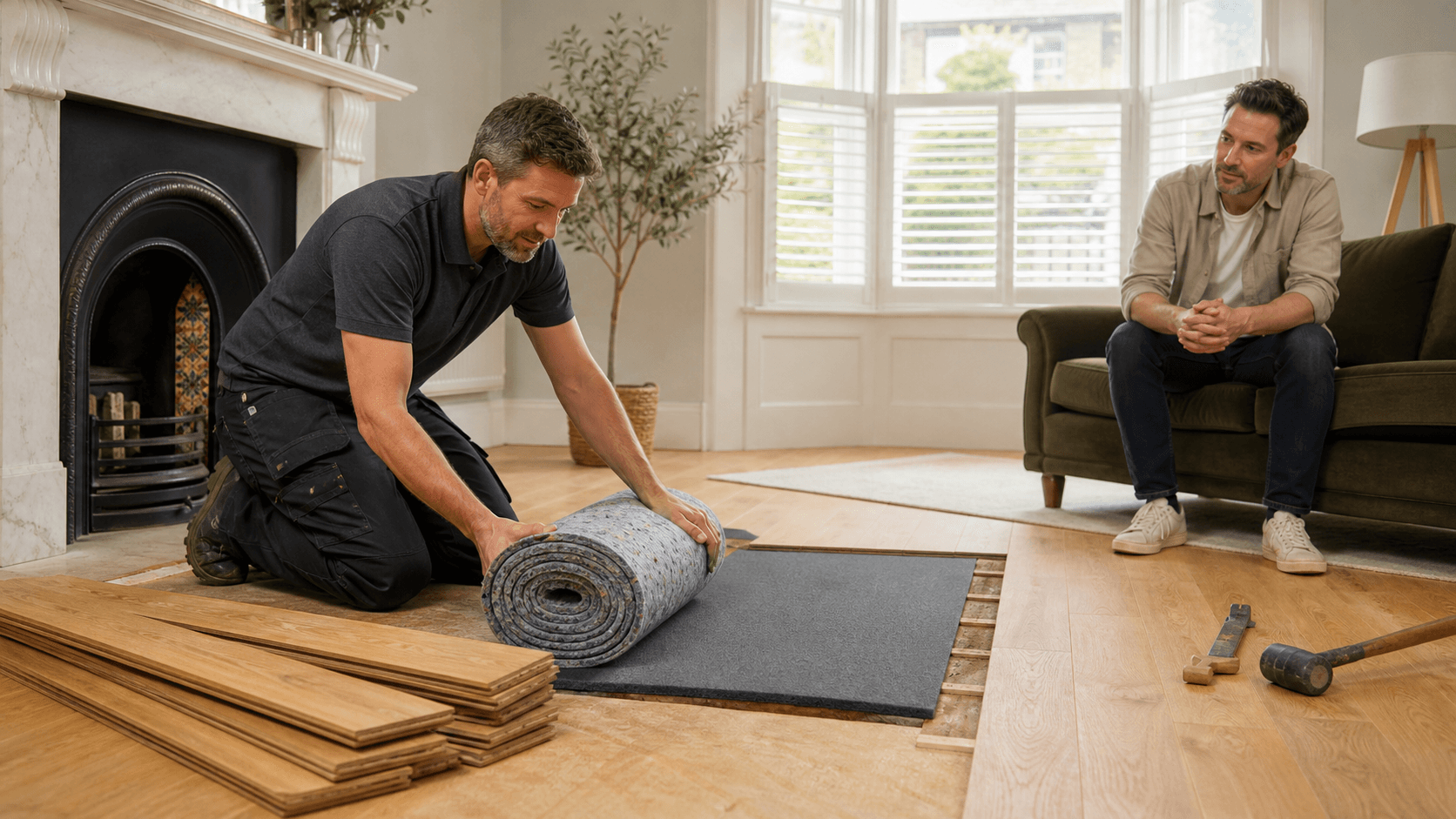
Acoustic underlay mainly targets impact noise. When a heel hits a bare timber floor, the energy passes straight into the boards, into the joists, and into the ceiling below. A good underlay layer acts like a controlled cushion, soaking up some of that energy before it reaches the structure.
There is also flanking transmission. Sound does not only go straight through the floor. It can run along joists into nearby rooms, pass through gaps at skirting, travel down party walls, and even come through recessed lights below. So underlay alone will not create total silence, but it is a key part of a wider build-up that can be tailored to each property.
What Makes an Acoustic Underlay Effective
Not all soft layers are acoustic underlay. True acoustic underlay is designed for sound performance, not just comfort. It needs the right mix of density and resilience so that it compresses under load but springs back instead of flattening over time.
Things to look at include:
- Density and resilience: too soft and you can bottom out, too hard and you barely absorb impact
- Thickness versus performance: thicker is not always better, the material itself matters
- Tested ratings: lab values show how much impact sound reduction a product reached in a controlled build-up
In the UK market you will usually see products based on materials such as:
- Rubber and rubber foam composites
- High-performance foams
- Fibre and recycled blends
Cheap, ultra-light foams can feel nice at first but often do very little for sound. They may collapse under furniture, lose resilience, and give almost no real reduction in the thud of footsteps. Higher quality materials keep their shape, share loads properly, and stay effective for longer.
Matching Acoustic Underlay to Your Floor Finish
Your final floor finish has a big effect on how you should choose underlay.
For carpeted floors, acoustic underlay usually sits under a standard carpet underlay or in place of it. You can often get the best results by combining:
- A premium carpet underlay for comfort
- A specialist acoustic layer designed for impact reduction
Here, look for weight and compression resistance. You want something that supports the carpet backing, works well with grippers, and does not squash flat in high-traffic areas like landings.
For laminate, engineered wood, and LVT, things are different. These floating floors can actually make impact noise worse, because the hard boards act like a drum skin. So it is important to use an underlay with:
- Low dynamic stiffness so it absorbs impact but stays stable
- Good support to protect the click joints
- A surface that does not let boards slide or separate
You should avoid very spongy products under these floors, as they can stress the locking system and lead to movement, squeaks, or gaps.
For tile and solid timber, you need to think about rigidity and point loading. Heavy furniture, pianos, or kitchen islands all put a lot of force through a small area. Many simple roll-out underlays are not suited to this. You may need a more engineered build-up, sometimes with acoustic boards or different systems that can carry the load without cracking tiles or letting fixings bridge the acoustic layer. Moisture also matters, so any ground-floor timber will need proper protection before you add extra layers.
Key Specs and Practical Checks Before You Buy
When you look at product data, there are a few key specs to keep in mind. One of the main ones for acoustic underlay is impact sound reduction, often shown as a dB improvement. This figure comes from tests in a standard lab build-up, usually concrete, so it is a guide, not a promise of exact performance in your timber floor.
Things to check on a datasheet include:
- Stated impact sound reduction values
- Any airborne sound improvement data given
- Thickness, density, and dynamic stiffness where listed
It helps to have a basic feel for Building Regulations Part E. Even if your project does not need to meet those rules, they set a useful benchmark for what counts as a meaningful improvement between homes.
Practical details matter too. Installers and DIYers should think about:
- Whether the underlay is suitable for use with underfloor heating
- How flat and level the existing floor is
- Whether a separate moisture barrier is required for ground floors
- How perimeter gaps and edges are detailed to avoid sound bridging
Even a high-performing acoustic underlay can underperform if it is laid over a very uneven floor or hard fixed in a way that bypasses the acoustic layer.
Acoustic Underlay for Flats and Upstairs Rooms
Noise issues feel sharper in upstairs spaces. Converted lofts, first-floor bedrooms, and flats often share the same problems: neighbours below hearing every step, children running across hard floors, chairs scraping in open-plan living areas. With windows closed against the cold, there is less outside noise to mask those sounds.
Common approaches for these spaces include:
- High-performance rubber-based underlays under laminate or engineered wood
- Combination systems under carpets that pair comfort with acoustic performance
- Floor build-ups that marry underlay with acoustic overlay boards where more control is needed
It also helps to be clear about who you are trying to protect:
- Rooms below within the same home
- Adjoining neighbours next door or downstairs
- A mix of both in split-level conversions
The answer can affect how much finished floor height you can spare. Extra layers can mean trimming doors, adjusting skirtings, or planning thresholds carefully, so it is worth thinking all this through before work starts.
Choosing Advanced Acoustics Underlay with Confidence
The best way to choose acoustic underlay is to work step by step. First, identify your floor type and finish. Then, decide what bothers you most: is it footsteps from above, chairs scraping, general echo in the room, or a mix of all three? After that, look at realistic performance data and consider how the underlay will sit within the whole floor structure instead of hoping it will fix everything by itself.
At Advanced Acoustics, we bring our experience in acoustic treatment and soundproofing to both domestic and commercial timber floors, from home cinemas and studios to busy offices and shared living spaces. If you measure your rooms, note the floor build-up you have, and gather a few photos, we can help you match the right acoustic underlay and supporting products to the real-world conditions in your home, so your timber floors feel calmer, warmer, and more inviting for the colder months.
Get Started With Your Project Today
If you are ready to improve the sound performance of your space, we can help you choose the right acoustic underlay for your project. At Advanced Acoustics, we work with homeowners, contractors and commercial clients to provide practical, technically sound solutions that fit real-world budgets and timescales. Share your plans with us and we will advise on suitable products, installation approaches and expected results. To discuss your requirements in more detail, simply contact us today.