Create a Calmer Garden Beyond Road Noise
Acoustic fencing can help make a garden feel calmer when passing cars, lorries, motorbikes and tyre noise regularly spill over the boundary. Even if your home feels fairly quiet indoors, road noise can make a patio, play area or seating spot feel exposed, less private and harder to enjoy.
At Advanced Acoustics, we know that a better garden boundary can reduce the perceived impact of traffic noise by interrupting its most direct path. Acoustic fencing is made for that job, unlike lightweight panels, decorative screens or fencing with gaps between boards. It will not remove every sound, but the right height, construction and installation can make a meaningful difference to how your outdoor space feels.
Acoustic Fencing Can Block Direct Traffic Noise
Traffic sound generally travels outward from the road towards your garden. Where there is a clear line of sight between vehicles and your seating area, noise can reach you more easily. A tall, solid acoustic barrier can break that line of sight and create a quieter area behind it, sometimes called an acoustic shadow.
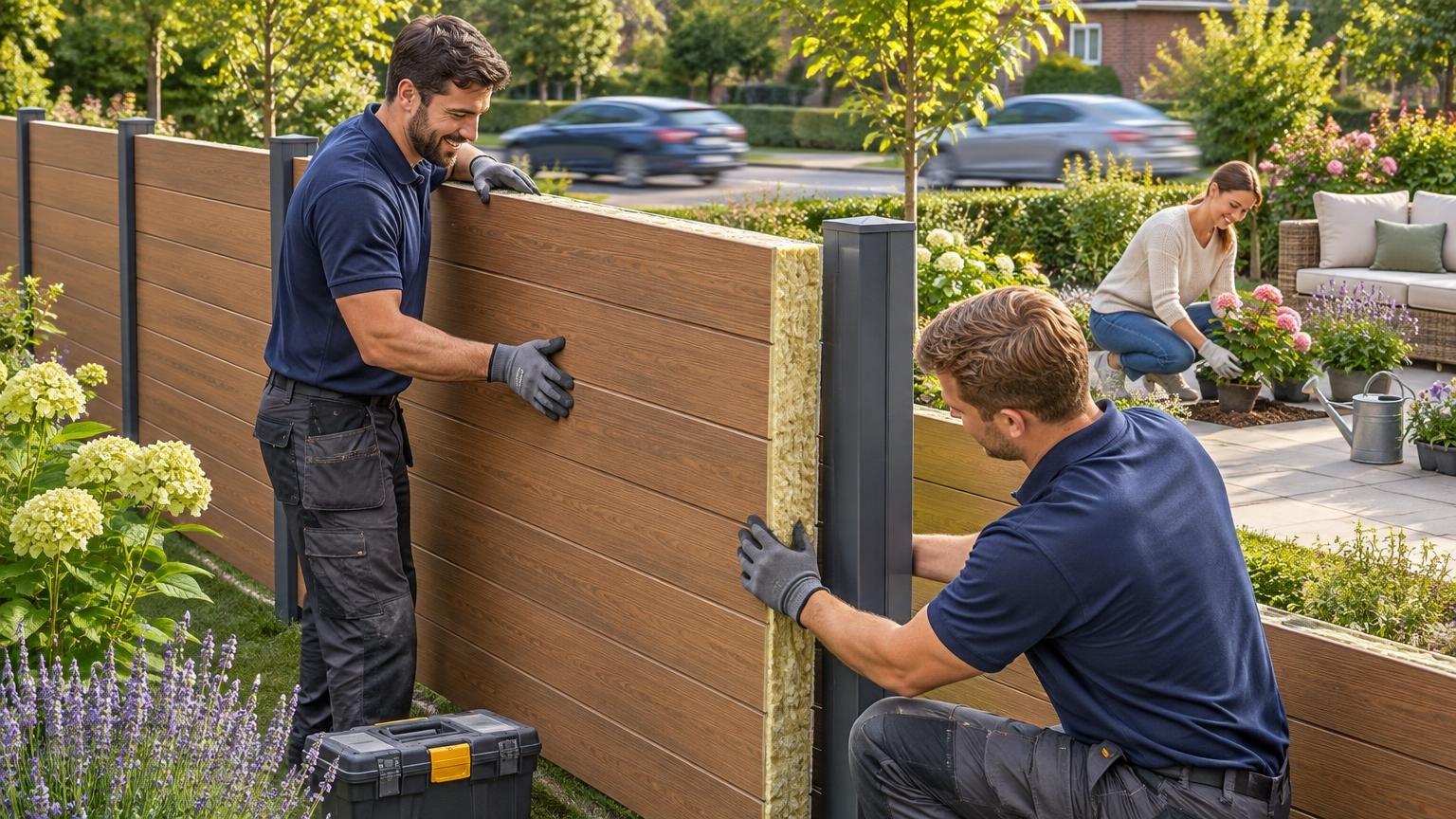
For this to work well, the fence needs to be more than a standard boundary marker. Acoustic fencing is designed with mass, density and a continuous surface in mind. These qualities help reduce the amount of sound that passes directly through the barrier.
A well-planned fence can help by:
- Blocking the straightest path from the road to your garden
- Reducing sound passing through thin or lightweight panels
- Creating a more sheltered zone for outdoor seating and play
- Improving the sense of privacy beside a busy route
That said, we always encourage realistic expectations. Sound can still travel over the top of a fence, around its ends and through any gaps. Noise may also be harder to control where the road is very close to the garden, sits above it, or carries frequent heavy traffic. Acoustic fencing is most effective when it is treated as part of a wider plan for the boundary and garden layout.
Height, Mass and Seals Determine Fence Performance
Height matters because the barrier needs to interrupt the sound path between the road and the area where you spend time. In practice, this means considering the position of traffic, the level of the road, the slope of your garden and the height of your patio furniture or play equipment. A fence that is too low may leave a clear route for sound to pass above it.
Local planning requirements should always be considered before choosing a taller boundary fence. Rules can differ depending on whether the boundary faces a highway, pavement or other public area.
Gaps are just as important as height. A small opening beneath a panel, between boards, around a post or beside a gate can allow sound through. One poorly sealed section can weaken the benefit of an otherwise substantial fence.
When assessing acoustic fencing, we recommend looking for:
- Dense materials that provide useful mass
- Overlapping or closely fitted construction
- Continuous panels with carefully detailed joins
- Weather-resistant finishes that help the barrier stay sound over time
Thin panels with loose boards may look acceptable from a distance, but they are not built to limit sound transmission. A heavier, continuous barrier generally gives better results, provided it is fitted securely and sealed properly across the full boundary.
Acoustic Fencing Works Best with Smart Garden Layout
The quieter zone behind an acoustic fence is often the best place for the parts of the garden you use most. Moving a dining set, bench, children's play area or garden office away from the road-facing boundary can help you get more benefit from the barrier.
Rather than placing your main seating area directly beside the traffic side of the garden, consider how the whole space can work together. A shed or storage structure near the road-facing edge may provide another physical layer between traffic and the rest of the garden. Carefully positioned enclosed structures can also change how exposed an outdoor area feels.
Planting can improve the look and privacy of a boundary, but we would not rely on trees or shrubs alone for meaningful traffic noise reduction. Dense greenery may soften the appearance of acoustic fencing and make the garden feel more enclosed, yet a solid acoustic barrier is still doing the main sound-blocking work.
Nearby garden rooms may need their own sound insulation measures as well. Acoustic fencing can reduce the noise reaching the outside of the structure, while appropriate insulation helps manage the sound that remains.
UK Planning and Installation Protect Results
Before installing acoustic fencing, it is sensible to check what is allowed at your property. Taller boundary treatments can be subject to permitted development rules, particularly where they sit next to a highway or pavement. Extra care may also be needed for listed buildings, conservation areas or properties with other planning restrictions.
We suggest confirming the requirements with your local planning authority before work begins. It is much easier to plan the right fence height and position from the start than to alter a completed boundary later.
Installation quality matters over the long term. Acoustic panels need secure posts, suitable foundations and tightly formed connections so they remain stable and sealed. Wind loading should be considered, especially for taller fences, as movement can create gaps or damage connections over time.
A full boundary review is usually more useful than focusing only on the loudest section. Sound does not always stop at the end of a short fence, and it can travel around side boundaries or across changes in ground level. Fence returns, gates and corners deserve just as much attention as the main road-facing run.
Choose Acoustic Fencing That Suits Your Garden
The best acoustic fencing approach depends on your garden's layout, the road's position, the available boundary height and how you want to use the space. Start by measuring the affected boundary, spotting obvious gaps and identifying where traffic noise is most noticeable.
It also helps to consider where you spend the most time outdoors. A well-planned fence can then support a quieter patio, dining space, family garden or work area, rather than simply standing at the edge of the plot.
Bring More Calm To Your Garden
At Advanced Acoustics, we can help you choose acoustic fencing suited to your outdoor space and the noise you want to reduce. Our team can discuss practical options, materials and installation considerations for your property. Contact us to talk through your requirements.