Enjoy Quiet at Home Without Losing Your Deposit
Noise in a rented flat can wear you down, especially as the evenings get darker and we spend more time indoors. Neighbours watching loud TV, music through thin walls, footsteps above, traffic echoing up from the street, it all adds up. When you are trying to work, relax, or sleep, that constant background noise can feel like it runs your whole day.
Renters also have a different set of rules to deal with. You need your deposit back, so you cannot start pulling up floors or building new walls. Most tenancy agreements limit what you can fix to walls and ceilings, and you are often not allowed to make big changes at all. The good news is that you can still make a real difference with the right mix of removable, landlord-friendly soundproof room solutions.
Know Your Noise: Airborne, Impact, and Flanking
Before we can cut down noise, we need to understand what kind of noise is causing the problem.
There are three main types in most UK flats:
- Airborne noise: voices, TV, music, traffic, dogs barking
- Impact noise: footsteps, dropped items, doors slamming, chairs scraping
- Flanking noise: sound travelling around the edges of a wall through gaps, vents, and the building structure
Soundproofing means stopping sound moving from one space to another. Acoustic treatment means improving the sound inside a room, for example reducing echo or boom so speech is clearer and music sounds more controlled. Both are helpful, but they do different jobs, so it is worth being clear what you want to fix first.
Many UK flats use timber floors, stud walls, or older party walls that are not very heavy. Sound passes through these quite easily. Some walls might be solid brick, others might be thin plasterboard, ceilings might have voids, and floors can act like big drums. That is why one flat hears mainly footsteps from above, while another hears mostly voices next door. There is no one solution that fits every building, especially older rented places, so the plan has to match your space.
Renter-friendly Soundproof Room Solutions That Work
In a rented home, we are aiming for layers of small, smart changes that all add up, without damaging anything.
Simple, landlord-safe ideas include:
- Thick, heavy curtains over windows and even across noisy walls
- Draft sealing strips around window frames and doors to cut gaps
- Deep rugs with dense underlay on bare or laminate floors
- Full bookcases against party walls, filled with books and soft items
- Plenty of cushions, throws, and soft furniture to soak up airborne sound
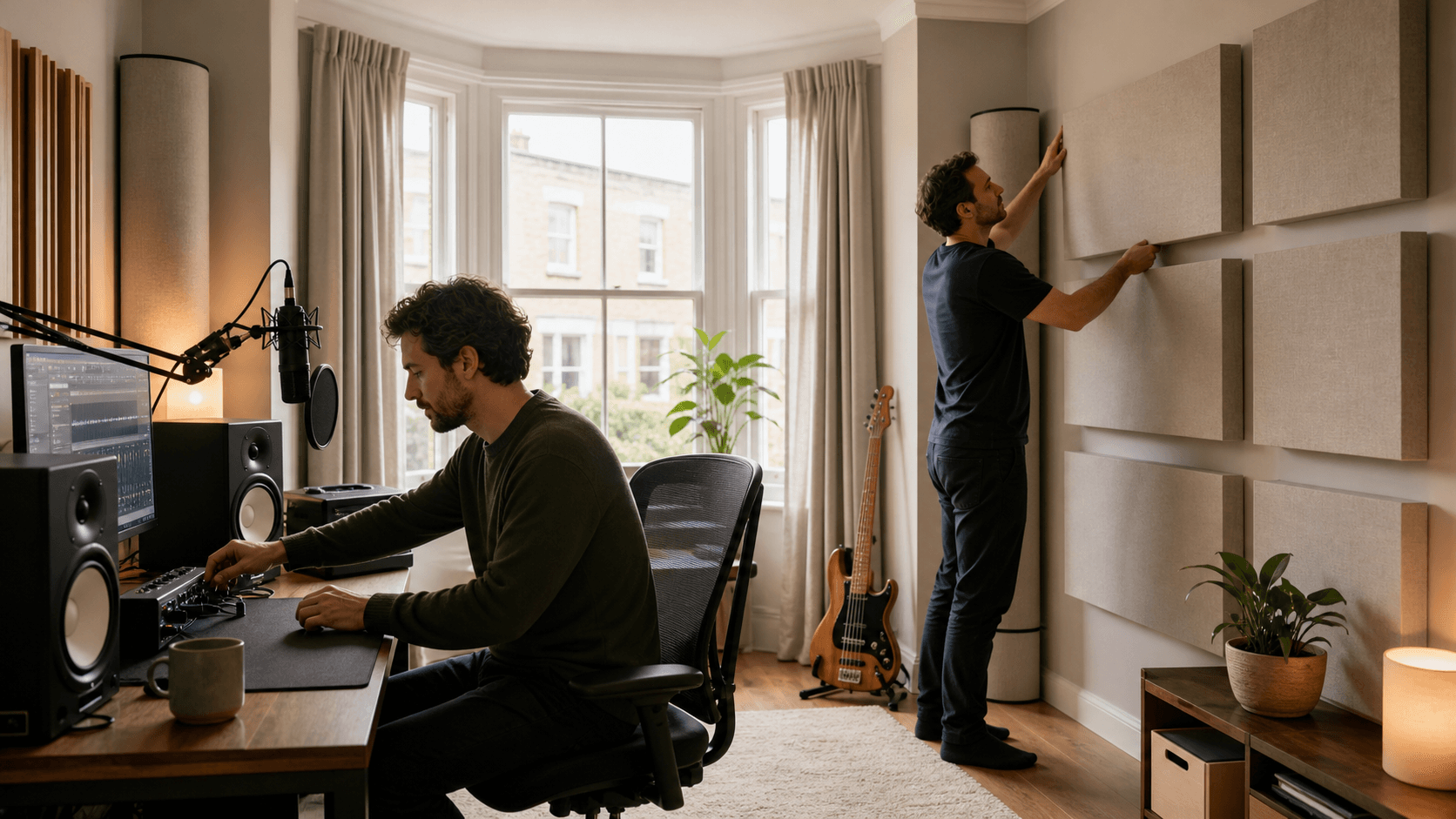
On top of that, you can bring in products that are designed for acoustic control. Acoustic panels, acoustic foam tiles, and bass traps can all be used in rented flats if fitted in the right way. Instead of permanent fixings, you can look at:
- Command-type strips on suitable surfaces
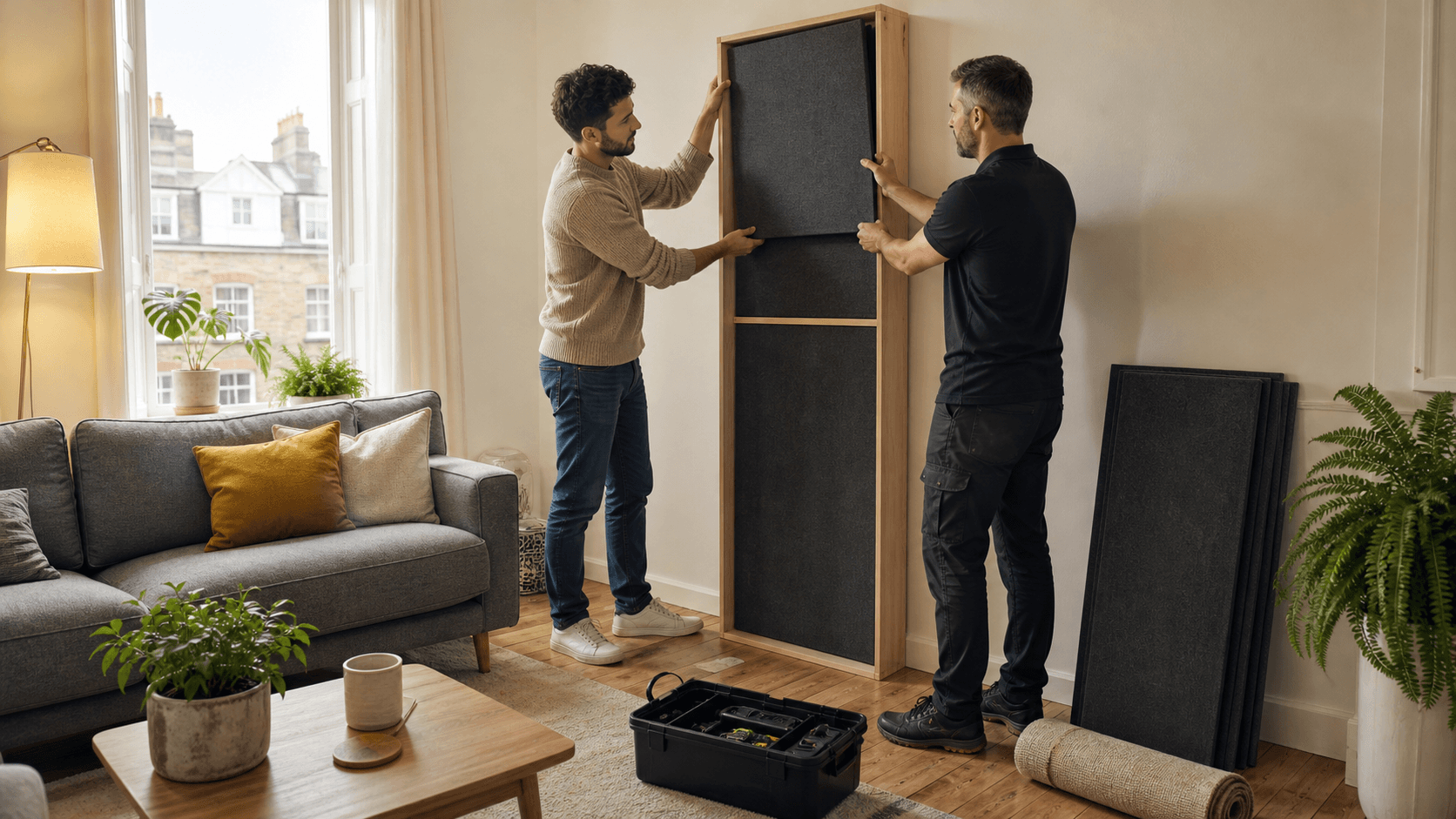
- Free-standing panels in simple frames
- Lean-to panels that rest against walls without screws
Realistic expectations matter. Without structural work, you will not get a recording studio style seal, but you can often:
- Take the sharpness off voices and TV coming through walls
- Cut the echo in your own room so sounds feel calmer
- Reduce how much your music or meetings spill into the hall or next door
Start with the main problem areas, maybe the wall you share with the noisiest neighbour, the front door, or the window facing the street. Treating one or two key surfaces well is usually better than spreading effort thinly across everything.
Creating a Quiet Study, Studio, or Home Cinema in a Flat
Many people want one special room to work, create, or unwind in. With the shorter days and wetter weather, that quiet space matters even more.
For a home office, focus on:
- Reducing echo so you sound clearer on video calls
- Cutting harsh reflections from the wall in front of your desk
- Softening the wall behind you so sound does not bounce back into your microphone
A simple setup might be a few wall panels at head height around the desk, a thick rug under the chair, and a draft-sealed door. Your voice will sound cleaner and you will hear colleagues more clearly.
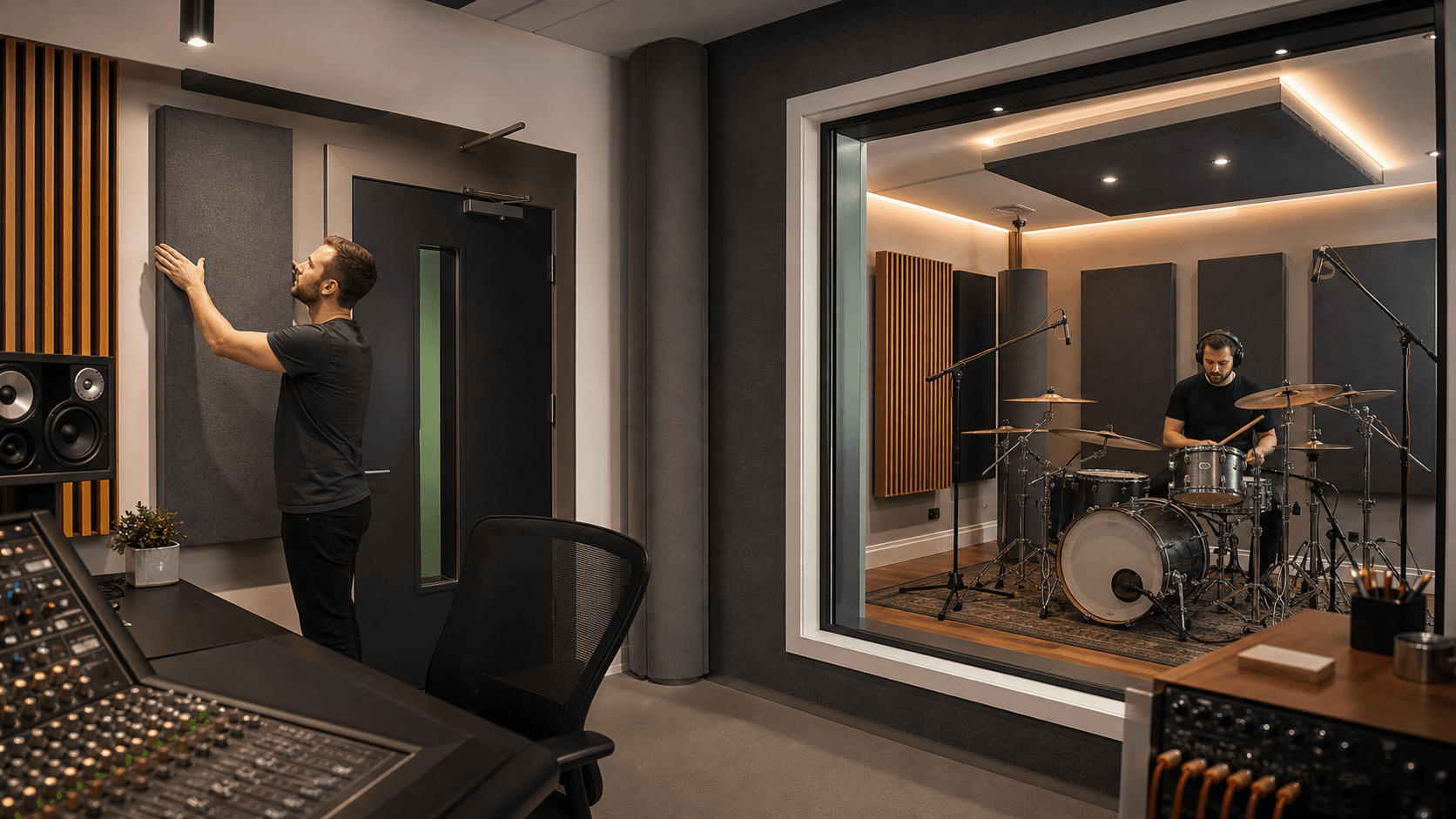
For a podcast or music space, we want both control inside the room and reduced spill out. Acoustic foam or panels at first reflection points, usually the walls to the left and right of speakers and the ceiling above, will calm down early reflections. Corner bass traps help tame low-end build-up in small UK rooms that can make recordings sound muddy.
For a home cinema, think about:
- Pulling speakers and the TV unit slightly away from party walls
- Placing the sofa away from the wall behind it if space allows
- Using panels on the wall behind the speakers and behind the listener
- Treating corners with bass traps for more even bass
Keeping speakers and subwoofers off shared walls, even by a small amount, can help reduce how much your neighbours feel the sound.
Winter-ready Soundproofing for Comfort and Warmth
As the temperature drops and the heating comes on, many of the same steps that cut noise can also help keep rooms warmer. Dense materials slow down both sound and heat loss. That is why a bare single-glazed window feels cold and noisy, while a window with a heavy curtain feels quieter and more snug.
Some practical winter-friendly upgrades are:
- Sealing small gaps around window frames with removable draft strips
- Adding clear secondary glazing film to reduce traffic noise and cold air
- Fitting heavy-duty door seals around the main flat door
- Hanging lined, multi-layer curtains over windows and even over thin doors
Acoustic panels and foam products can also play a part in this winter comfort plan. When you cover large sections of cold, reflective wall with dense, soft materials, the room often feels less chilly and less echoey at the same time. Because these solutions can be fixed with removable methods, they can come down again when you move out, leaving the flat as you found it.
Plan Your Quiet Room with Expert Help From Advanced Acoustics
A good first step is to carry out a quick noise audit. For a few days, note:
- Where the noise seems to come from
- What kind of noise it is: voices, footsteps, traffic, bass
- What times of day or night are worst
- Which single room would most improve your daily life if it felt calmer
Once you have that, measure the room and take a few clear photos of the main problem walls, doors, and windows. Then look over different acoustic panels, bass traps, and soundproofing systems and think about where they might sit in your layout.
At Advanced Acoustics, we are based in the UK and we focus on UK-made acoustic treatment and soundproofing products that can work in real British homes and flats. By mixing our specialist panels, traps, and foams with renter-friendly fixings and simple layout changes, it is possible to create a quieter, warmer room that keeps both your peace and your deposit safe.
Get Started With Your Project Today
If you are ready to reduce noise and improve clarity in your space, our experts at Advanced Acoustics are here to help. Explore our tailored soundproof room solutions to find the right approach for your project, whether it is a single room or an entire commercial property. We can advise on materials, installation methods and performance so you achieve reliable acoustic results first time. If you would like specific guidance or a bespoke quote, simply contact us and we will respond promptly.