A noisy restaurant can feel busy and exciting, but when guests have to shout just to order a drink, something is wrong. Acoustic wall panels give you a way to calm the sound, keep the buzz and make the space far more comfortable, without tearing the whole place apart.
In this article, we will look at why restaurant noise gets out of control, how acoustic wall panels actually work and what to think about when choosing them. We will also share some simple planning ideas so you can fit upgrades around a packed summer rota.
Turn Down the Clatter and Turn Up the Covers
On a warm August evening in the UK, the terrace is full, the dining room is heaving and the bar is two deep. Glasses clink, chairs scrape, plates land on bare tables and voices bounce off every hard surface. After a while, all of that sound blends into one constant roar and guests lean in just to hear the person opposite.
That kind of noise does not just annoy people, it changes the way they feel about the whole visit. When you have to repeat yourself to the server, or you cannot hear what the person across the table is saying, the meal feels rushed and tiring. People often stay for less time, skip dessert or another drink and are less likely to book again for a long, relaxed evening.
The good news is that you usually do not need to knock walls down or rip out the bar to fix this. Well-planned acoustic wall panels can change the sound of a room in a very noticeable way while your layout, lighting and style stay the same. With the right treatment, that August rush can feel lively but not harsh, so guests enjoy staying a little longer.
Why Restaurant Noise Drives Customers Away
Most noisy restaurants have the same mix of sound sources, especially in the summer holiday peak:
- Hard floors, bare walls and big windows that bounce sound around
- Open kitchens and bar areas with constant clatter
- Background music stacked on top of voices and movement
- Large groups celebrating, often all speaking at once
All of this builds up quickly, especially in spaces with hard surfaces and high ceilings. Guests might not complain directly, but they show how they feel in other ways. Many will cut visits short if they leave with a sore throat or a headache. Older diners and families with young children usually find very loud spaces tiring and choose somewhere calmer next time.
Noise does not only affect guests. It wears staff out too. When servers struggle to hear orders, they need to repeat questions, move in closer to guests and work harder just to do simple tasks. That can lead to:
- More wrong orders and wasted dishes
- Missed upsell chances because staff cannot chat calmly
- Tired, stressed teams by the end of the shift
There is a big difference between a room with a nice buzz and a room that feels like a pub at last orders. People want energy and life, but they still want to talk at a normal level and hear every word.
How Acoustic Wall Panels Tame Echo and Improve Clarity
Sound inside a room does not just travel in a straight line, hit one surface and stop. It bounces. When voices, music and clatter hit walls, ceilings, windows and even tabletops, they reflect back into the space. With enough hard surface area, that reflection turns into an echo and then into a thick wash of noise called reverberation.
Acoustic wall panels are made to soak up some of that energy. They do not sit there as decoration only, they actively absorb mid and high frequencies, the range where most speech and cutlery noise sits. By doing this they reduce the reverberation time, so sounds die away more quickly instead of hanging in the air and stacking up.
It is important to note that acoustic treatment and soundproofing are not the same thing. Wall panels improve how the room sounds from the inside. They usually are not designed to stop noise escaping to neighbours or the street. That kind of control needs separate soundproofing measures.
When acoustic wall panels are used properly, diners tend to notice that:
- They can speak in a normal voice and still be heard
- Background music sounds clearer at lower volume
- The room feels calmer even when every table is full
Staff also find it easier to work. Service feels smoother, and communication between bar, floor and kitchen can improve because people are not battling the echo.
Choosing Acoustic Wall Panels That Match Your Concept
No one wants their restaurant to look like a recording studio. The good thing is, acoustic wall panels can be made to fit almost any style, from relaxed coastal terrace to smart city dining room.
Some common design options include:
- Fabric wrapped panels in brand colours or subtle neutrals
- Printed panels that double as artwork, patterns or logos
- Slimline panels for tight walkways or narrow walls
In food areas, the practical side matters too. You may want:
- Panel thickness matched to how loud the space normally gets
- Wipeable or stain resistant finishes near busy tables
- Fire rated materials in line with UK safety regulations
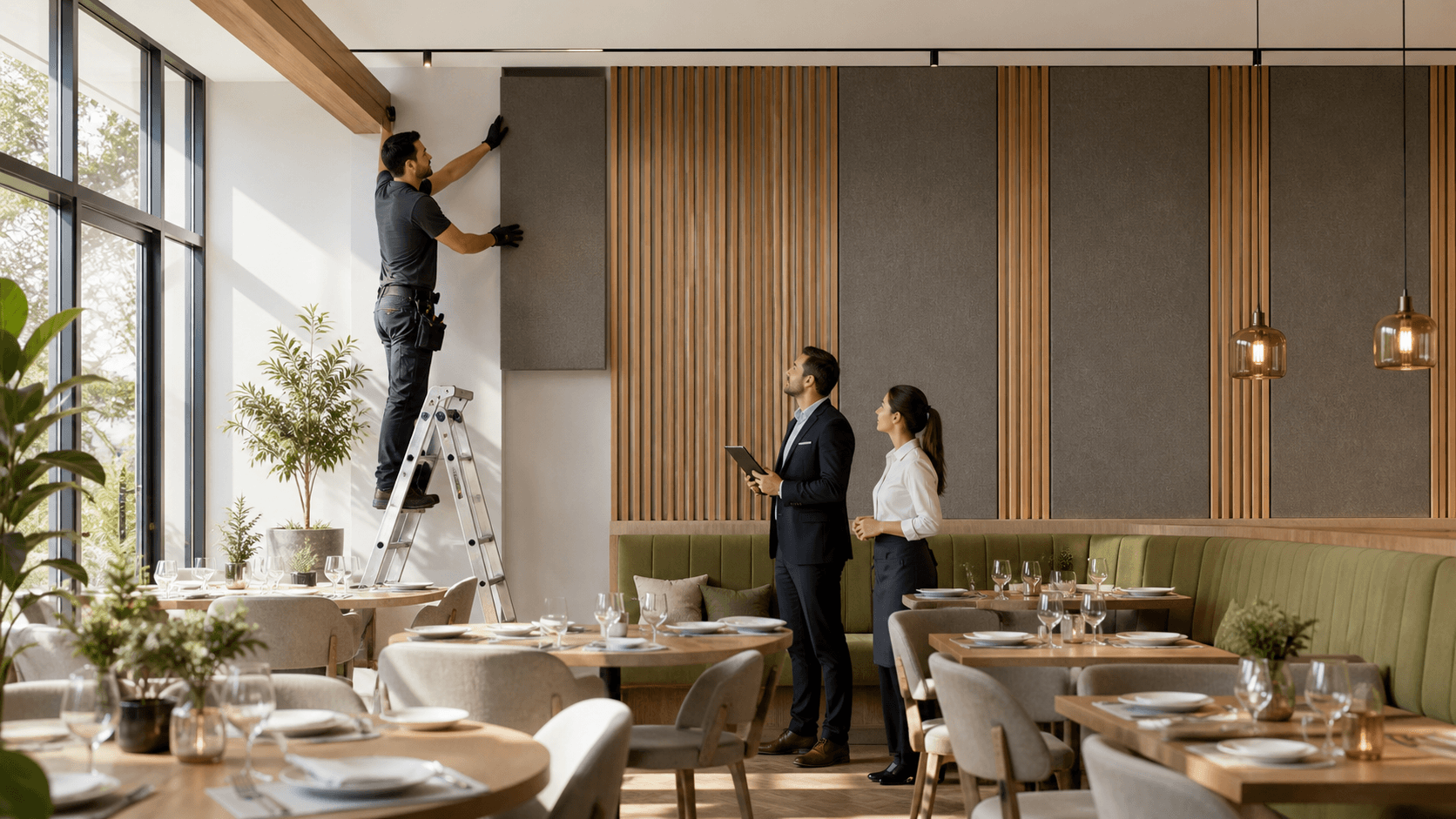
You also do not have to cover every wall from floor to ceiling. A good layout often uses zoning. For example, more panels around bar and waiting areas, on walls directly opposite large windows, and near big seating zones. Other areas can be left a little more reflective so the room keeps a sense of life and sparkle.
Because panels can be made in different sizes and shapes, they can work around existing features quite neatly. Things like windows, mirrors, wall lights and current artwork can usually be kept in place with the panels fitted around them in a planned pattern.
Planning a Summer Refurb with Minimal Disruption
Summer is when many restaurants earn a large part of their yearly trade, which can make the idea of any work feel risky. Acoustic upgrades do not have to mean long closures or scaffolding everywhere.
A typical process often looks like this:
- Acoustic assessment of the space, either on site or using plans and photos
- Clear recommendations on panel numbers, sizes and layout
- Choice and sign off of fabrics, colours or printed designs
- Installation scheduled for quiet weekday mornings or short closure windows
Most acoustic wall panels are designed to be quick to mount using simple fixing systems. That often means less time with trades moving through the room and less disruption to your normal flow of service.
Since you already have some level of disruption, even if small, it can make sense to pair acoustic work with other light updates. Many restaurants use that time for repainting feature walls, adding new artwork, or refreshing signage so the whole space feels lifted at once.
From Noisy to Noteworthy Dining Experience
When a space sounds good, everything else gets a little easier. Guests relax into the evening, orders are heard correctly, music sits comfortably in the background and staff can talk without straining. That tends to lead to happier customers, stronger word of mouth and a restaurant that stands out during a busy summer season for all the right reasons.
At Advanced Acoustics, we are based in the UK and focus on acoustic treatment and soundproofing products, including acoustic wall panels made for real spaces like restaurants, offices, studios and home cinemas. We work with owners, managers and designers to shape solutions that respect the look and feel of each venue while tackling the echo that causes so much stress.
If you are unsure how your place sounds, a simple test is to listen during your next peak service. Notice how loud staff and guests must speak, whether orders are repeated often and if noise comes up in online reviews. If the answer is yes, well planned acoustic wall panels could make all the difference before the next summer rush hits and every seat is in demand.
Get Started With Your Project Today
If you are ready to improve the sound quality and comfort of your space, our acoustic wall panels are a straightforward way to achieve professional results. At Advanced Acoustics we can help you choose the right solution for your room size, layout and design goals. If you would like tailored advice or have questions about installation, simply contact us and we will be happy to assist.