Enjoy Summer Films Without Disturbing the Neighbours
Home cinema sound in a typical UK house can feel tricky. You want big, exciting sound from your films, but you do not want angry knocks on the wall or a tired child awake at 11 pm. That balance is what home cinema soundproofing is really about.
On a warm summer evening, the problem is even clearer. Windows are open, the sun is still up, children are in bed earlier on school nights, and neighbours are sitting in their gardens trying to relax. Bass from an action scene or a football match travels further in the quiet air, and any weak point in your walls, floors, or windows starts to show.
Many homeowners think the only answer is full studio style soundproofing, or they give up and say it is impossible in a semi-detached or terrace. We want to question those ideas. From our experience with home cinemas, media rooms and lounges across the UK, including many older houses, we know that smart acoustic choices can make a big difference without turning your home into a building site.
Myth one: UK Homes Are Too Old or Thin for Proper Sound
One common belief is that British homes are hopeless for home cinema soundproofing. People look at a Victorian terrace with hollow floors, a 1930s semi with a shared chimney breast, or in a lightweight new build and think there is no chance of keeping sound under control.
The first step is to separate two things:
- Sound isolation, stopping noise getting out or in
- Acoustic treatment, improving how sound behaves inside the room
Both can work in the kinds of construction we see every day in the UK. We just have to respect how the building is put together.
For stud partitions and plasterboard, useful upgrades often include:
- Adding more mass with extra boards
- Using acoustic insulation between studs
- Decoupling layers so vibrations do not pass straight through
For brick party walls and chimney breasts, we might look at:
- Independent stud frames in front of the wall
- Dense board layers with acoustic membranes
- Careful sealing around skirting, sockets and junctions
None of this has to mean rebuilding the whole room. Often, we focus on the noisiest surfaces, like the wall shared with a neighbour or the ceiling below bedrooms. When work starts to affect the structure or change the use of the room, planning or building control might be involved, but many modest, well-planned treatments stay within normal home improvement levels.
Older or lighter houses are not write-offs. They just need a clear plan that respects the limits of the structure and aims for sensible, real-world gains.
Myth two: Good Soundproofing Means Total Silence
Another big myth is that good home cinema soundproofing should give you a perfect bubble of silence, like a recording studio, with not a hint of sound escaping. In most UK homes, that is not realistic, and it is usually not needed.
Sound behaves in ways that surprise people:
- Low bass travels through floors, ceilings and solid walls
- Sound sneaks through gaps around doors, sockets and floorboards
- Flanking paths, like joists running into other rooms, carry vibration
Even very high-end cinema rooms accept that a little sound will escape at higher volumes. The real goal in a house is more practical. For most families and neighbours, success looks like this:
- Someone sleeping in the room above is not woken up every time there is a car crash scene
- Neighbours hear only a dull rumble at worst, not every word of dialogue
- You can enjoy a film comfortably at a lower volume because the room sounds clear and controlled
Good acoustic treatment on the walls and ceiling helps a lot here. When echo and muddiness are reduced, you do not need to blast the sound to hear dialogue. This is especially useful on warmer nights when you might want a window on the latch. You may not get total silence outside the room, but you can reach a level where late-night viewing is far less of a problem.
Myth three: Foam Panels Alone Will Soundproof My Cinema
Foam tiles on the wall are often the first thing people think of. They look like studio gear, so they must be soundproofing, right? Not quite. This is where confusion between treatment and isolation really causes problems.
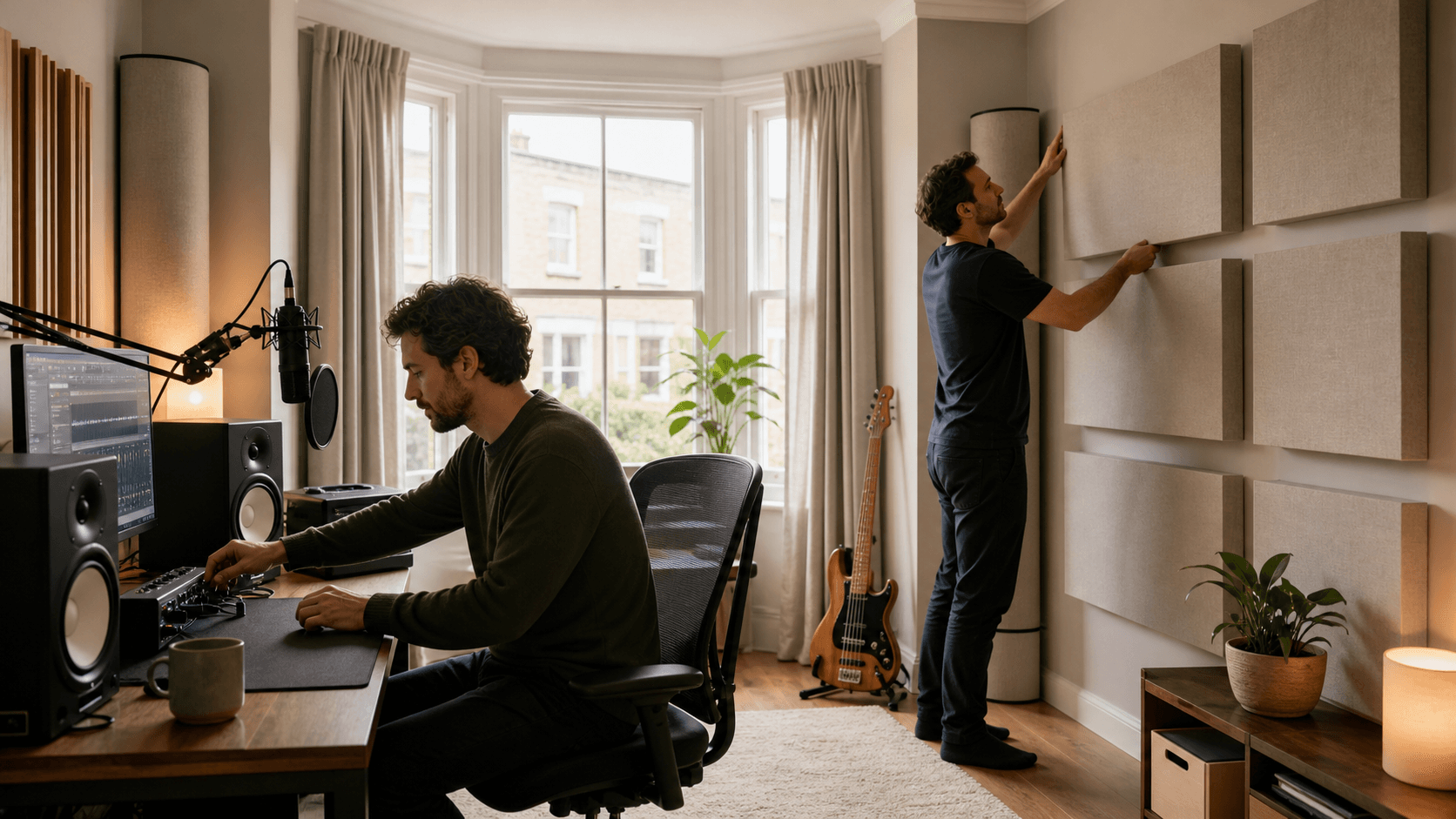
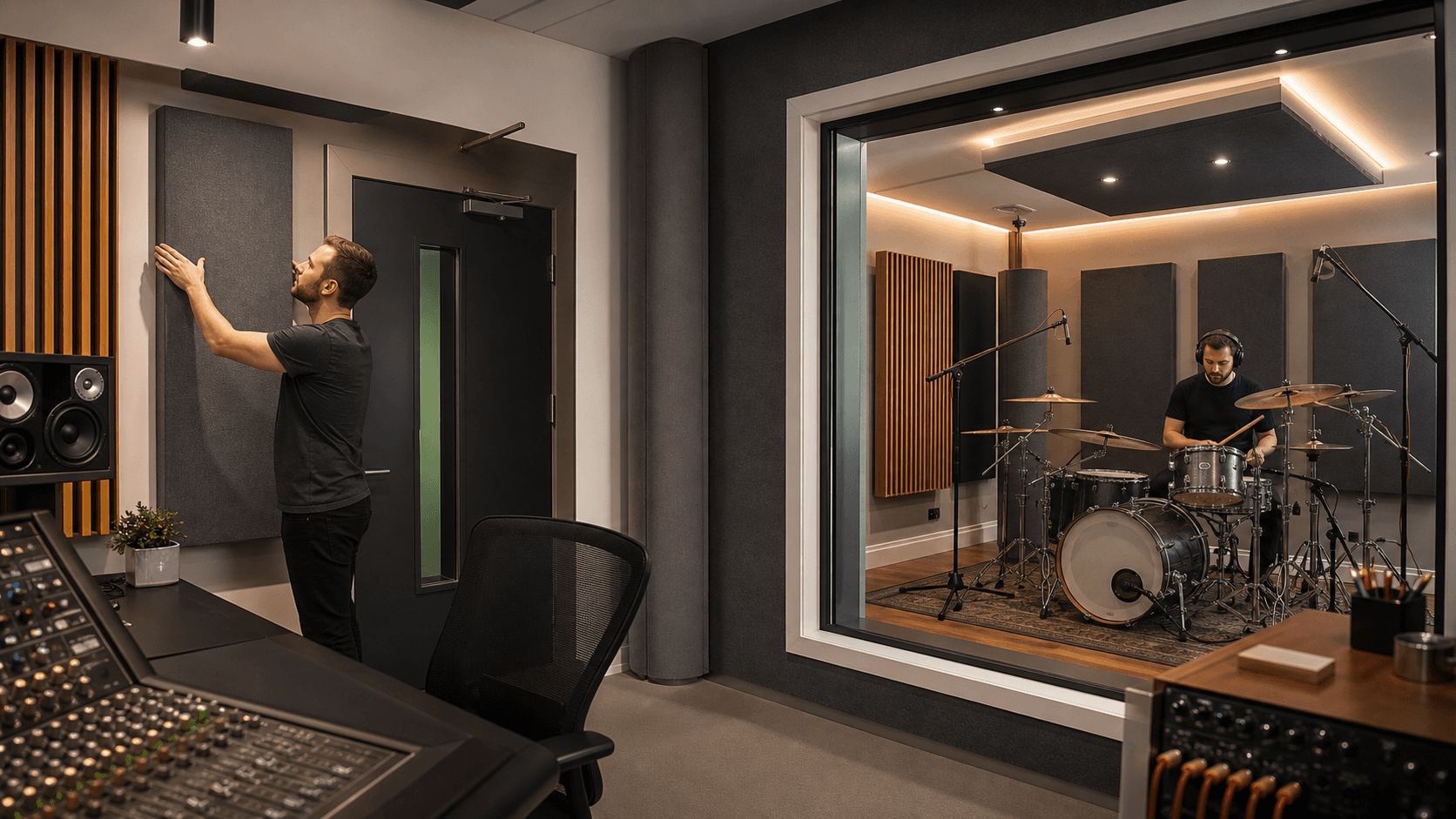
Foam panels and fabric-wrapped absorbers are acoustic treatment. They help with:
- Reducing echo and flutter
- Calming down harsh reflections from walls and ceiling
- Making dialogue clearer and music more detailed
In smaller UK rooms, like box bedrooms or snug lounges, this treatment can make the space feel bigger and more controlled. But it does not stop sound going through the wall in any serious way. The sound may be nicer inside, yet your neighbour can still hear the explosions.
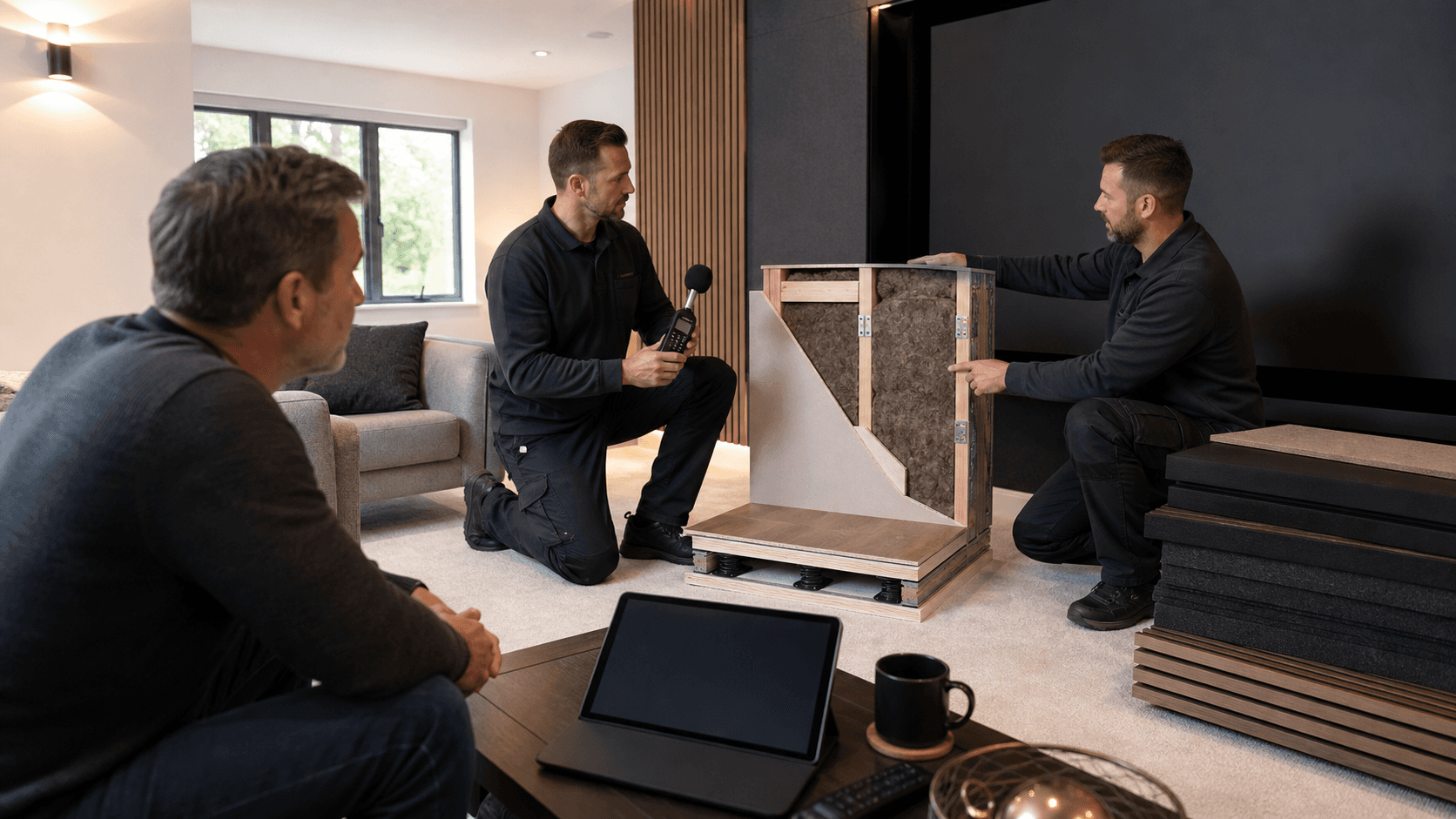
Home cinema soundproofing uses different tools, for example:
- Added mass, like layered boards or specialist membranes
- Decoupling systems, like isolation clips and separate frames
- Full perimeter sealing so air gaps are closed
Those elements work to block and slow sound transmission. The best rooms use both approaches together. At Advanced Acoustics, we spend a lot of time helping people avoid the disappointment of sticking a few foam panels on bare plasterboard and expecting miracles. A coordinated plan, even on a modest scale, gives a far better result.
Myth four: Effective Home Cinema Soundproofing Costs a Fortune
There is also the idea that unless you build a full room inside a room or add a luxury extension, home cinema soundproofing is not worth doing. That can stop people from taking any steps at all, which is a shame, because layered improvements can work very well.
We often think in simple tiers of investment, such as:
- Quick wins, like upgrading a door set, sealing gaps or adding focused treatment
- Mid-level changes, such as rebuilding one key wall or improving the ceiling
- Full-room projects, where all surfaces are treated in a joined-up design
For a terraced house, priority might be the party wall. For a semi, it may be the ceiling below the main bedroom. In a loft or converted garage, bass control at wall-floor corners becomes more important, as light structures tend to shake more.
Planning ahead with the seasons helps too. Many people find it easier to empty a lounge or spare room in summer when life is a bit more flexible. Soundproofing upgrades can also work alongside thermal insulation, which pays off when the colder, darker evenings arrive and you use the cinema more often.
Good sound reduction is not an all-or-nothing luxury. There is usually something meaningful that can be done within the limits of the space and the budget.
Turn Your Lounge Into a Cinema You Can Actually Use
The main shift we encourage is to move from perfection to improvement. Instead of thinking, "My house is too old" or "I can never get studio silence," it helps to ask, "What level of control would make film nights easier for me and the people around me?"
A simple home audit is a strong starting point:
- Room size and shape
- Wall, floor and ceiling construction
- How close you are to neighbours
- When you mostly watch and how loud you like it
- Any current complaints or worries
From there, a clear plan for home cinema soundproofing and treatment becomes possible. At Advanced Acoustics, we spend our time designing practical, staged options for UK homes, from single media walls to full-time cinema rooms. With the right mix of isolation and treatment, your lounge, loft or spare room can become a cinema you actually use, even on warm summer nights, without turning every screening into a noise dispute.
Get Started With Your Project Today
If you are ready to improve your viewing experience, we can help you plan and install effective home cinema soundproofing tailored to your space. At Advanced Acoustics we will work with your room layout, budget and performance goals to recommend the most suitable products and layout. To discuss your ideas, ask technical questions or request a quotation, simply contact us and we will guide you through the next steps.