Mass-loaded vinyl is one of the most talked-about soundproofing materials. It pops up in forums, in Social Media groups, and in plenty of quick-fix videos, especially when summer noise rises with open windows, garden parties, and longer trading hours. Many people hear the name and hope it will silence noisy neighbours or loud venues completely in one go.
We work with acoustic treatment and soundproofing every day, and we see the same confusion again and again. This guide looks at what mass-loaded vinyl can really do, what it cannot do, and how to use it as part of a proper soundproofing plan so you get results that actually match your expectations.
Rethinking What Mass-Loaded Vinyl Can Really Do
Mass-loaded vinyl, or MLV, is basically a very heavy, flexible sheet. It is designed to add mass to walls, ceilings, and floors without taking up much space. Because it is thin and simple to understand, it often gets sold as a magic answer to noise.
Here is the honest truth:
- MLV is useful in the right system
- It can give a clear improvement in some builds
- It will not turn a light wall into a recording studio wall on its own
When you understand where it fits, you can save time, money, and frustration. Instead of one quick product fix, we prefer to think in terms of complete solutions that suit the space, the structure, and the type of noise you are dealing with.
Myth One: Mass-Loaded Vinyl Stops All Noise
A lot of marketing makes it sound like mass-loaded vinyl blocks sound completely. That is not how soundproofing works. The main job of MLV is to add weight to a surface. This follows what is often called the mass law: the heavier a barrier, the harder it is for sound to pass through.
In simple terms:
- More mass usually means less sound getting through
- MLV adds mass without adding much thickness
- It reduces sound transmission, it does not remove it
This is especially true when we talk about very low frequencies such as bass from music, drum kits, or home cinema systems. Those long, deep waves carry a lot of energy. A single sheet of vinyl, even a heavy one, will not completely stop them. It may give a small drop in what you hear, but bass can still travel through the structure.
We often see this when people upgrade a games room, a summer home cinema, or a music space and expect total silence for the neighbours after adding MLV. If the structure is light and there is no decoupling or extra layers, the material can only do so much. It is a helpful part of the build, not a mute button.
Myth Two: Mass-Loaded Vinyl Works Alone Without Layers
Good soundproofing is about systems, not single products. To block sound effectively, you usually need:
- Decoupling, so both sides of a wall are not rigidly linked
- Insulation in the cavity to absorb sound inside the structure
- Airtightness, with all gaps and joints sealed
- Mass, from materials like plasterboard, boards, or MLV
Mass-loaded vinyl can support this system, for example:
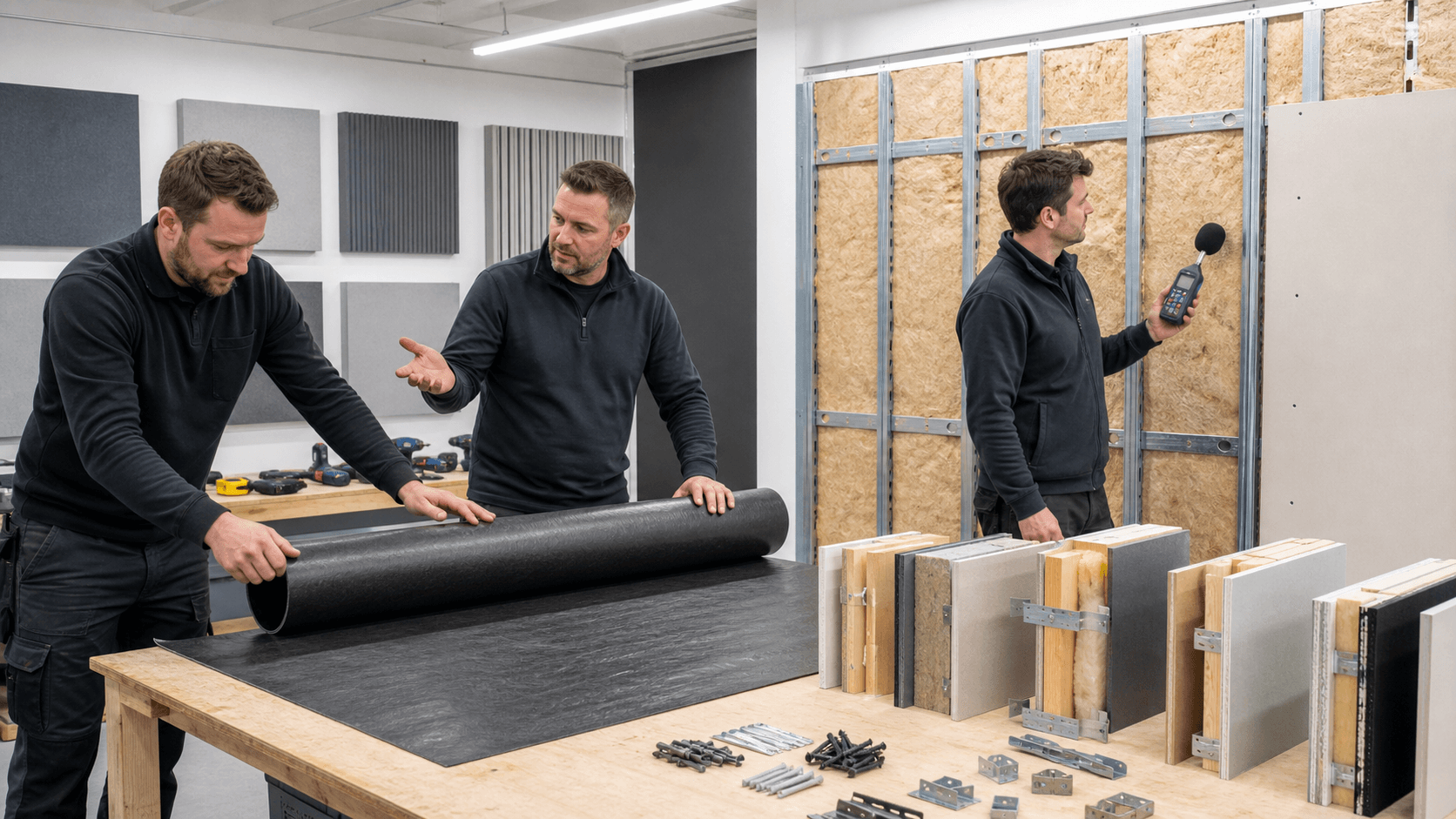
- Sandwiched between two layers of plasterboard on a stud wall
- Added over a timber floor before overlay boards
- Hung within a ceiling build with isolation bars and acoustic sealant
Simply sticking MLV to existing plasterboard, or pinning it to a door, is rarely enough to give a big leap in isolation. This is especially true in many UK homes where walls and ceilings are quite light. If the structure is still firmly tied together, sound will happily travel around your new vinyl layer through studs, joists, and side paths.
Myth Three: Thinner Mass-Loaded Vinyl Replaces Solid Walls
There is a tempting idea that a few millimetres of very heavy vinyl can match a solid wall. It sounds great, but real buildings do not work like that. A well-built dense partition with insulated cavities and multiple board layers will usually beat a thin add-on layer in terms of isolation.
Think of it like this:
- MLV is one extra coat, a solid wall is the whole outfit
- The full build controls sound through mass, separation, and absorption
- A thin but heavy layer helps, but it cannot fix a weak structure underneath
You also have flanking paths to think about. Sound does not only pass straight through the main surface. It sneaks around:
- Through gaps at sockets, skirtings, and coving
- Through floor and ceiling cavities
- Along side walls and structural links
If these paths are not addressed, the overall sound reduction is limited. You may still notice an improvement, but it will not match the bold claims some adverts promise.
Myth Four: All Mass-Loaded Vinyl Is the Same
Not every roll labelled mass-loaded vinyl performs the same way. Differences in how the product is made can affect how it behaves once installed. Some cheaper options can use fillers that add weight but reduce flexibility, which can make fitting harder and performance less predictable.
When you compare products, it helps to look at:
- Surface weight in kg per square metre
- Flexibility and feel when handled
- Fire performance ratings
- Whether there is clear, realistic test information
Good MLV should feel dense yet workable. It should bend without cracking and sit flat once fixed. Test data should describe systems, not just the sheet by itself, because soundproofing is always about how layers work together.
Buying on a name alone or going straight for the lowest price can lead to disappointment if the material does not behave as expected in a real build.
Choosing Mass-Loaded Vinyl or Alternatives for Your Project
MLV makes the most sense where space is tight or where you need flexible mass inside a more complex system. Common uses include:
- Retrofits where you cannot lose too much room depth
- Upgrading timber floors between flats
- Improving door assemblies and certain light partitions
- Specific commercial areas where flexible barriers help
Other times, different steps may give better value and performance, such as:
- Extra layers of acoustic plasterboard
- High-quality acoustic insulation in cavities
- Resilient bars or isolation clips for walls and ceilings
- Full room build-ups for studios, offices, or home cinemas
Summer can be a useful planning period. Noise often feels worse when windows are open and outdoor activity ramps up, which is when many people finally decide to act. Using this time to design a proper system means your space is ready for the louder evenings and busy indoor seasons that follow.
The key is to start with a clear goal: what type of noise do you want to reduce, when does it happen, and how good does the isolation really need to be? Once that is set, mass-loaded vinyl can be judged fairly, as one of several tools available rather than the only answer.
Get Started With Your Project Today
If you are ready to improve the sound isolation in your space, we can help you choose the right balance of performance and practicality. Our high quality mass-loaded vinyl solutions are designed to integrate smoothly into a wide range of building and renovation projects. At Advanced Acoustics, we work with you to match products to your specific noise problems and construction type. If you would like tailored advice before ordering, simply contact us and we will guide you through your options.