Stop Wasting Money on Ineffective Soundproofing
Soundproofing mat can work really well, but only when it is used in the right way. Many people buy something called "soundproofing" and then feel let down when the noise from upstairs, next door, or the home cinema still leaks through.
The problem is often not the product; it is how it is chosen and installed. A good mat, fitted badly, will act like an expensive underlay. As late-summer projects pick up before autumn, this is when rushed choices and guesswork can easily lead to disappointment.
We want to question some common habits around soundproofing mat and show you where things usually go wrong. We will look at choosing the right type, avoiding hidden gaps, fitting it in floors, walls, and ceilings, and thinking about real homes and rules, not just wishful thinking.
Are You Choosing the Wrong Type of Soundproofing Mat?
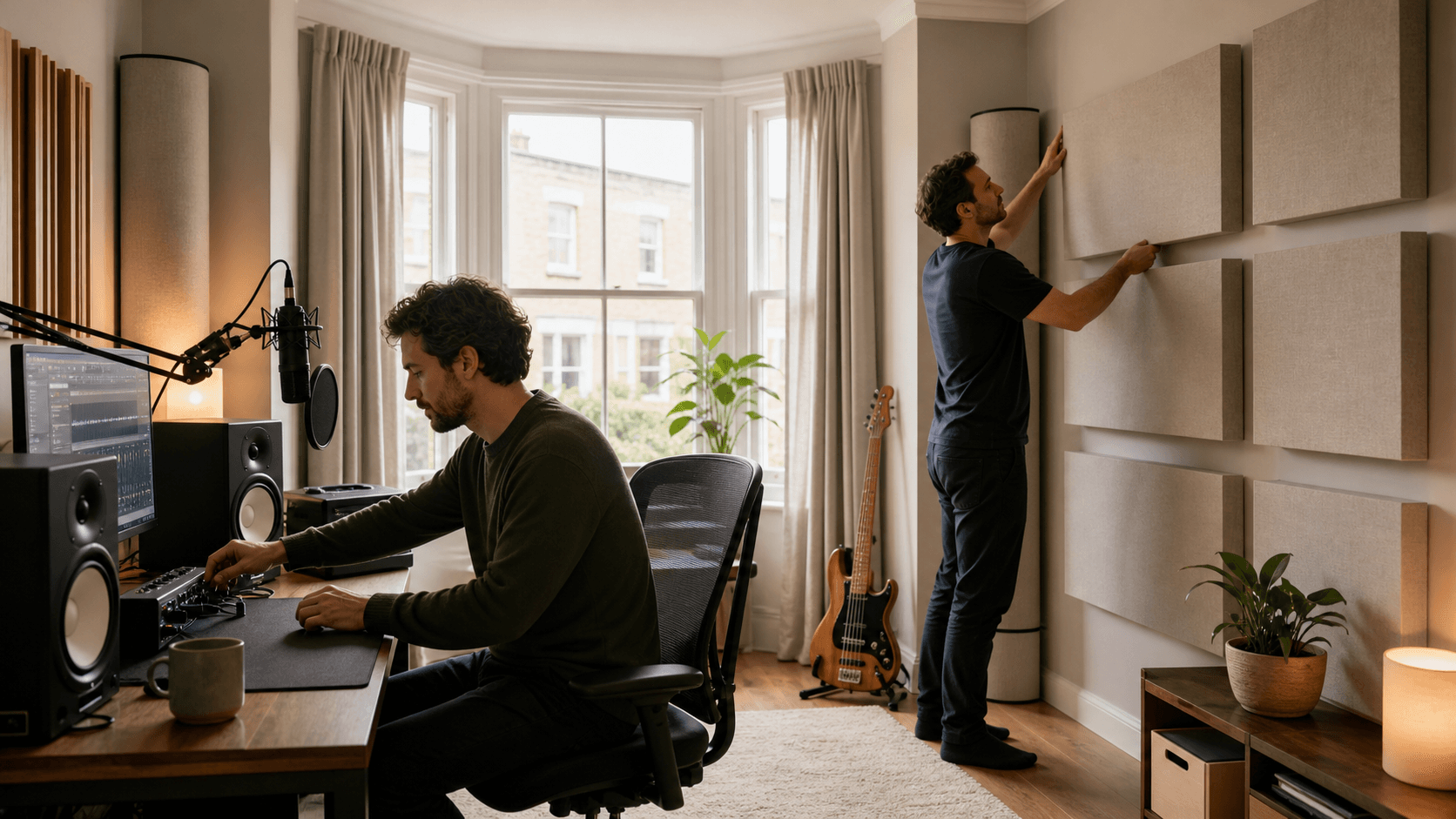
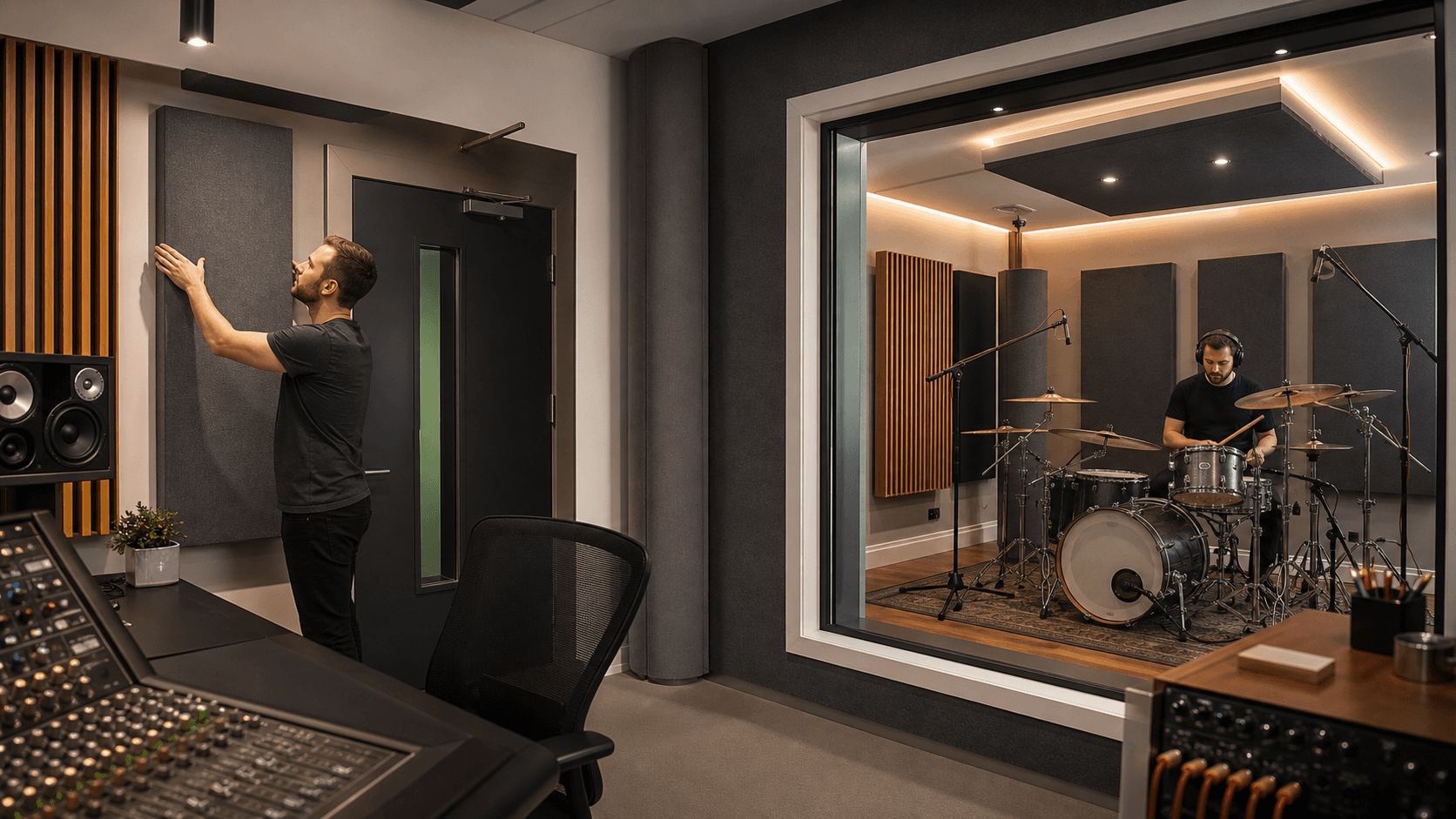
A big mix-up happens between soundproofing and acoustic treatment.
Soundproofing is about blocking sound from travelling between rooms. Acoustic treatment is about making a room sound nicer inside, for example with foam tiles on the walls. Foam can be great for echo, but it does not have the weight needed to stop sound travelling through structures.
Here are common mistakes people make when picking a soundproofing mat:
- Buying light foam or thin rolls and expecting them to stop loud music
- Choosing the thinnest mat just to save ceiling height
- Using underlay-style mats that only help with impact noise like footsteps
- Picking one "universal" product from a non-specialist shop
Real soundproofing needs mass and the right type of material. Mass loaded vinyl is a dense barrier material that may be used as part of a suitable soundproofing system, but it will not solve every noise issue on its own. Different problems need different solutions. For example:
- Deep bass from a subwoofer needs more mass and often layered systems
- Speech and TV noise might need a different setup from heavy footfall
- A timber floor behaves nothing like a concrete slab
- A home studio, office, or rented flat all have very different needs
The type of mat that works under a floating timber floor might not be the right choice behind a stud wall or under a ceiling below a home cinema. That is why it helps to match the product to the structure and the kind of noise you actually hear, not just the label on the roll.
Hidden Installation Traps That Kill Performance
Even the best soundproofing mat can fail if the install is full of leaks. Sound is sneaky. It hunts for the easiest path, and it will always find gaps and weak spots.
Typical problem areas include:
- Gaps at the edges where the mat meets walls
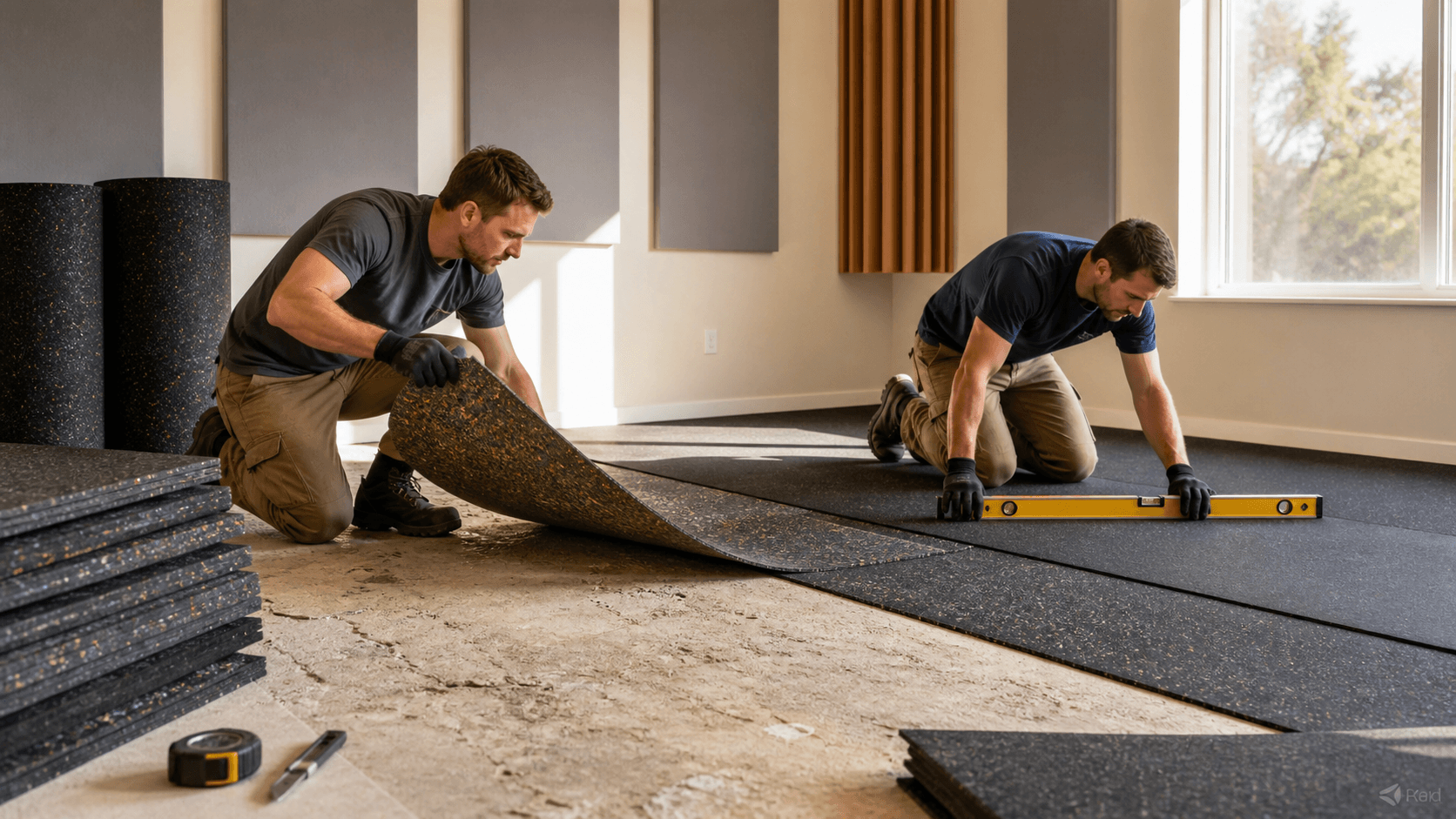
- Open joints between sheets or rolls
- Unsealed routes around sockets, pipes, and services
- Overlooked flanking paths like chimney breasts and side walls
Soundproofing works as a system, so the weakest link can ruin the lot. A tiny unsealed edge can let mid and high frequencies pass through far more than people expect. That is why details matter.
DIY shortcuts often include:
- Not staggering joints, so sound can follow a straight line across the floor or wall
- Leaving edges loose instead of butting them tightly
- Skipping acoustic sealant and relying only on boards or skirting
- Treating just one wall while sound flows around it through ceilings or floors
A proper approach uses layers that work together, for example a soundproofing mat with the right boards, resilient layers, and fully sealed perimeters. Warm, dry late-summer days are great for adhesives and sealants to cure properly and for tackling more complex builds before the colder, damper season makes work harder.
Misusing Soundproofing Mat in Floors, Walls and Ceilings
The same soundproofing mat can act very differently depending on where it is placed. Simply "sticking it on" the nearest surface often wastes its potential.
On floors, it helps to think about two types of noise:
- Impact noise, like footsteps, chairs, and dropped items
- Airborne noise, like voices, TV, and music
Impact noise often needs a resilient, slightly springy layer that separates the walking surface from the structure. Airborne noise usually needs mass and airtight layers. Put the mat in the wrong place, or clamp it hard to the joists, and you join things back together so vibration can travel again.
On stud walls, common missteps include fixing a dense mat straight to bare studs, then screwing plasterboard tightly through everything. This can help a bit with higher frequencies, but it often leaves low-frequency noise like bass almost untouched. Better results usually come from decoupling, layering the mat in with the right boards, and keeping the mass as continuous and airtight as possible.
Ceilings bring their own traps:
- Long screws that go through the resilient layer and straight back into joists
- Missing backer boards, so the mat has nothing solid to work with
- Forgetting that sound from upstairs might travel through joists and cavities, not just straight down
In a typical UK home or studio, the placement and integration of mass loaded vinyl with boards, resilient layers, sealing, and decoupling can make a big difference to performance. The material is only one part of the system. The structure around it is just as important.
Overlooking Real-World Constraints and Regulations
Soundproofing is not just about theory. Real homes, especially older UK properties, come with quirks.
People often start big projects too late in the year, when cold and damp make everything slower. Adhesives and sealants may not cure as well in chilly lofts or unheated rooms. Cutting and handling heavy mats is also less pleasant when you are working in thick coats with cold fingers.
There are also building regulations to think about, especially for separating floors and party walls. A soundproofing mat on its own is rarely a full solution for these rules. The whole system needs to be thought through so it meets the right standard for the space.
Other areas people often forget:
- The extra weight on older timber joists or lath and plaster ceilings
- The total thickness of new build-ups, doors, and trims
- The quality and consistency of the products they are using
Product quality and reliable supply matter a lot. Swapping to a different material halfway through because stock ran out can leave you with a patchwork build that does not perform the way you hoped.
Get Soundproofing Mat Right First Time
Before you buy anything, it helps to ask a few clear questions:
- What type of noise is the main problem, impact or airborne, or both?
- Where is it actually travelling, through floors, walls, ceilings, or flanking routes?
- What is the current structure, timber, concrete, or something mixed?
- What final finish do you need, plasterboard, flooring, or specialist panels?
Take a fresh look at any current or planned soundproofing mat install. Check for the mistakes we have talked about: wrong type of mat, thin or lightweight products trying to do a heavy job, gaps and air leaks, mats fixed in the wrong place in the structure, and ignored building rules.
When soundproofing mat is chosen and fitted properly, it becomes a powerful tool for real homes, offices, studios, and home cinemas here in the UK. Late summer is a smart time to sort it, so your spaces feel calmer and more comfortable by the time the darker, noisier autumn and winter evenings arrive.
Get Started With Your Project Today
If you are planning a refurbishment or new build and need reliable control over noise, we can help you choose the right soundproofing mat solution for your space. At Advanced Acoustics we work closely with contractors, designers and property owners to deliver practical, high-performing systems that are straightforward to install. Share a few details about your project and we will recommend a tailored approach that fits your budget and timescale. If you would like specific technical guidance or a quotation, simply contact us and our team will respond promptly.