Quiet Living in Flats Without Major Renovations
Noise in a flat can wear you down. Footsteps from above, voices through the party wall, music from next door, and you often have very little say over how the building was put together in the first place. On top of that, many leases limit what you can do to floors, ceilings, and walls, so big structural changes are off the table.
So where do you start? Do you focus on acoustic underlay under your floor, add soundproofing to your walls, or try a mix of both? Getting this choice right can make a big difference to how peaceful your flat feels and how well you sleep.
Late spring and early summer often make the problem feel worse. Windows stay open longer, people stay up later, and there are more barbecues, parties, and general noise around. Thoughtful acoustic treatment can help keep all that sound under control without turning your flat into a building site.
We are Advanced Acoustics, based in the UK, and we spend a lot of time helping people in flats find realistic, workable ways to reduce noise. The key is not a one-size-fits-all product, but matching the treatment to the noise you actually hear and the type of building you live in.
How Sound Travels in Flats and Why It Matters
To choose between acoustic underlay and wall soundproofing, it helps to know what kind of noise you are dealing with.
There are three main types:
- Airborne noise, such as TV sound, music, and conversation
- Impact noise, such as footsteps, dropped items, or chairs scraping
- Flanking noise, which sneaks around edges, through floors, ceilings, or side walls
In many UK flats, floors are either timber joists with boards on top or solid concrete. That matters a lot:
- Timber floors often pass impact noise very easily, so footsteps above can sound sharp
- Concrete floors are better at stopping impact noise but can still pass low rumbles and airborne sound
- Stud partition walls can pass voices and TV noise much more than solid brick or block
Common myths cause a lot of disappointment. A thick carpet without proper acoustic underlay rarely solves heavy footfall. A chunky wall does not always mean you can ignore the ceiling or floor, because sound can travel around edges or through gaps.
Before you spend money, it is worth working out:
- What do you hear most: thumps, voices, or both?
- When does it bother you most: late at night, early morning, or all day?
- Where does it seem to come from: above, below, or through one key wall?
Once you have that clear, you can decide whether underlay, wall soundproofing, or a mix is likely to give the best return.
When Acoustic Underlay Is Your Best First Move
Acoustic underlay sits under your finished floor, such as laminate, engineered wood, or carpet. It is designed to soften and spread the impact of footsteps and general movement so less energy passes into the structure. If the main problem is noise from above or complaints from neighbours below, it is often the right place to start.
Good acoustic underlay helps most when:
- You are in an upper-floor flat and get comments about your footsteps
- You hear sharp tapping or chairs scraping rather than clear voices
- You are planning to change flooring anyway, for example in early summer refurbishments
In flats, there are a few practical points to think about:
- Floor height build-up, doors, and skirting may need adjusting
- Underfloor heating needs compatible underlay that still allows heat to pass
- Different floor finishes, such as laminate or carpet, work better with certain underlays
Lease rules can also affect what you can put down, especially if hard flooring has been a problem in the block before. Acoustic underlay can often be a way to improve things while staying within those rules, because you are not changing the main structure.
If your flat is a conversion and you need to satisfy Part E of the Building Regulations for separating floors, acoustic underlay can be part of a wider solution along with other layers in the floor. Underlay is strong on impact sound, but it can also help limit how much of that impact turns into airborne noise that nearby rooms can hear.
At Advanced Acoustics, we supply acoustic underlay that can fit into layered systems, so it works alongside other elements like extra floorboards or ceiling upgrades where needed.
Where Wall Soundproofing Outperforms Underlay
If what really bothers you is hearing next door's TV, arguments, laughter, or music, wall soundproofing will usually do more for your comfort than changing your floor. Acoustic underlay will not do much for voices through a party wall.
Typical wall soundproofing build-ups in flats include:
- Independent stud walls, built just clear of the existing wall, filled and double boarded
- Resilient bar systems, which decouple new boards from the wall to cut vibration paths
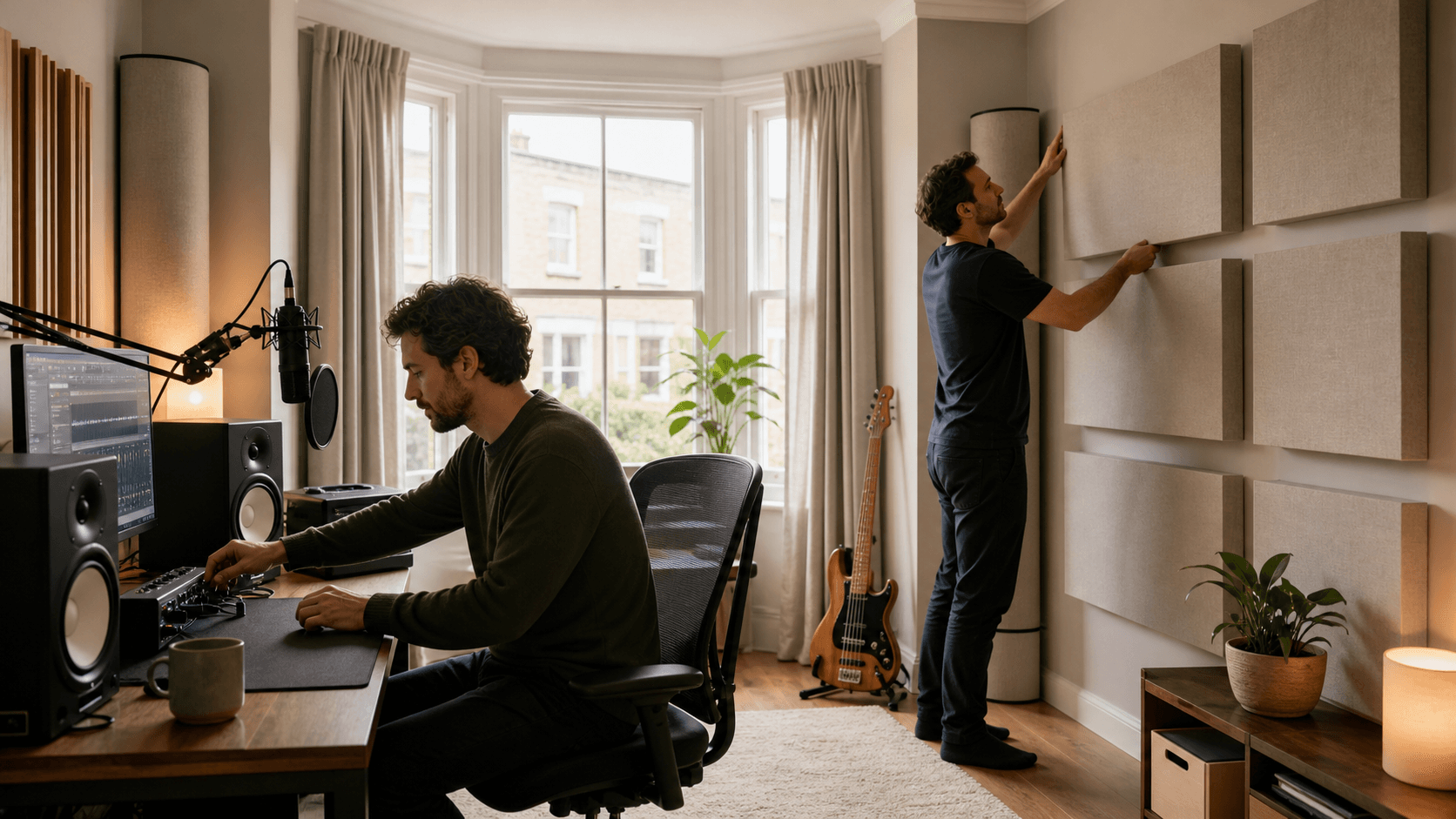
- Slimline soundproof panels that add mass and damping in as little space as possible
The trick is to add mass, damping, and separation without losing too much floor space. That is a real worry in smaller flats, where every centimetre matters. We also have to plan for:
- Radiators and pipework that may need to move forward
- Sockets and switches that must be treated carefully to avoid sound leaks
- Freeholder conditions that may limit heavy structural changes
One advantage of wall soundproofing is that you can phase it room by room. Many people start with bedrooms so they have a quiet place to sleep before guests arrive in summer or before hot, noisy nights with windows open make it harder to drift off.
At Advanced Acoustics, we match products to wall type, expected noise level, and available depth. The idea is to balance sound reduction with space and disruption, not just throw the thickest system at the wall.
Combining Floor and Wall Solutions for Better Results
In real flats, noise is rarely just one thing. Maybe you hear footsteps above in the evening and TV through the wall at night. A hybrid approach often gives the best overall result, especially in open-plan living areas or bedrooms underneath busy living rooms.
A simple way to think about it:
- Mostly footsteps and scraping from above, start with acoustic underlay
- Mostly late-night voices and TV through one side, start with wall soundproofing
- Both are equal, plan to do wall and floor in stages, starting with the worst room
When planning work around a summer refurbishment, it helps to map out:
- Which rooms you can empty first with the least hassle
- How to group trades, so flooring, electrics, and decorating line up smoothly
- Where you can accept a bit more disruption for a bigger noise improvement
The good news is that floor and wall systems can be chosen so they work together. For example, an acoustic underlay upgrade now can be teamed later with wall panels in the same room without having to rip up your new floor. Advanced Acoustics supplies compatible underlays, wall products, and accessories so the pieces fit together when you are ready.
Planning a Quieter Flat This Summer
The main point is that there is no single magic product for every flat or every noise. The right mix of acoustic underlay and wall soundproofing depends on what you hear, how your flat is built, and what your lease allows.
A useful first step is to pay close attention for a few days:
- Write down times when noise bothers you most
- Note if it is sharp impact, low rumble, clear voices, or TV
- Try to judge whether it comes mainly through the floor, ceiling, or one wall
Then, gather simple facts about your flat, such as whether your floor is timber or concrete and whether your party wall feels solid or hollow. With that information, it becomes much easier for a specialist like Advanced Acoustics to suggest realistic acoustic underlay options, wall systems, and combinations that match your space and your expectations.
Get Started With Your Project Today
If you are planning a new build or refurbishment, we can help you choose the right acoustic underlay to achieve reliable sound control. At Advanced Acoustics, we work with homeowners, contractors and designers to deliver solutions that fit performance targets and budgets. Share a few project details with us and we will recommend a clear, practical approach. For tailored advice or a quotation, simply contact us today.