Office noise isn’t always loud, but it can still be hard to deal with. That low background hum of voices, rustling papers, and footsteps can get in the way of a simple chat. It builds up softly, making it harder to hear people clearly during small meetings or passing conversations.
It gets worse when sound keeps bouncing off hard walls and open desk spaces. When there is nothing there to stop the noise, it lingers. That is where acoustic foam panels can help. By softening sharp echoes and blocking sound from traveling too far, these panels create a setting that is quieter and easier to focus in.
Why Sound Becomes Unclear Indoors
Many offices today are built for openness. Friendly layouts, exposed floors, and lots of glass make everything feel lighter. But all those smooth, flat surfaces make sound spread more than it should. The harder the surface, the less sound it soaks up. Instead, the sound reflects again and again.
This happens most in larger shared rooms and meeting zones, where multiple voices stack onto each other without stopping. Spring only adds to it. Colleagues are back in full swing, planning, catching up, and moving between spaces. Group chats by the lift or in the lounge sound pleasant, but they keep spreading if nothing stops them. It becomes difficult to pinpoint who is speaking or what is even being said.
Once voices mix and bounce between walls and desks, they become muddled. That blur in the background might not sound loud at first, but it still creates mental noise that makes it harder to focus or hold a clear conversation.
How Acoustic Foam Panels Help Clean Up Sound
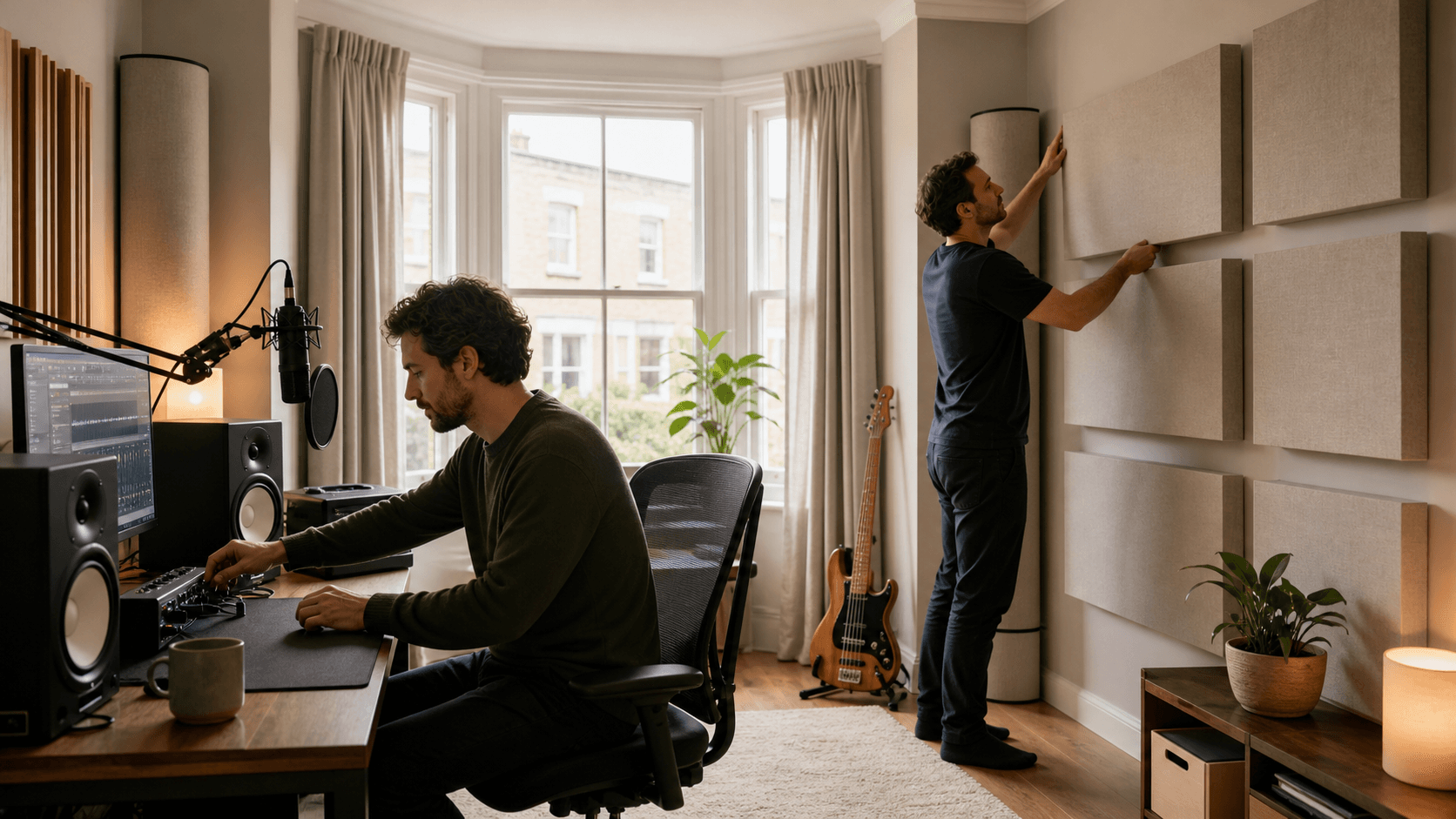
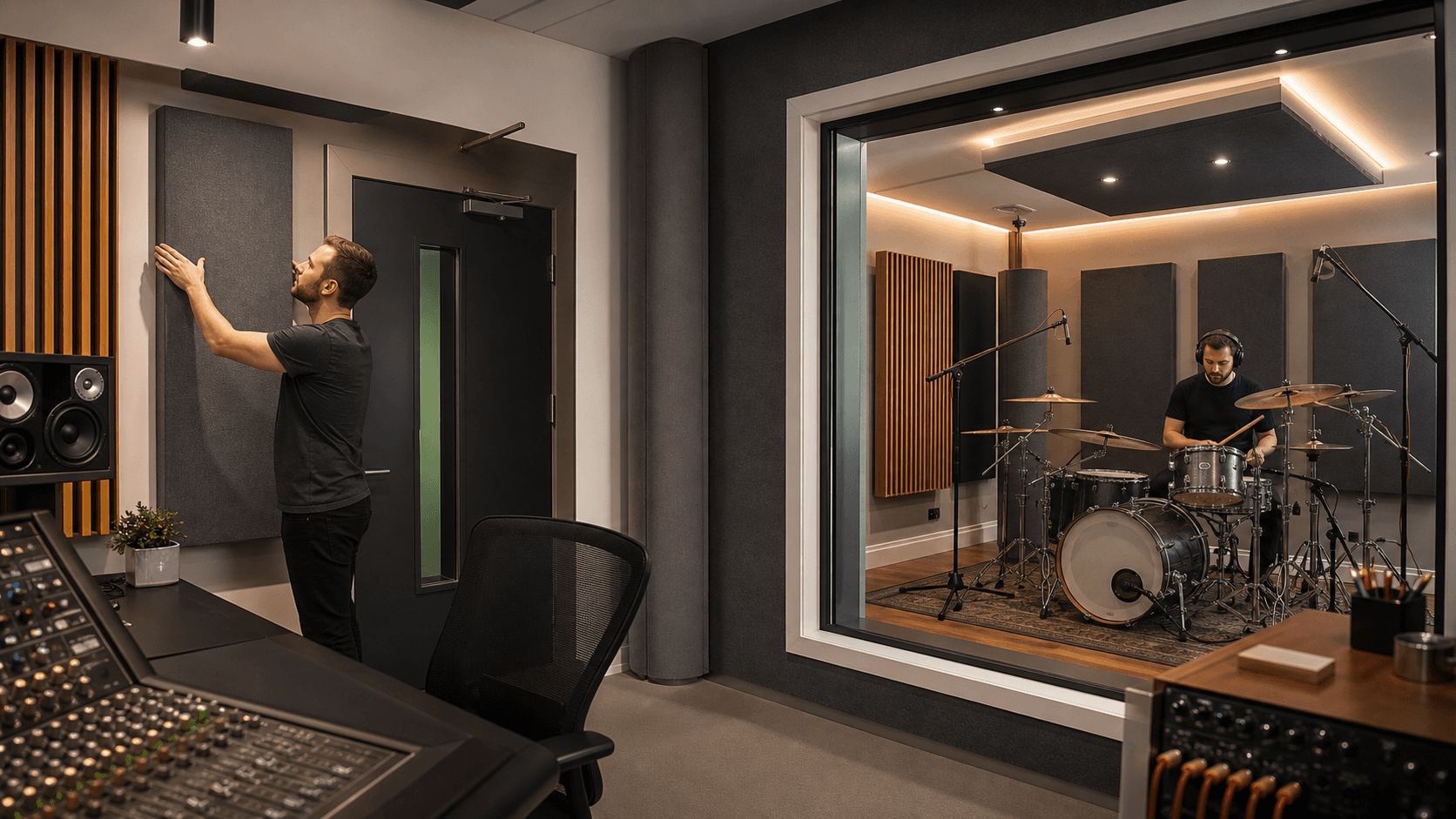
We use sound-absorbing materials to absorb, not reflect, stray noise. Acoustic foam panels do just that. Once attached to a wall, they help stop sound waves in their tracks by soaking them up at the point of contact.
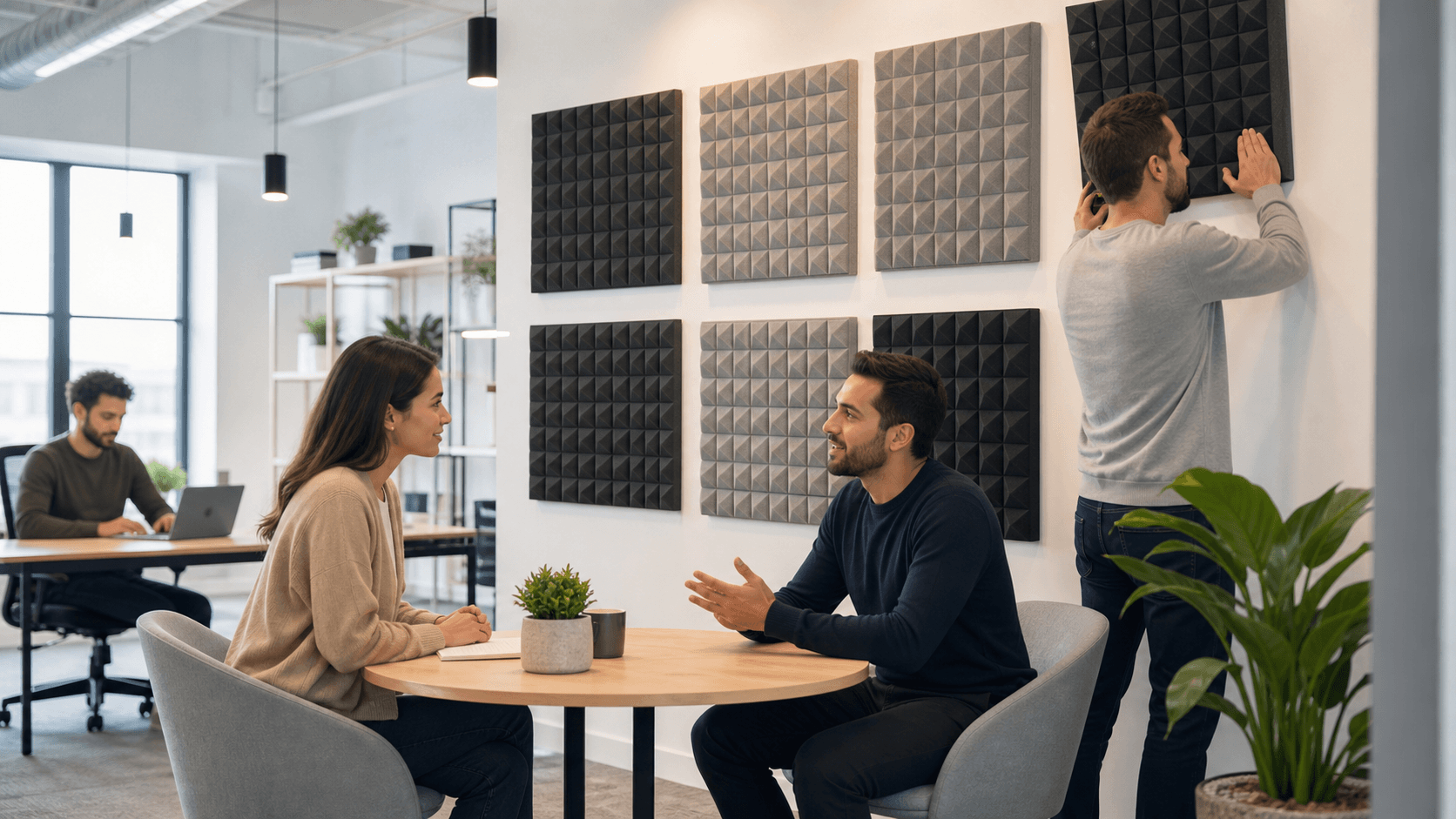
Unlike flat paint or plaster, foam has texture. That design slows the sound down and catches it early. When panels are fitted at speaking height or slightly above, they help clear up the noise right where it begins. Office walls see a lot of contact sound, talking, laughing, even quiet shuffling from team members working side by side. The foam dampens it before it carries on to the next space.
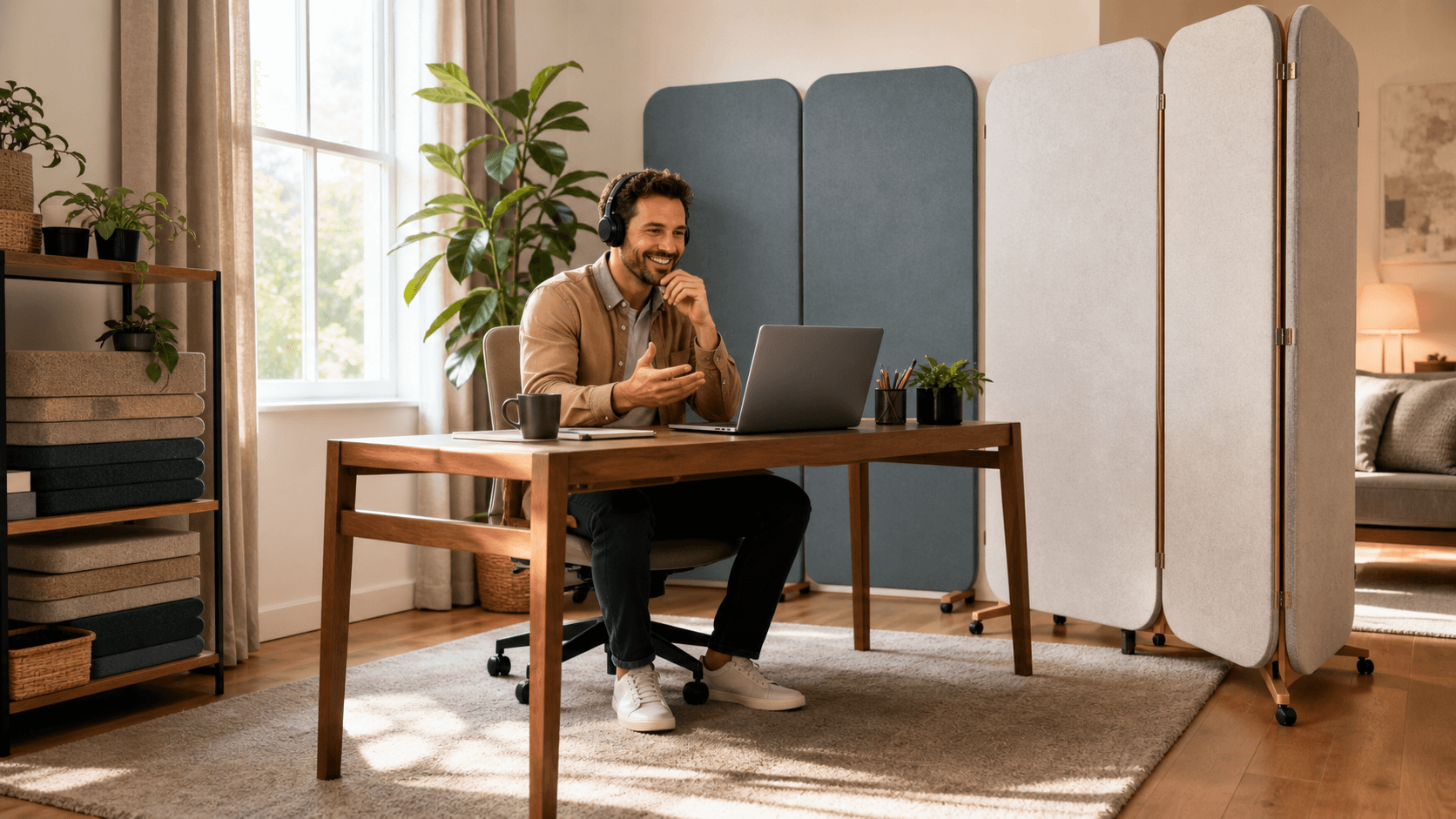
Placing these panels around workstations or small meeting spots helps keep conversation more grounded. Rather than voices bouncing across the room, they stay closer to where they are needed. Less travel means less mix-up, and people do not need to repeat themselves as often.
Where to Put Panels for the Best Result
A good result comes down to smart placement. You do not need entire walls covered, just the right parts. We look for where conversations naturally happen or overlap and work with those zones first.
Here are three of the most effective spots to install panels:
- Behind or beside workspaces, where voices tend to rise and drift into nearby desks
- In open common areas like hallways, booths, or lounge areas, where casual chats often build and carry
- On tall, bare walls surrounding desks or conference tables, which otherwise reflect voices back across the room
Adding panels on both sides of a spot can be more effective than only one wall. In spaces with high ceilings or large center tables, sounds have multiple directions to travel in. It is best to stop them while they are still close to the source.
Blending Sound Control with Office Design
Aesthetic matters. Offices are not just places to work; they are set up for comfort, team connection, and brand identity. So any acoustic additions must respect the space visually too.
That is why foam panels come in different shapes, patterns, and soft color choices. Some blend in like artwork, while others take a subtle back seat to desks, walls, or lighting. With careful arrangement, panels do not take over a wall, but rather sit where they are likely to help the most.
Positioning matters just as much as color. We plan around movement. If a corridor needs to stay clear or a line of sight is important for natural light, panels are fixed where they avoid impact. When done thoughtfully, they work without changing how a room flows or feels.
Clearer Rooms, Quieter Minds
Being able to hold a conversation without strain is a basic need in any office. If you are asking someone to repeat things or raising your voice just to be heard, it spoils the work rhythm. That is what lingering echoes and loose background sound do. They add friction where none is needed.
Well-placed acoustic foam panels calm that space. They help keep voices to their spot, reduce overlap, and make everything sound closer and clearer. You do not get rid of all the sound, but what is left is softer and sharper. People can talk, think, or meet without working against the room.
That difference may not seem big at first, but it is felt every day. Less echo means less strain. And that means more grounded chats, quicker decisions, and cleaner focus, all from a small update that disappears into the room without taking space from the people in it.
If echo and unclear sound are holding your team back, smart upgrades can make a big difference. With the right office acoustic solutions, you can reduce distractions, improve clarity, and support natural, easy conversations throughout your workspace. At Advanced Acoustics, we focus on blending performance with design so that you get better sound without changing the look and feel of your environment. Let’s make your office sound as good as it works.