Introduction
Meeting rooms should feel calm. They should be places where people can speak clearly, share ideas, and make decisions without straining to hear each other. Yet many offices deal with an ongoing hum in the background. It can come from the ceiling, from walls, or from the space next door. Over time, this constant sound can make meetings feel more draining than they should.
We often hear from workplaces that want to fix this issue without building a full soundproof wall in the UK. The good news is, it's possible. Without pulling down walls or rebuilding, you can quiet that low hum using the right mix of materials. Acoustic foam panels and purpose-made office acoustic panels are a smart starting point that keep your space looking clean while cutting down on deep background noise.
Understanding Where the Humming Comes From
Before fixing the issue, it's helpful to understand what's causing it. Most humming sounds in meeting rooms fall into a low-frequency range. They travel differently from sharper sounds and tend to carry through walls, floors, and ceilings more easily.
There are common reasons this hum sticks around:
- Electrical fittings like light ballasts or outdated wiring
- Machinery or HVAC units running in distant rooms
- Vibration through ducts or suspended ceilings
- Echoes that occur from plain, flat walls or hard flooring
Open ceiling designs, often seen in modern offices, can make this worse. These designs may look open and stylish, but they often allow sound to bounce uninterrupted, making the hum feel louder. Bare flooring, such as polished concrete or vinyl, adds to the reflection. Together, these hard surfaces give low-frequency sounds more room to grow.
Using Acoustic Foam Panels for Sound Absorption
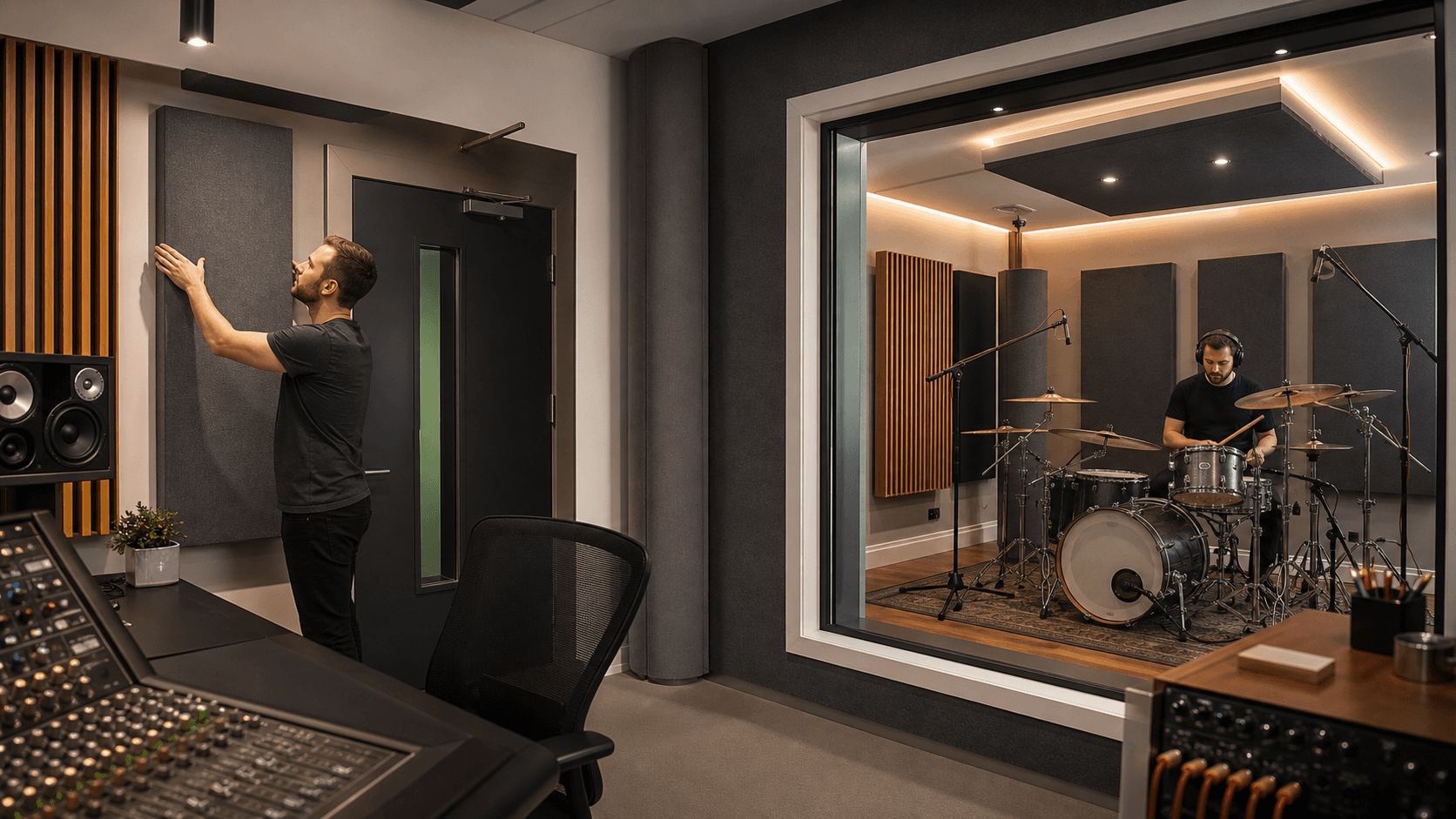
This is where acoustic foam steps in. These panels are made to absorb sound rather than reflect it. They're not just for music rooms or studios. When used correctly, they can reduce humming and bring clarity back to speech.
Here's how they help:
- They soak up deep sound waves that normally bounce off walls or ceilings
- Soft textures stop sound from travelling far and lingering in the space
- Foam with the right thickness can target those long, low tones that cause most of the background hum
Where you place them matters. Ceiling corners are good spots because sound tends to build up there. Wall sections that sit opposite air vents or next to machinery rooms are also worth treating. If ceilings are exposed, acoustic foam stuck in between joists or placed above lighting can reduce vibrations.
Shapes play a part too. Wedge-cut and bevelled panels often absorb deeper rumbles better. Denser foam blocks are made to target mid to low frequencies, which are typical of mechanical hum.
Office Acoustic Panels That Blend Into the Room
When people hear the term acoustic solutions, they may imagine bulky foam stuck to every wall. That doesn't have to be the case. We can reduce sound problems without changing the full look or function of a room. Office acoustic panels are built to work in practical, shared-use spaces.
There are a few ways to use them:
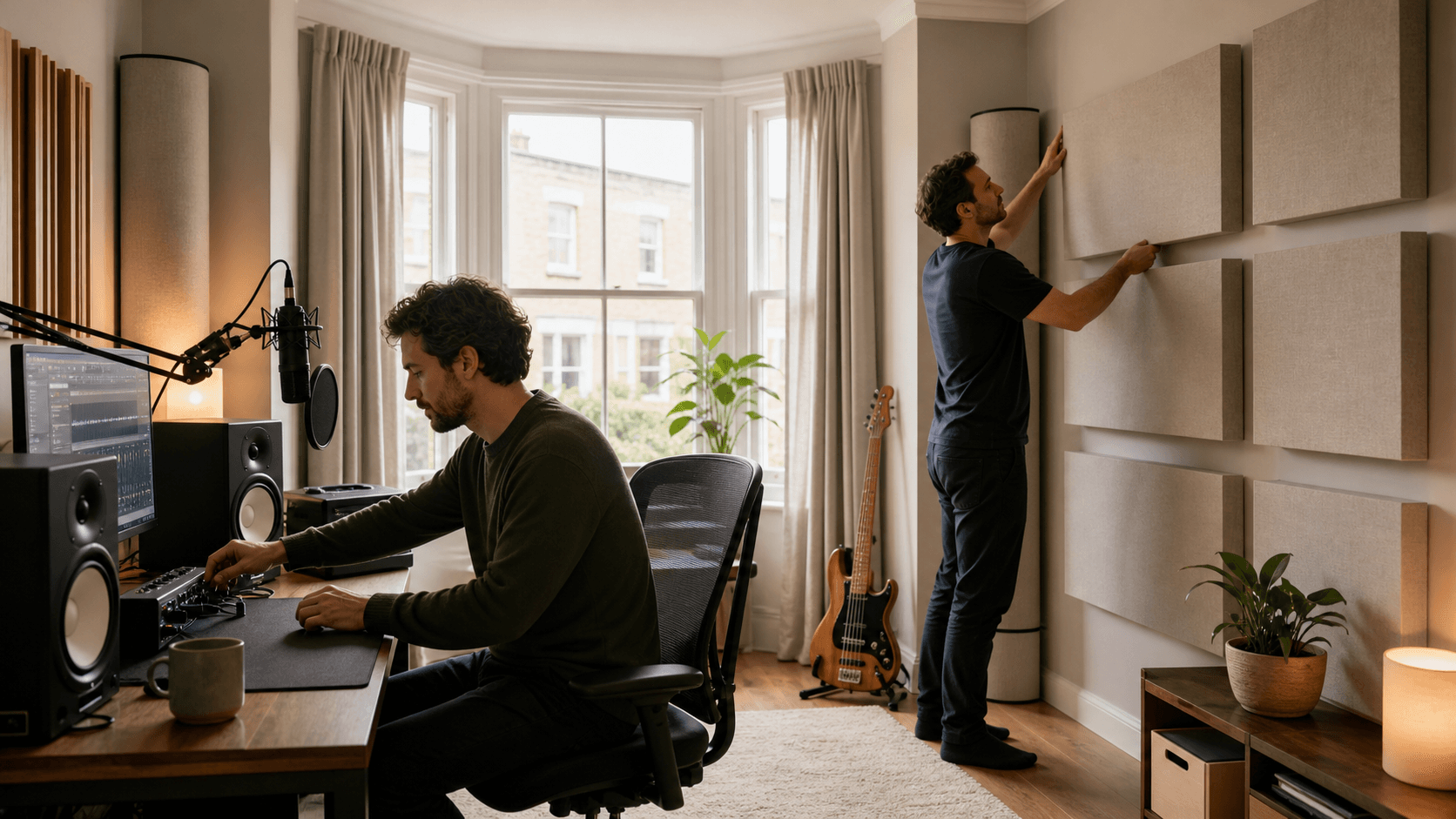
- Wall-mounted panels can be installed only where needed, without covering entire surfaces
- Fabric-covered panels come in colors and textures that match existing interiors
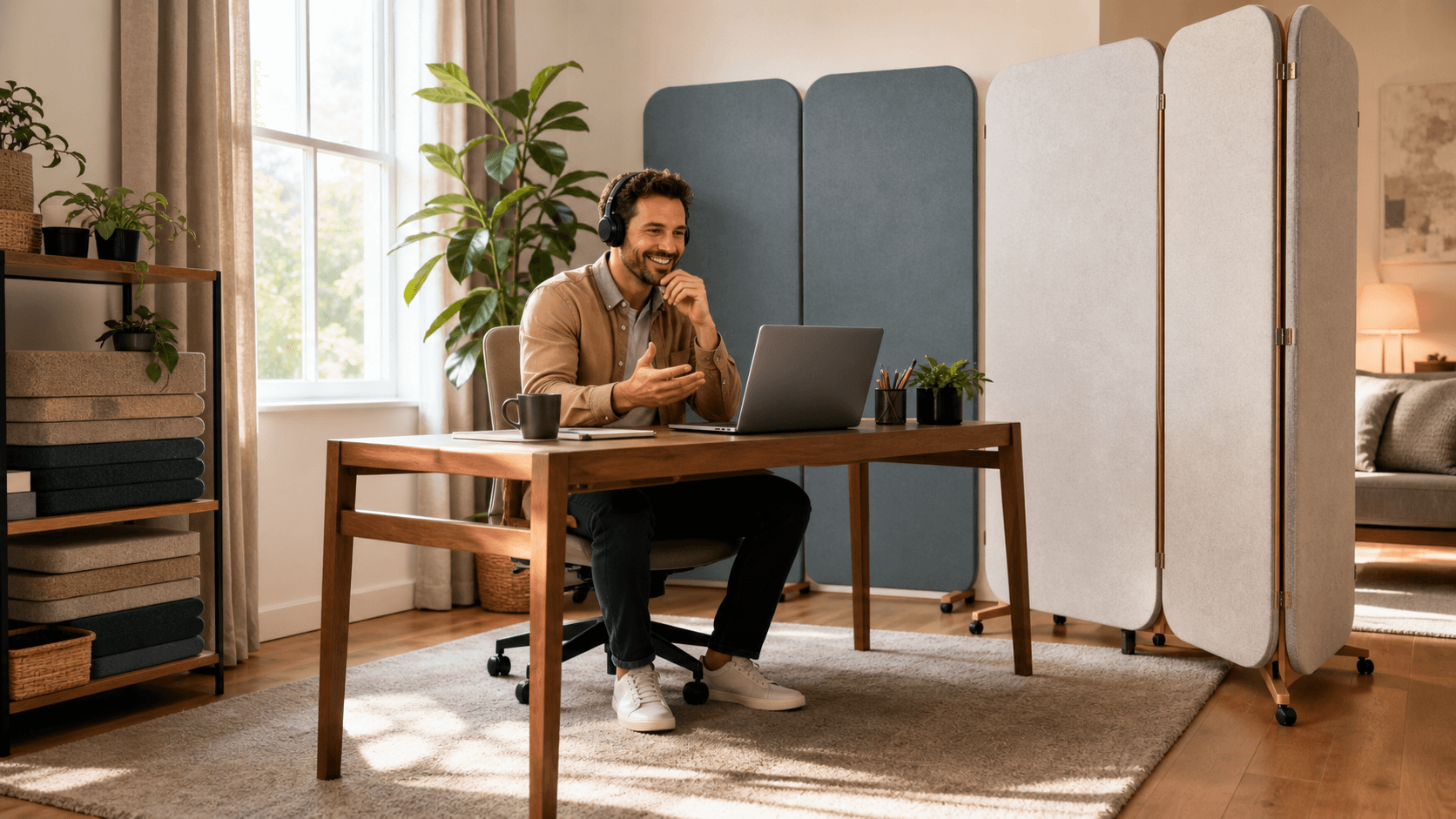
- Divider panels can act as sound barriers between meeting spaces or work zones
Some panels are even made to look like modern art or decorative features. This way, they add colour or texture to the room, while still tackling noise. They can be placed higher up on the wall or mounted above head height. That's useful in rooms where wall space is limited by screens or furniture placement.
Freestanding panels offer yet another choice, especially in rental properties. They can sit behind desks or act as room dividers, softening the space while helping tone down sound build-up.
Keeping Sound Out Without Rebuilding
Often, humming doesn't come from inside the room at all. It sneaks in from other areas of the building. If the wall doesn't hold much sound back, you'll hear humming through from adjacent conference rooms or utility areas. This might feel like noise you can't control without full construction.
Instead of adding a soundproof wall in the UK, we can focus on what's already in place:
- Attach ceiling-mounted acoustic baffles that trap sound before it drops into the room
- Block off any small openings or cable gaps that give sound a pathway in
- Add acoustic panels to the wall area nearest to where the sound enters
Products such as Premium Mass Loaded Vinyl soundproofing mats in 5 kg or 10 kg weights, and Silent Panel composites that bond mass loaded vinyl to acoustic foam in 5 kg/25 mm and 10 kg/50 mm versions, can be fitted behind existing wall finishes to strengthen separation between noisy and quiet rooms.
It's often enough to treat inside the room with high-absorption panels, instead of changing the original wall structure. High ceilings offer flexibility, since vertical space can carry panels or fabric baffles that hang down without affecting how the room is used.
Audio reflections can also enter from glass panels or doors. In those cases, foam strips or acoustic drapes help to tighten up the space without major renovations.
The Power of Quiet Meetings
A quiet room doesn't just make meetings sound better. It helps people think more clearly, speak without straining, and leave a session feeling less wiped out. Humming hangs in the background like a weight on conversation. Removing it brings the space back to what it should be, a place for ideas, not distractions.
By using acoustic foam and smart office panels, we can soften the space in a way that works. Meeting rooms can stay modern and open without suffering from sound issues that wear people out. These changes don't take long, but the difference they make is easy to hear. And once the hum is gone, the room feels lighter, more open, and easier to use every day.
At Advanced Acoustics, we understand the challenge of managing noise in shared spaces without causing major disruption. When full walls aren't an option, our acoustic panels provide a clean and effective solution to quiet rooms quickly. For those seeking to reduce external noise, one reliable option is enhancing what's already there rather than building a full soundproof wall in the UK. Our wall soundproofing range includes options such as 5 kg and 10 kg Premium Mass Loaded Vinyl soundproofing mats and Silent Panel composites that combine mass loaded vinyl with acoustic foam, giving extra isolation behind existing surfaces. We have developed materials that work well in meeting rooms where clarity and comfort matter, and we would be happy to discuss the best options for your space, just give us a call today.