How to Soundproof a Room Without Green Glue: Practical UK Options
Green Glue compound is off the table in the UK right now, and it may be that way for quite a while. If you have noisy neighbours, loud traffic, or a busy family home, waiting around is not much help. You still need real, practical soundproof room solutions that you can actually get and install here.
In this guide, we will walk through realistic ways to soundproof walls, floors, and ceilings without Green Glue. We will also look at doors, windows, and how to improve the sound inside a room. As a UK-based soundproofing specialist, we work with these types of systems every day, so we know what tends to work best in real homes, studios, offices, and commercial spaces.
Understand What You Are Soundproofing Against
Before choosing any materials, it helps to know what type of noise is causing the problem. There are two main types.
Airborne noise is sound that travels through the air, like:
- Voices and shouting
- TV and music
- Traffic and outside noise
Impact noise is sound that travels through the structure, such as:
- Footsteps on floors above
- Chairs scraping on hard floors
- Doors banging and things dropped on the floor
Soundproofing is about blocking or reducing sound passing from one space to another. Acoustic treatment is about how a room sounds inside, for example reducing echo, muddiness, or harshness. Both matter, but they are not the same thing.
Choosing the right soundproof room solutions starts with spotting the main path for the sound. Is it coming through a party wall, up through a timber floor, down from a ceiling, or through a lightweight door? Once we know that, we can target the right part of the structure.
Wall Soundproofing Options Without Green Glue
Green Glue is often used between layers of plasterboard, but without it we still have strong ways to improve walls.
One common approach is to add mass to the wall. Heavier walls tend to block more sound. Typical options include:
- Acoustic barrier mats or mass-loaded vinyl-type materials
- High density soundproof plasterboard
- Extra boards such as MDF to build up layers
A typical upgrade to a party wall might look like this: existing wall, then an acoustic barrier mat or similar dense sheet, then one or two layers of acoustic plasterboard. This kind of build-up can suit bedrooms, living rooms, and home offices where you want a clear drop in everyday airborne noise.
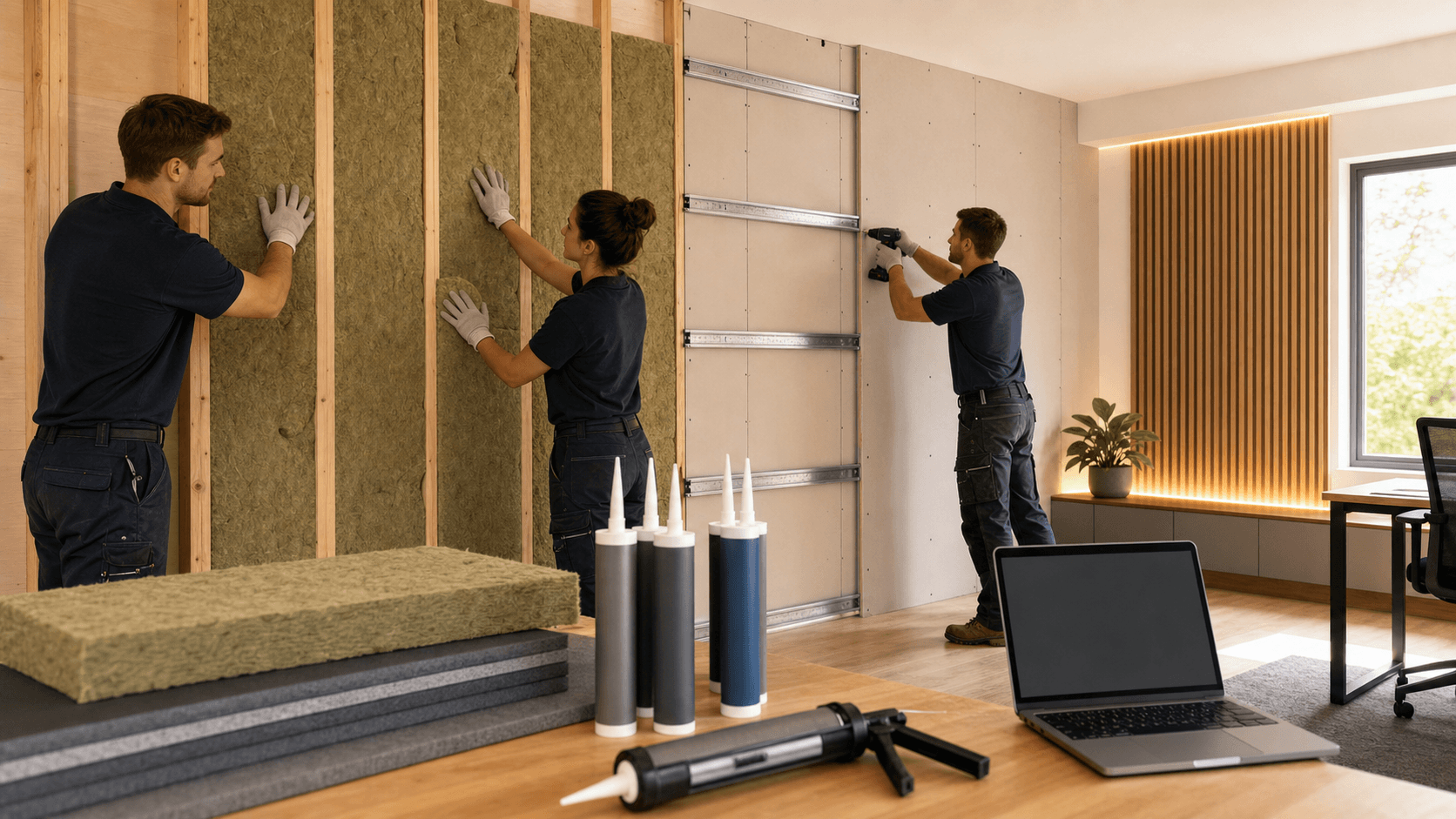
For bigger problems, an independent or resiliently fixed stud wall is often more effective. Here, you build a new frame slightly away from the existing wall, then:
- Fill the cavity with acoustic mineral wool
- Fix sound-rated boards to the new studs
- Keep the new wall separated from the old one as far as possible
This decoupling reduces vibration travelling straight through the structure. The trade-off is that you lose some floor space and the work is more involved, but the jump in performance can be worth it in many cases.
Whatever wall system you choose, sealing and finishing are key. Small gaps can undo a lot of hard work. It helps to:
- Use acoustic sealant around edges, skirtings, and at the junctions
- Seal around sockets and switches
- Use back boxes and putty pads behind electrical outlets
These wall build-ups are among the most effective soundproof room solutions for typical party walls in UK homes.
Floor and Ceiling Soundproofing Alternatives
For noise between floors, we normally need to think about both impact and airborne sound.
Floating floors and acoustic underlays can help with impact noise from footsteps and moving chairs. Options include:
- Acoustic underlays that sit under laminate, wood, or vinyl flooring
- Rubber crumb mats laid over existing boards
- Overlay boards that add some mass and isolation
Standard carpet underlay is not the same as a dedicated acoustic system. A sound-rated underlay is usually designed to work under different floor finishes and to reduce both the feel and the sound of impact.
On the ceiling side, an acoustic suspended ceiling can give a big improvement, especially with timber joists. A common setup might be:
- Existing ceiling left in place where possible
- Acoustic mineral wool fitted between the joists
- Resilient bars or acoustic hangers fixed below
- One or two layers of acoustic plasterboard on the new frame
This kind of ceiling helps isolate the room below from activity above, which can be useful under busy bedrooms, kids' rooms, or workspaces.
If you are in a flat or a multi-storey house, the best results often come when both sides are treated. That might mean an upgraded floating floor upstairs and a suspended ceiling below. For many shared properties, combined floor and ceiling upgrades are some of the most practical soundproof room solutions.
Doors, Windows, and Flanking Paths
Weak points in a room can undo a lot of good soundproofing work, and doors and windows are often the biggest culprits.
A lightweight hollow-core internal door lets a surprising amount of noise through. Upgrading to a solid core or acoustic door can help cut that down. To go further, it also helps to:
- Add perimeter seals around the frame
- Use a drop-down seal or threshold seal at the bottom
- Make sure the frame itself is well filled and sealed
Windows are another common leak, especially near busy roads. Useful upgrades can include:
- Secondary glazing to create another layer and air gap
- Thicker or laminated glass units
- Careful sealing around frames and sills with acoustic mastic
Even a heavy, well-built wall can be undermined by a single weak window, so it is worth treating the whole section as one system.
Sound can also travel by flanking paths. This means it sneaks around the main barrier, using side walls, floors, ceilings, cavities, or even pipework and vents. Simple steps that often help include:
- Sealing gaps between floorboards
- Boxing in noisy pipes with lined enclosures
- Using acoustic mastic at the edges of frames, skirtings, and architraves
Effective soundproof room solutions must deal with these extra paths, not just the main surface.
Acoustic Treatment to Make Rooms Sound Better Inside
In some rooms the main problem is not sound leaving or coming in, it is how the space sounds inside. This is common for:
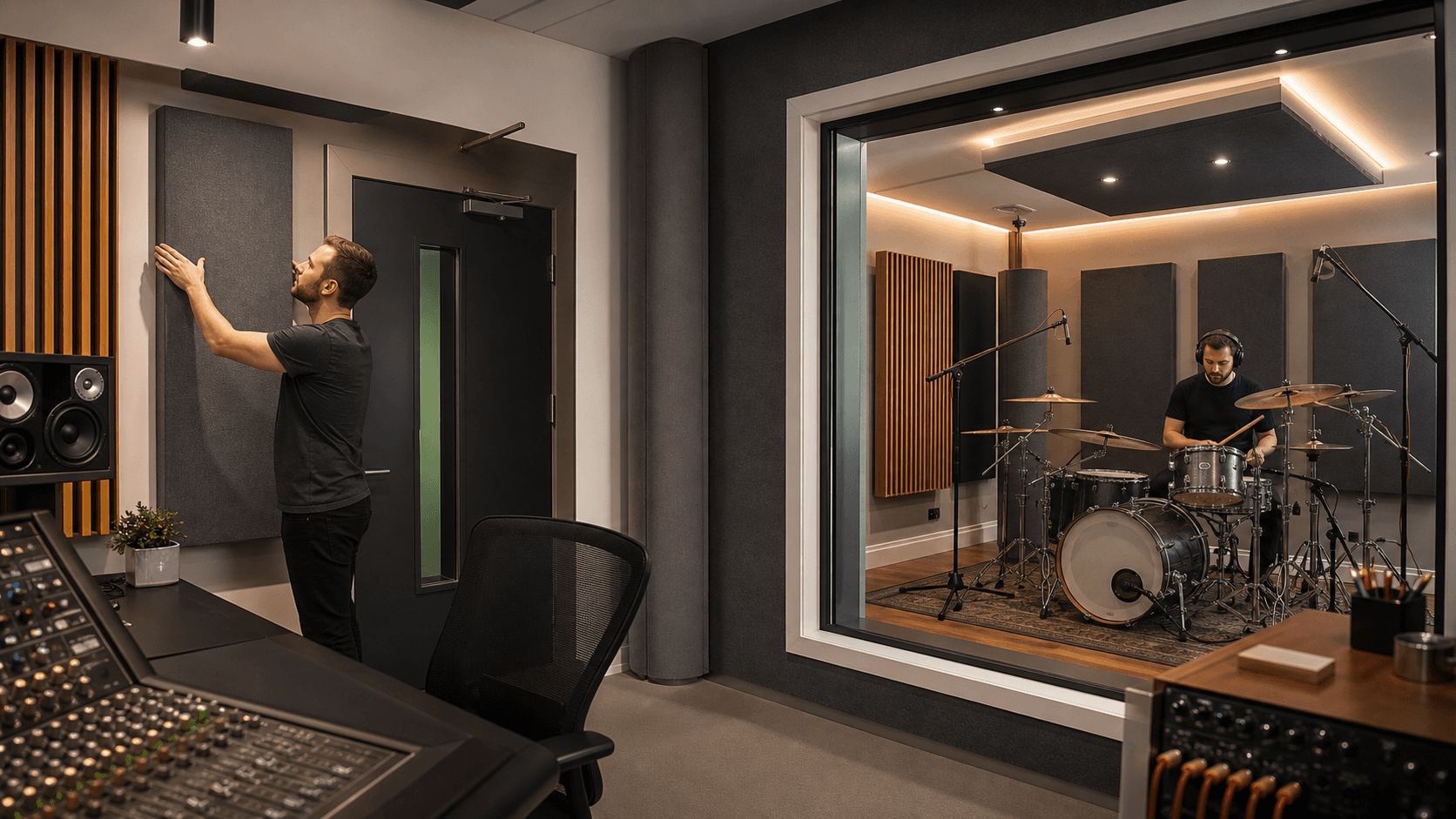
- Home studios and podcast rooms
- Home cinemas and media rooms
- Meeting rooms and open offices
Here we are trying to reduce echo and reverberation so speech is easier to follow and music sounds clearer. Acoustic treatment will not soundproof the room to your neighbours, but it can transform how comfortable it feels to use.
Common treatment options include:
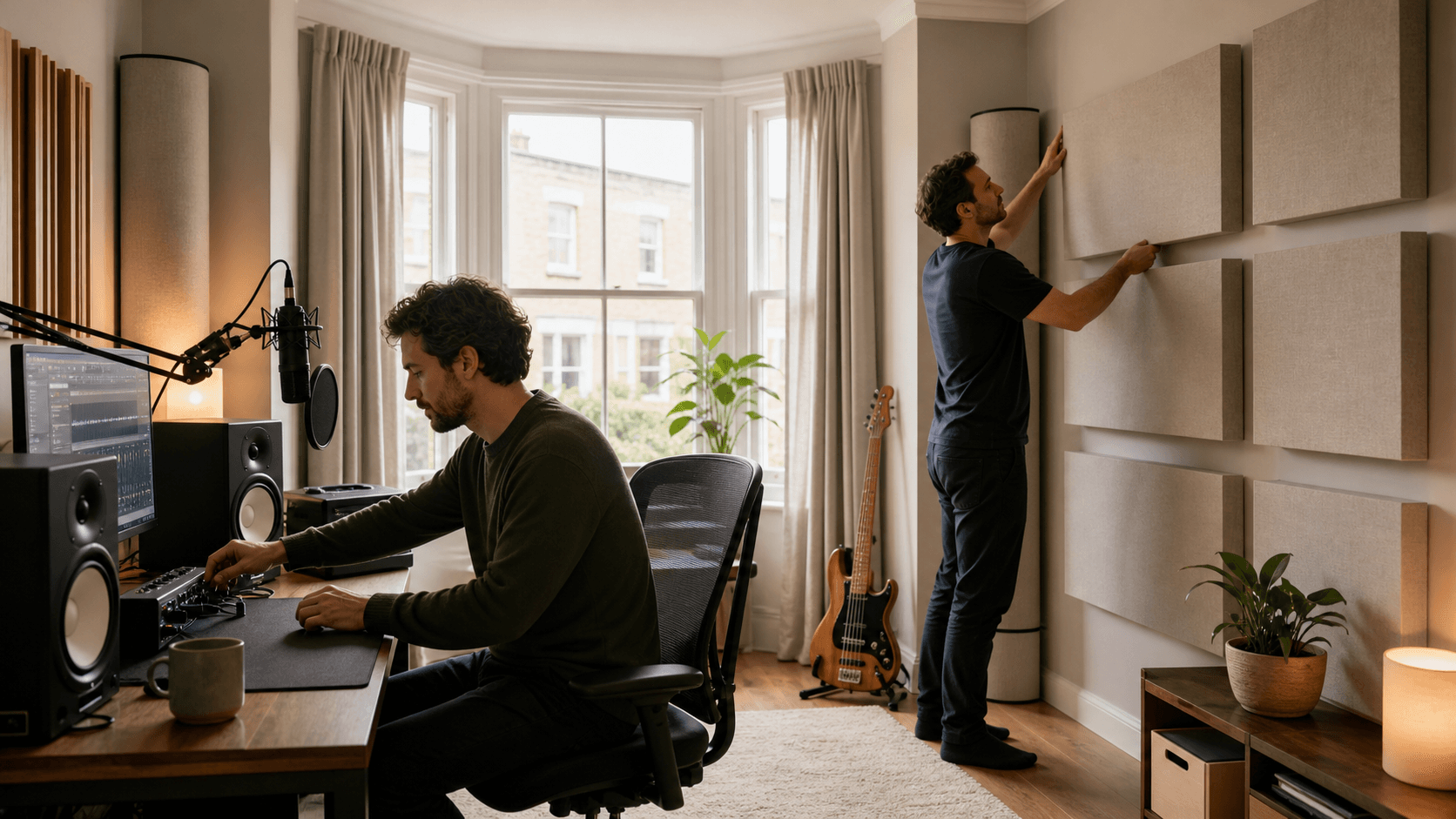
- Acoustic wall panels to reduce reflections and flutter echo
- Bass traps in corners to help with low-frequency build-up
- Studio foam tiles for more targeted control in recording spaces
Often the best approach is to build your soundproof structure first, then add acoustic treatment in the key spots, such as first reflection points, side walls, and the ceiling above the listening or working position. At Advanced Acoustics we supply both structural soundproofing products and acoustic treatment, so we can help plan how the two sets of materials work together. By combining structural soundproof room solutions with targeted acoustic treatment, you can create a quiet space that also sounds clear and controlled inside.
Choosing the Right System and Getting UK Specific Help
Every property is different, and there is no single setup that suits every noise problem. There are always trade-offs: higher performance systems usually use more layers and take up more space, while slimmer systems are less noticeable but give more modest gains. It is also worth keeping expectations realistic. Complete silence is very rare, but a noticeable and useful reduction in noise is achievable in many rooms.
Working with materials that suit common UK constructions, such as brick and block walls, stud partitions, timber joists, and concrete floors, makes a big difference. It also helps to keep UK Building Regulations in mind, including Part E for separating walls and floors in certain property types.
At Advanced Acoustics, we focus on practical soundproof room solutions using products that are available now, without relying on Green Glue compound. When people share their room dimensions, basic construction details, and a rough idea of the noise they are fighting, we can guide them towards build-ups, product choices, and good practice that fit their property, noise issue, and overall goals.
Create A Quieter Space With Tailored Soundproofing
If you are ready to reduce noise and improve comfort, our soundproof room solutions can be tailored to your home, studio or workspace. At Advanced Acoustics, we take the time to understand your space and recommend products that deliver real, measurable results. If you would like expert guidance or a bespoke specification, contact us, and we will help you plan the next steps.