Keeping Your Studio Cool, Quiet and Consistent Through Summer
Working in a hot studio is hard enough. Mixing in one is harder still. When the temperature climbs and the windows stay shut against street noise, a small sealed room with a rack of equipment in it becomes a genuinely demanding environment, both for the people in it and for everything installed on the walls.
Plenty of UK studios face this every summer, particularly in flats, terraced houses, lofts, and city units where air barely moves. This is where it pays to think about material specification, because different acoustic foams are engineered for different conditions, and melamine acoustic foam is specifically designed for the warmest and most demanding of them.
What Heat Actually Does to a Studio
The first thing worth separating out is the room from the treatment. A hot room causes problems whether or not the acoustic treatment is affected.
Sealed rooms run hot because of what is in them. Projectors, amplifiers, computers, lighting, and outboard gear all push heat into a space with nowhere for it to go. Windows stay shut to keep road noise, neighbours, and busy summer evenings out of your takes. The air sits still and the temperature climbs through the session.
Then there is cooling. Fans and air conditioning make the room liveable but add whirrs and rumbles that microphones are very good at finding. So the choice becomes staying comfortable or getting a clean take, which is a frustrating position to be in halfway through a session.
None of that is a materials problem. It is a room design and ventilation problem, and it is worth addressing directly through airflow planning, equipment placement, and quiet cooling. What materials specification does affect is how the room behaves close to those heat sources, and how the space performs on fire safety and air quality when it is sealed tight for hours at a time.
What Makes Melamine Acoustic Foam Different
Melamine acoustic foam is a low-density, open-cell material with a very fine internal structure. That structure delivers strong broadband absorption while keeping the material remarkably light, so it sits on walls and ceilings without loading up fixings.
Two properties set it apart, and both come from the chemistry of the material itself rather than from any coating or treatment applied afterwards.
High temperature tolerance. Melamine foam is engineered to operate at temperatures well beyond anything a studio will reach, which is why it is specified in industrial and transport applications as well as acoustic ones. In a studio context, that makes it a confident choice for positions close to hot lighting rigs, projector housings, equipment racks, and ceiling voids above heat-generating gear, where you want the specification to have a wide margin rather than a narrow one.
Inherent flame retardancy. This is the property that most often drives the decision. Melamine foam is inherently flame retardant, meaning the fire performance is built into the material rather than applied to its surface. It also produces low smoke levels and can meet stricter fire classifications than general-purpose foams. In a small sealed room full of electrical equipment and cabling, that matters, and in commercial, education, and public-use installations it is frequently a requirement rather than a preference.
Alongside those, melamine is chemically stable and low-odour, which is worth having in a tightly sealed room during long summer sessions when the door stays closed and the air does not move much.
Choosing Between Melamine and Standard Acoustic Foam
Both materials do their job well. This is a specification decision, not a quality one.
Our standard polyurethane acoustic foam range delivers excellent absorption, holds its shape and finish reliably in normal room conditions, and represents better value for most domestic and project studios. It is the right answer for a great many rooms, and a warm room in July is not on its own a reason to move away from it. We supply it with high heat resistance adhesive precisely so that fixings stay sound through summer temperatures.
Melamine becomes the better specification when one of these applies:
- Fire performance is a requirement. Commercial premises, rented studios, education and public-use spaces, or any installation where a specific fire classification has to be evidenced.
- Treatment sits close to a significant heat source. Directly around lighting rigs, projectors, or ceiling positions above equipment racks.
- Weight is a constraint. Suspended ceiling clouds, large-span installations, or fixings into weaker substrates where the lower density of melamine helps.
- The room is in constant heavy use. Commercial facilities running long daily sessions in a sealed space, where you want the widest margin on every property.
For a bedroom studio, a home cinema, or a podcast room in normal use, standard acoustic foam handles summer perfectly well. Melamine is the upgrade you specify when the environment or the regulations ask for more.
Designing a Cool, Quiet Studio
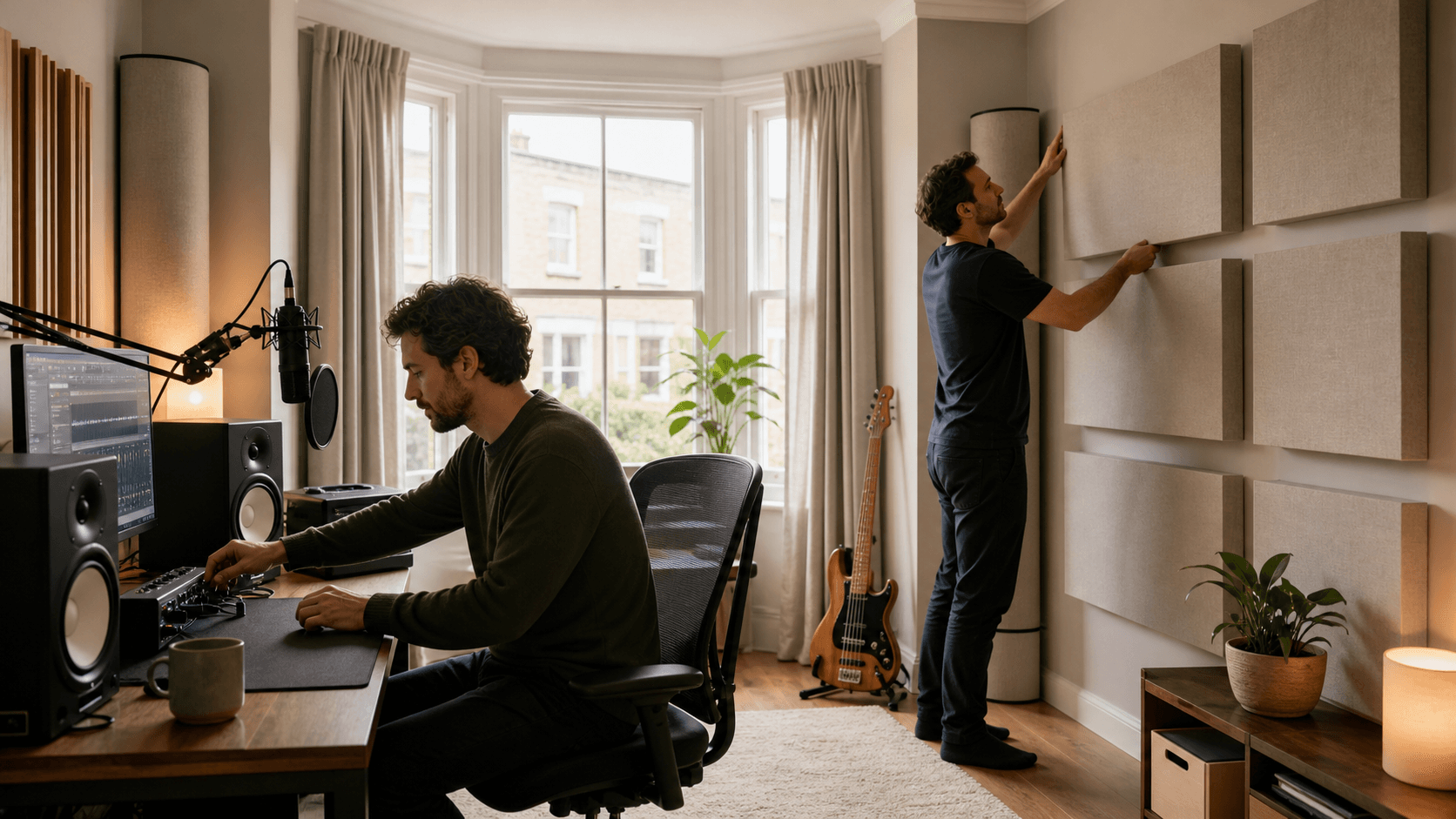
Melamine acoustic foam is flexible in how it can be used, and it suits a wide range of rooms: bedrooms converted to studios, lofts that heat up quickly, garden rooms, office podcast spaces, and home cinemas with layers of equipment.
Typical applications include:
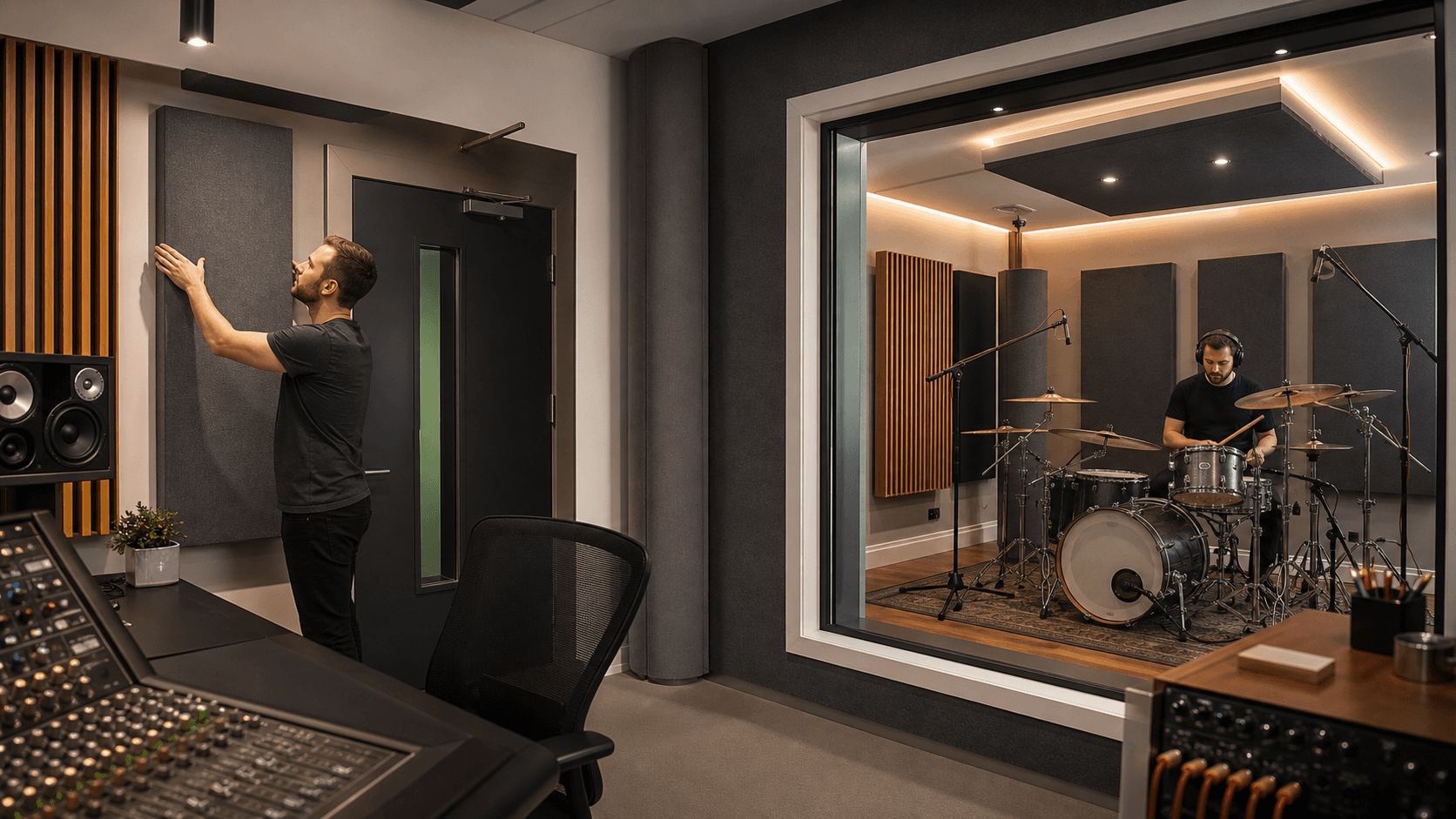
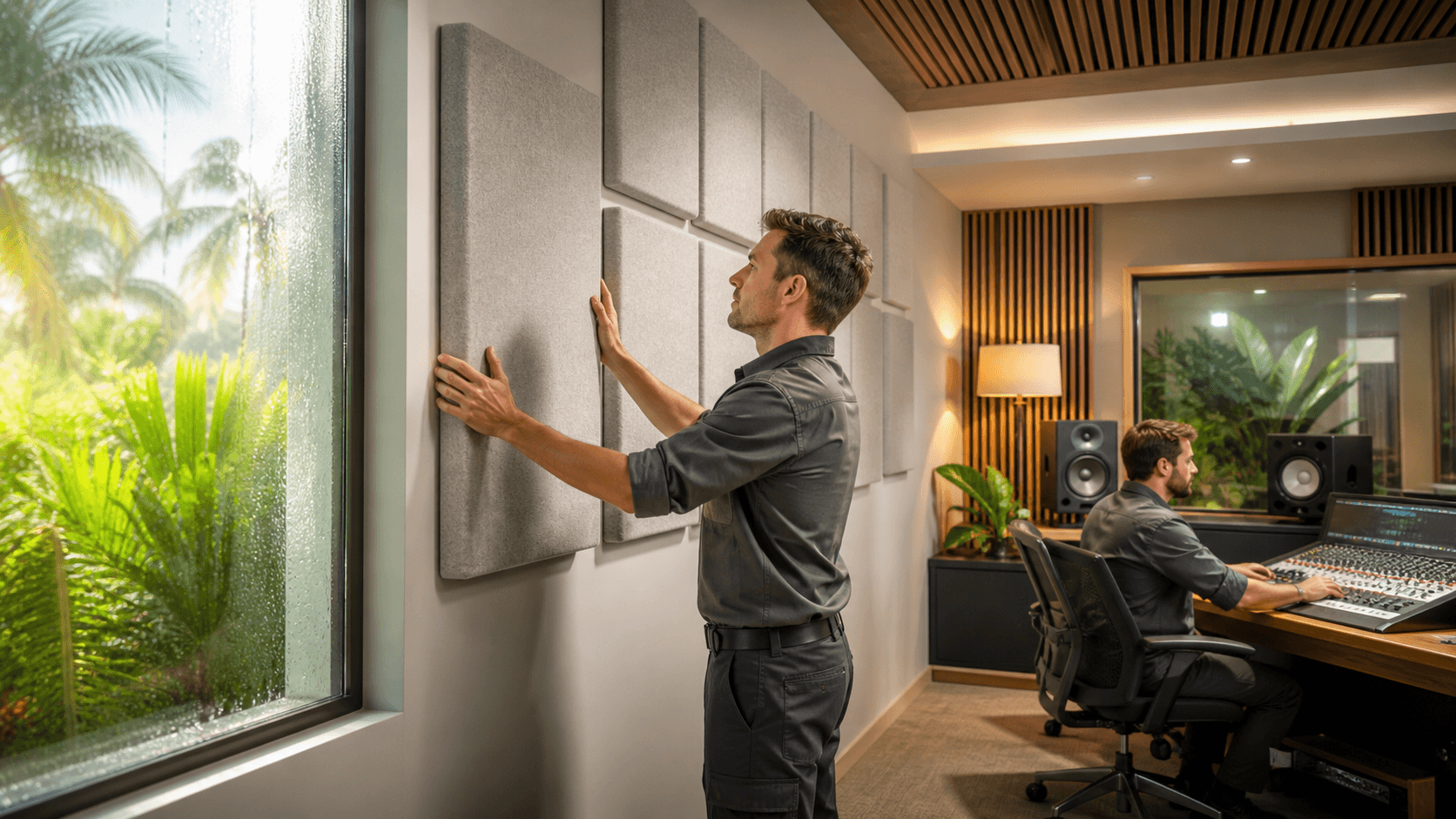
- Wall and ceiling tiles in control rooms for mid and high frequency control
- Panels in vocal booths and podcast spaces to keep speech clear and tight
- Ceiling clouds in offices and edit suites where computers and people raise the temperature
- Treatment positioned around lighting and projection equipment
Low-end control still needs attention regardless of which foam you choose. Bass traps, correctly placed, work alongside tiles and panels of either material to keep the whole spectrum in order. For rooms that also need to keep outside noise out, acoustic foam of any type works in combination with suitable soundproofing layers rather than in place of them.
Because every room is different, it helps to think through:
- Room size and ceiling height
- Where the main heat sources sit and how close treatment needs to be to them
- Whether the space has fire performance requirements
- How long sessions typically run and how the room is ventilated
- Whether the room doubles as a living or working space
That is where careful design and precise cutting make a real difference, so treatment is effective, neat, and easy to live with.
Specify With Summer in Mind
A studio that performs consistently through summer is mostly a matter of getting three things right: sensible ventilation and equipment placement, well-designed acoustic treatment for the room's dimensions, and materials specified appropriately for the conditions and requirements of the space.
Melamine acoustic foam earns its place where temperature margins and fire performance genuinely matter, and it does so without adding weight or bulk to the installation. Where those factors are less critical, our standard foam range remains an excellent and more economical choice. The useful conversation is not which foam is better, but which one your particular room calls for.
Get Started With Your Project Today
If you are ready to improve the sound quality of your space, explore our range of melamine acoustic foam designed to deliver reliable acoustic control with a clean, professional finish. At Advanced Acoustics, we can help you choose the right products for studios, offices, classrooms or any critical listening environment, including whether melamine or our standard acoustic foam range is the better fit for your requirements. If you would like tailored advice for your specific project, simply contact us, and we will guide you through the next steps.